In the heart of Silicon Valley, where futuristic promises often collide with the cold reality of quarterly balance sheets, Jensen Huang, the man behind the Nvidia empire, is attempting more than a simple product pitch. He is attempting to redefine the very concept of computing power. In his latest discourse, analyzed extensively by Bloomberg Tech, Huang didn't just stick to numbers; he described a new cosmogony: the transition from 'Digital AI' to 'Physical AI.'
For investors worried that the AI bubble might be nearing a saturation point, Huang has a clear answer: we are still at the beginning. The first phase—the training of Large Language Models (LLMs)—was merely the prelude. The real revolution, according to him, will arrive when artificial intelligence begins to interact with the physical world through robotics and industrial automation, requiring infrastructure that will make today's data centers look like pocket calculators.
The Shift to Inference at Scale
One of Huang's central arguments is the fundamental shift in how Nvidia's chips are being utilized. While the last two years have been driven by the need to train models like GPT-5, the future belongs to 'inference.' This is the process where a pre-trained model answers queries, performs tasks, or controls a robotic arm in real-time.
“Every time you interact with an AI, a processor somewhere in the world is working for you,” Huang explained. As AI usage becomes embedded in every facet of daily life, from search engines to autonomous vehicles, the need for inference computing power will grow exponentially. This means Nvidia is no longer just relying on Big Tech companies building models, but on the entire global economy that will be using them. The move from training-heavy workloads to inference-heavy ones represents a massive shift in the total addressable market (TAM).
Sovereign AI: The New Digital Frontier
Another critical aspect of Huang’s vision, which he termed 'Sovereign AI,' concerns the role of nation-states. Huang argues that every country should own its own production of intelligence, much like it owns its natural resources or energy infrastructure. “You cannot allow your data, your culture, and your national knowledge to be processed in another country,” he emphasized.
This approach opens a vast new market for Nvidia. Already, countries like France, Japan, and Saudi Arabia are investing billions to create domestic 'AI factories.' Nvidia is no longer just selling chips; it is selling the 'bricks' for building national sovereignty in the 21st century. This geopolitical dimension of technology acts as a safeguard for the company against the fluctuations of the commercial market, turning GPUs into a matter of national security.
Physical AI and the Digital Twin of the World
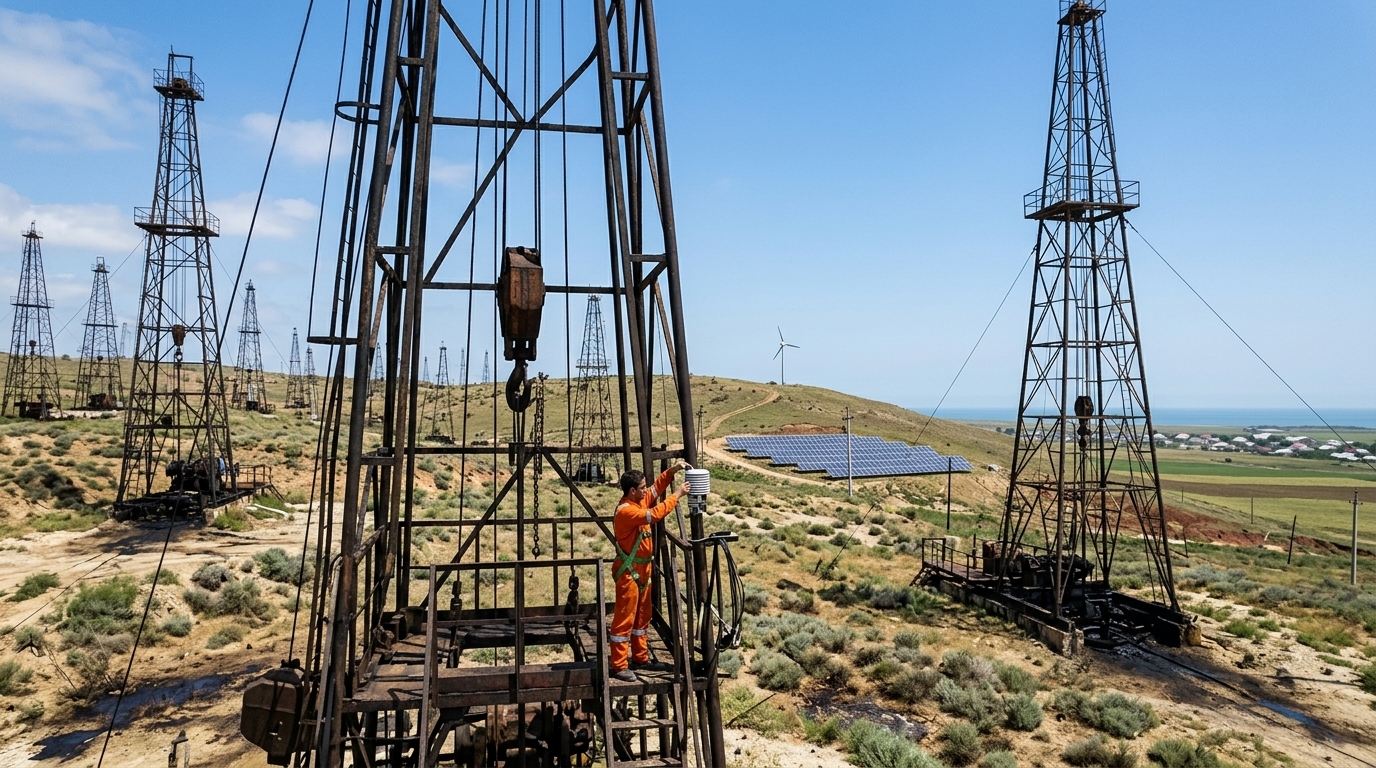
Perhaps the most ambitious part of Huang’s strategy is 'Physical AI.' Here, AI moves beyond the screen. Through the Omniverse platform, Nvidia allows companies to create digital twins of entire factories. In these virtual environments, AI can train robots to move and work before they are even built in reality.
This convergence of software and hardware is the key to the next decade. Huang envisions a world where everything, from washing machines to jet engines, will have embedded intelligence that was 'born' in an Nvidia environment. For investors, this implies that the hardware replacement cycle will be perpetual, as the increasing complexity of these systems will demand ever-more powerful processors. We are moving toward a reality where the physical world is essentially 'simulated first' to ensure efficiency and safety.
Energy Challenges and the Competitive Moat
Of course, Huang’s vision is not without its hurdles. The power consumption of the new Blackwell chips is staggering, raising concerns about the sustainability of power grids and the environmental impact of massive data center clusters. At the same time, competition from AMD, and the trend of Nvidia’s own customers (like Google and Amazon) developing their own custom silicon (TPUs/Trainium), creates clouds of doubt.
However, Huang remains defiantly optimistic. His strategy relies on two pillars: speed of execution and the CUDA software ecosystem, which remains the 'gold standard' for developers worldwide. Nvidia is no longer a semiconductor company; it is the architect of humanity’s new industrial fabric. Whether investors will follow this vision to its ultimate conclusion remains to be seen, but for now, Huang holds the reins of the global technological agenda with unshakable confidence.