In an era where Artificial Intelligence (AI) is often treated as a magic wand for productivity, Nokia CEO Pekka Lundmark is issuing a stern warning: the tool alone is not enough. During a recent strategic intervention, Lundmark shared a personal experiment that resonated across the tech world: he used AI-powered coding tools to rebuild the classic game Pong over a single weekend. However, his conclusion wasn't about gaming; it was about the cold reality of corporate governance. The message is clear: enterprises have adopted AI, but they have fundamentally failed to restructure their organizations to harness its full potential.
The Pong Experiment and the Illusion of Speed
When Lundmark sat down to recreate Pong, it wasn't a mere hobbyist pursuit. He wanted to stress-test the current generation of AI tools, such as Cursor and LLM-based coding assistants. The discovery was profound: an individual without deep, contemporary coding expertise could produce functional, complex software in record time. But as he pointed out, if a software engineer becomes 10 times faster thanks to AI, yet the company’s approval processes, quality assurance protocols, and deployment pipelines remain unchanged, the net productivity gain is negligible.
This is the "productivity paradox" of the AI age. Corporations are pouring billions into software licenses, yet their organizational frameworks remain hierarchical and sluggish, relics of a pre-digital era. Lundmark argues that the real challenge is not a technological upgrade but a total redesign of workflows. If AI collapses production time, then decision-making must accelerate proportionally. Otherwise, the technology simply creates a massive backlog of unfinished projects sitting on digital shelves, waiting for a human bottleneck to clear.
Infrastructure: The Silent Backbone of the AI Revolution
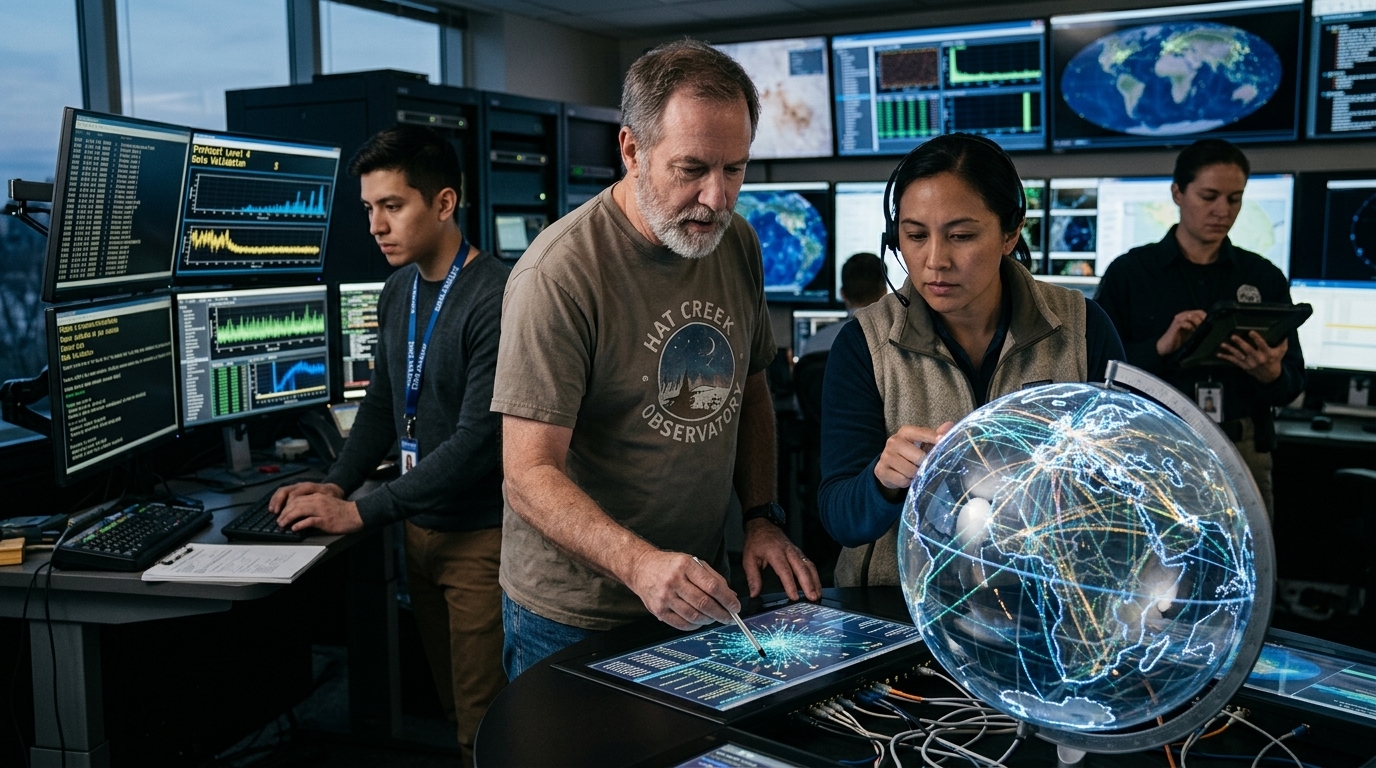
As the head of a company that serves as a global leader in telecommunications infrastructure, Lundmark links internal corporate change to the necessity for more robust networks. The mass adoption of AI by millions of workers is creating unprecedented pressure on data networks. "AI does not live in a vacuum," he notes. "It lives in the cloud, at the edge, and within the fiber optics." Nokia is betting that the demand for 5G-Advanced and eventually 6G will skyrocket as companies scramble to move the massive volumes of data generated by autonomous AI agents.
Furthermore, the shift toward "Edge AI"—processing data near its source rather than in distant, centralized data centers—is a cornerstone of Nokia’s strategy. For AI to function in real-time, such as in an automated smart factory or a remote surgical suite, latency must be near-zero. This requires a convergence of computing power and connectivity that only infrastructure providers can facilitate. Lundmark’s analysis suggests that the winners of the AI race will be those who pair organizational agility with a commitment to next-generation networking.
Redefining Leadership: From Control to Orchestration
The most radical shift, however, involves leadership. Lundmark suggests that managers must stop acting as task-checkers and start functioning as system orchestrators. In this new environment, the employee's role shifts from execution to oversight. If AI is writing the code or drafting the reports, the human must focus on architecture, ethics, and strategic alignment. This isn't just about doing things faster; it's about doing fundamentally different things.
This requires a culture of continuous learning unlike anything seen before. Nokia, for its part, is encouraging its employees to experiment with AI, much like its CEO did with Pong. The goal isn't to turn everyone into a programmer, but to ensure every employee understands the capabilities and limitations of the technology. The historical failures of the "old" Nokia in the handset market or Kodak in digital imaging serve as a haunting reminder: technological superiority does not guarantee survival if corporate culture is anchored to the past. Today, the "new" Nokia aims to be the catalyst helping other industries avoid the traps of a half-baked digital transformation.
Conclusion: The Path to 2030
Concluding his analysis, Lundmark emphasizes that we are only at the beginning of a long journey. The remainder of this decade will be defined by how quickly traditional sectors—from shipping to manufacturing—can integrate AI not as an add-on, but as the core of their operating model. The infrastructure is being laid, and the technology is available; all that remains is the courage of leaders to dismantle obsolete structures and build new ones capable of sustaining the breakneck speed of Artificial Intelligence.