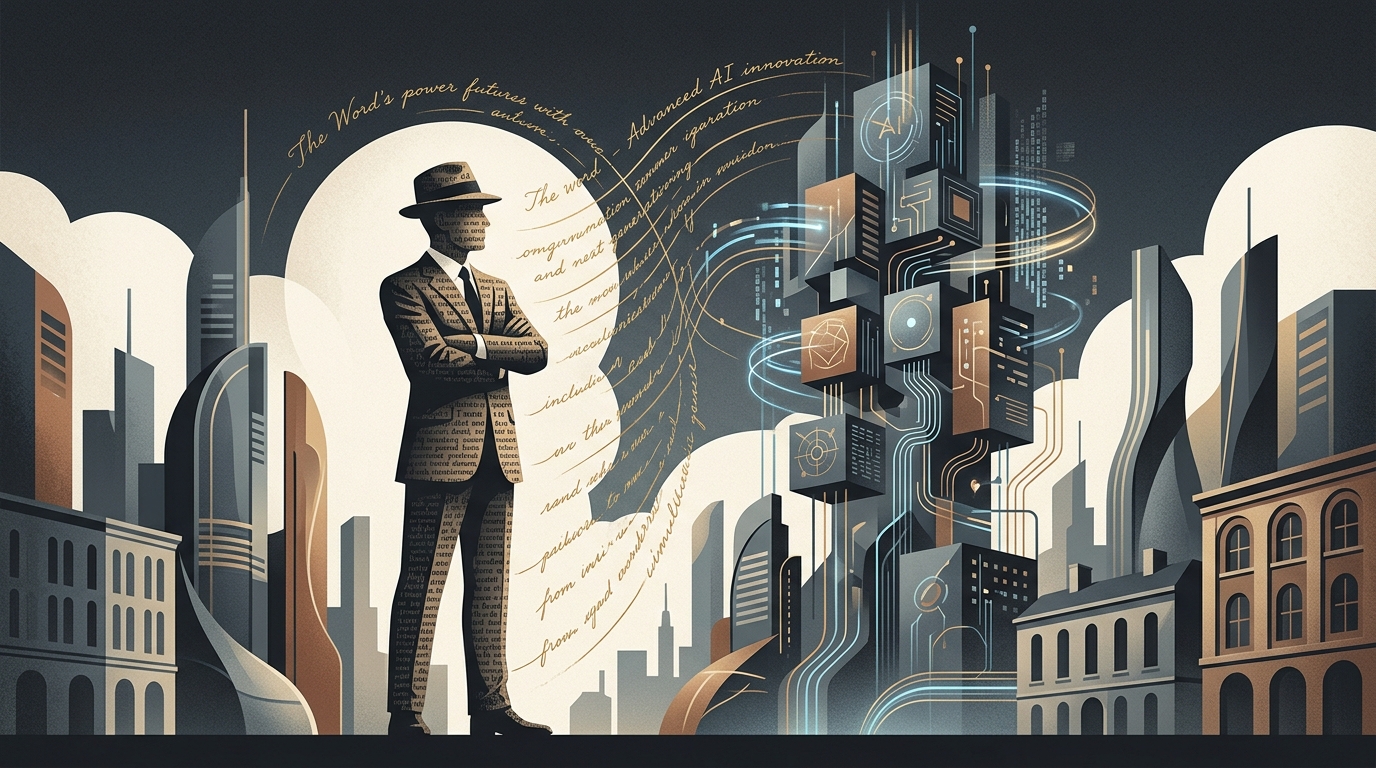
The history of space exploration has transitioned through several distinct phases: from the state-sponsored competition of the Cold War to the cooperative era of the International Space Station. Today, in April 2026, we stand at the zenith of a new, more complex epoch. It is no longer just about planting flags or leaving footprints in lunar dust; it is about establishing a permanent economic foothold where Artificial Intelligence (AI) serves as the architect, navigator, and resource manager.
The Billionaire Clash: SpaceX vs. Blue Origin
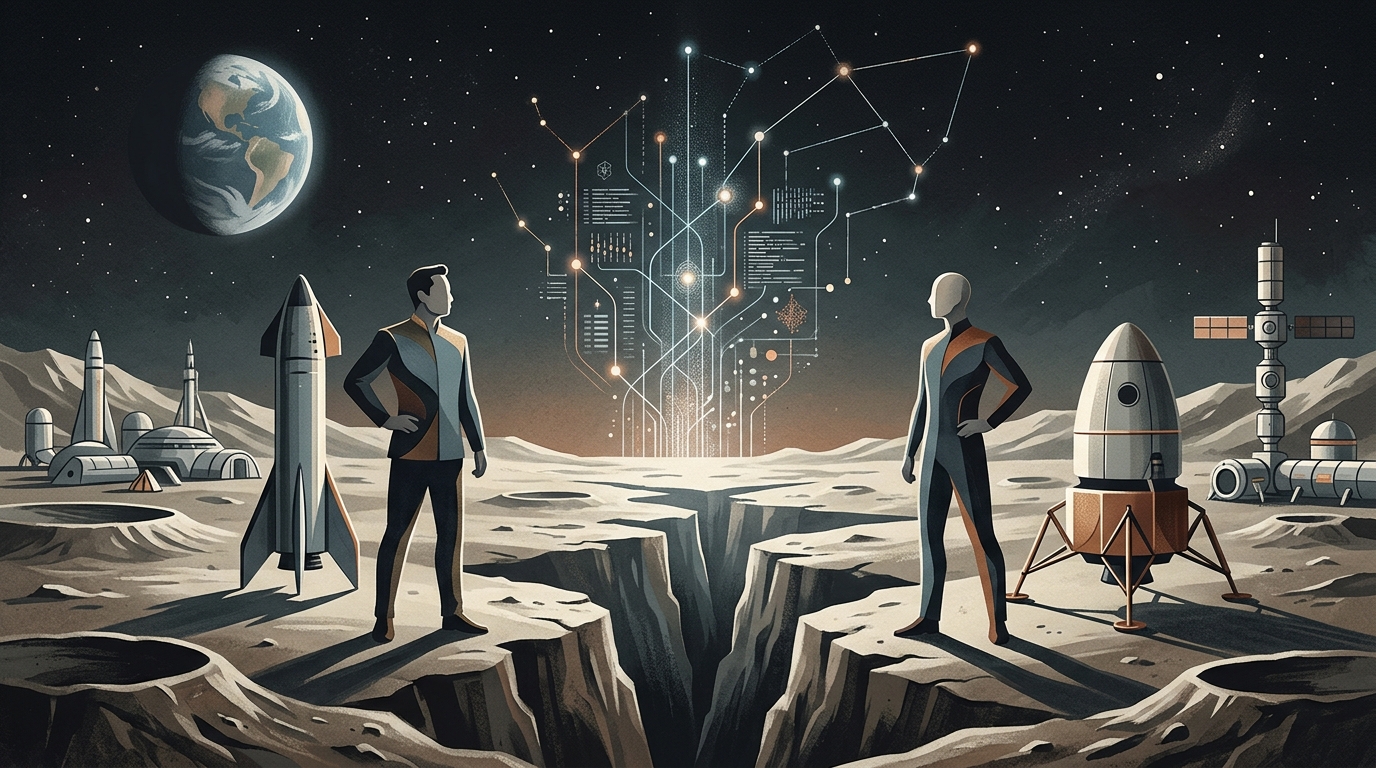
The rivalry between Elon Musk and Jeff Bezos is well-documented, but its intensity has surged as NASA’s Artemis program hits critical milestones. SpaceX, with its massive Starship, aims for full reusability and the transportation of unprecedented payloads. Conversely, Bezos’s Blue Origin, having secured the contract for the 'Blue Moon' lander for Artemis V, advocates for a more methodical, incremental, yet equally ambitious strategy.
However, the true differentiator in this modern race isn't merely the thrust of the rockets, but the 'brains' guiding them. SpaceX utilizes advanced machine learning algorithms for the autonomous landing of its boosters—a feat deemed impossible just a decade ago. Blue Origin, investing billions into AI, is developing systems that will allow robotic swarms to mine ice from lunar poles without a single human instruction from Earth.
AI as the Catalyst for a Lunar Economy
Why is AI so pivotal for the Moon? The answer lies in the constraints of physics. While the Moon is 'only' 1.3 light-seconds away, real-time operations demand local autonomy. The AI systems being developed by these two titans are not just navigation aids; they are comprehensive management ecosystems.
- Automated Construction: AI-driven 3D printers utilizing lunar regolith to build habitats and landing pads.
- In-Situ Resource Utilization (ISRU): Algorithms optimizing the extraction of oxygen and volatiles from the lunar soil.
- Predictive Maintenance: Systems capable of forecasting hardware failures in critical infrastructure before they occur—vital for survival in a vacuum.
Musk envisions the Moon as a stepping stone to Mars, where AI will eventually manage entire self-sustaining cities. Bezos, in contrast, sees the Moon as an industrial hub that will allow Earth to remain a 'garden' by shifting heavy industry and energy production off-planet. In both visions, human oversight is increasingly being replaced by algorithmic efficiency.
Geopolitics and Ethical Dilemmas
The Musk-Bezos stand-off does not exist in a vacuum. China, with its own formidable space program and cutting-edge AI research, represents the third major power in this theater. The deployment of AI in deep space raises profound questions regarding international governance. Who controls the algorithms that will dictate the distribution of lunar resources? What happens if a SpaceX AI conflicts with a Blue Origin AI or a state-owned autonomous system?
"The Moon is the first true testing ground for the symbiosis of human and machine in zero-tolerance environments," industry analysts suggest.
As we move toward the late 2020s, the integration of Large Language Models (LLMs) into astronaut interfaces will redefine exploration. The astronaut of 2026 is no longer a mere pilot, but a supervisor of a fleet of autonomous AI agents. The battle between Musk and Bezos is, fundamentally, a contest to determine who will write the operating system for humanity’s future among the stars.