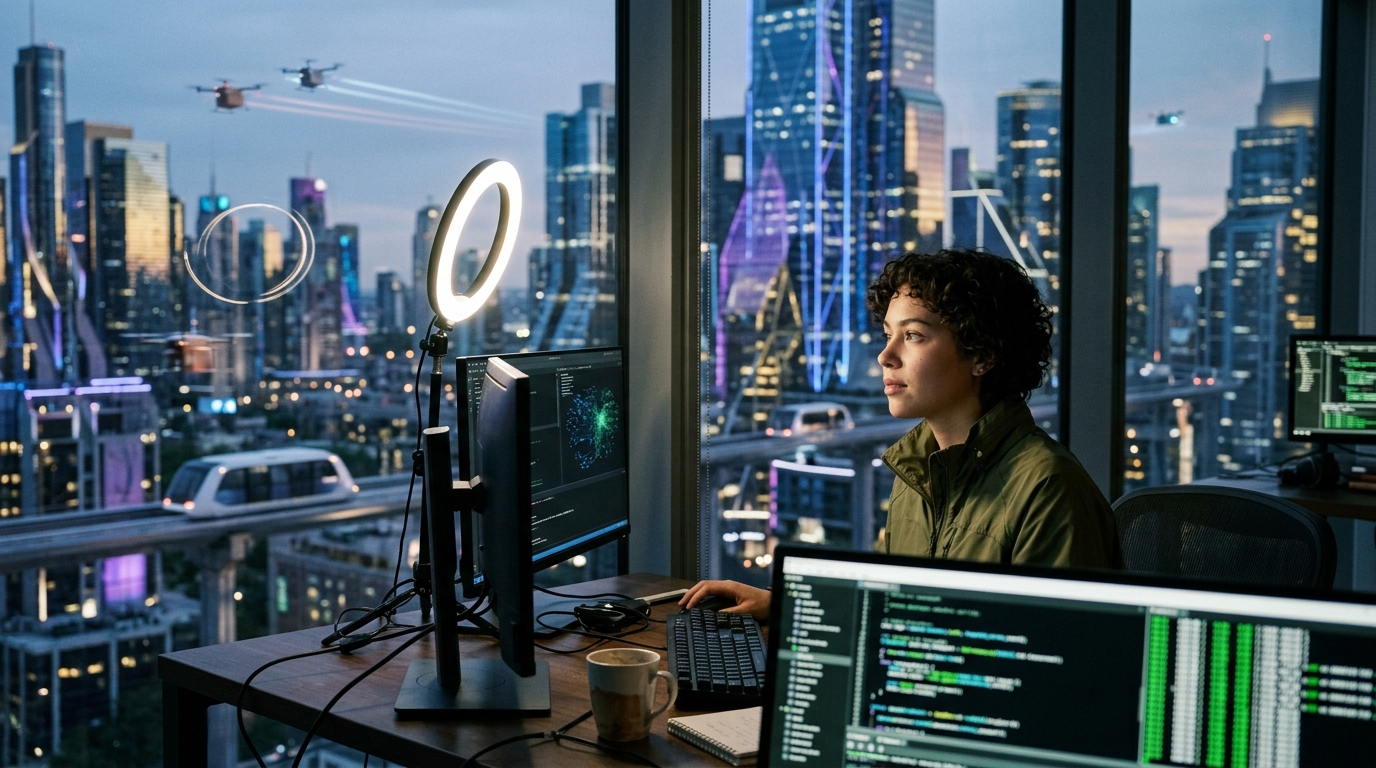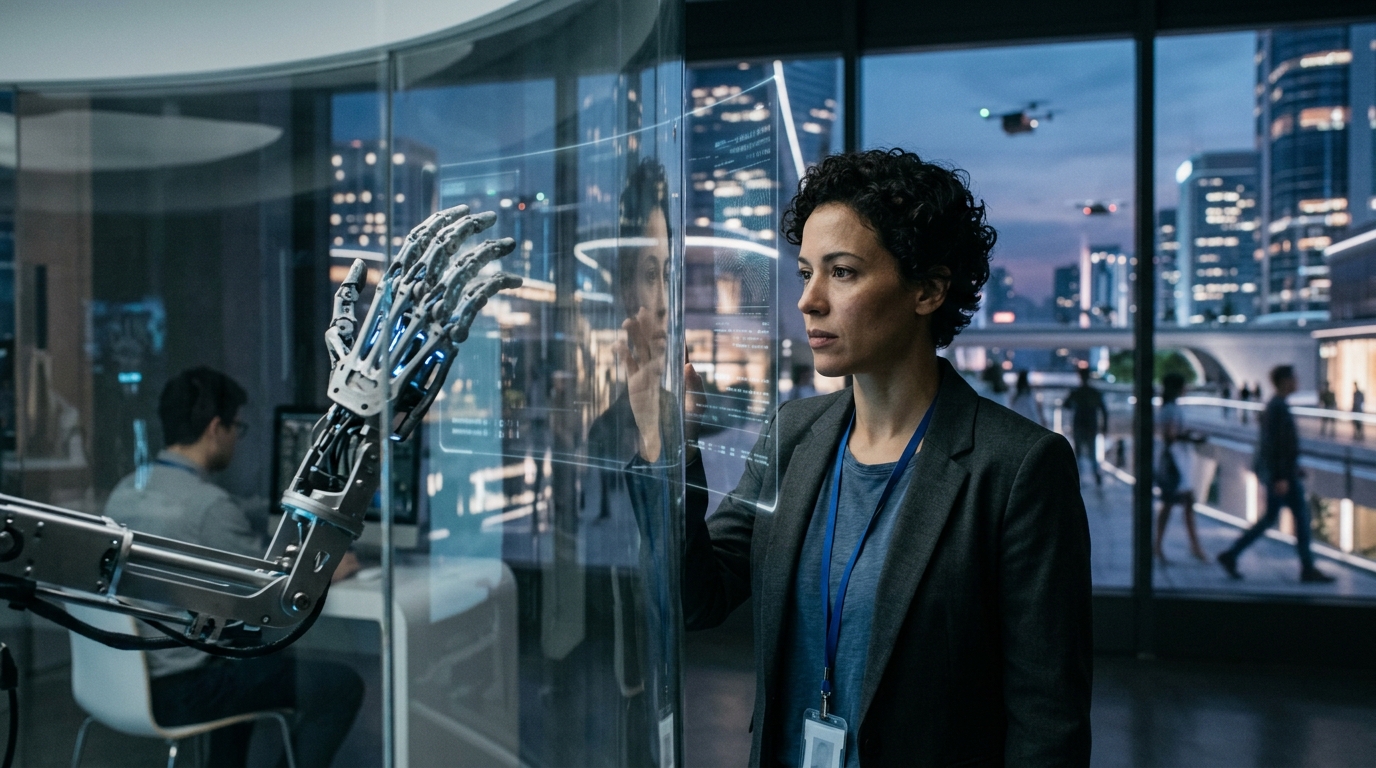
The statement by Le Monde is not merely a journalistic headline; it is the birth certificate of a new era. For millennia, humans defined themselves through the uniqueness of cognition, creativity, and decision-making. Today, as we navigate through 2026, this uniqueness is collapsing. Artificial Intelligence is no longer a simple data-processing tool but a mirror reflecting the image of our own consciousness, stripped of its biological substrate.
The Transition from Tool to Entity
Unlike the steam engine or the personal computer, the generative AI and autonomous agents that dominate today do not just execute commands. They synthesize, propose, and, most importantly, decide within frameworks of uncertainty. The machine's ability to "think"—even if this thought is based on the statistical probabilities of billions of parameters—causes an ontological shock. If the essence of the human being is reason (the 'logos' of the ancient Greeks), then what happens when reason ceases to be the exclusive privilege of the biological brain?
Le Monde's analysis highlights exactly this point: the mimicry of the essence. This is not a simple simulation of movement or strength, but a simulation of the internal process that makes us human. Creating a poem, solving a mathematical problem, or making a strategic business decision are no longer human strongholds. AI has invaded the "sanctum" of subjectivity.
Creativity in the Age of Automated Inspiration
Creation was always considered a divine spark, a mysterious process connecting emotion with expression. However, the models we see in 2026 have proven that creativity can be encoded. From architecture to musical composition, AI does not just produce copies but original works that evoke emotional responses in humans. This raises the question: if the result is creative, does it matter if the source lacks a "soul"?
- The decoupling of creativity from human effort leads to an inflation of content.
- The value of art shifts from execution to intention and curation.
- Machines are beginning to develop their own "style," based on patterns that humans are unable to perceive.
The challenge for creators today is not to compete with the machine in speed or precision, but to find that minimal trace of "human imperfection" that AI, in its quest for perfection, often eliminates.
The Burden of Decision and the Moral Void
Perhaps the most disturbing element of the analysis is the AI's ability to "decide." When we delegate the governance of infrastructure, the diagnosis of diseases, or the management of financial crises to algorithms, we transfer the weight of moral responsibility to a mathematical model. Decision-making has historically been linked to accountability. A leader or a judge is judged by their decisions. A machine, however, cannot be punished, nor can it feel remorse.
"We have not just created an assistant, but a competitor in the field of will," sociology analysts note.
This shift creates a democratic deficit. If the decisions that determine our lives are made by systems whose internal logic is often a "black box" even for their creators, then the concept of freedom is called into question. The ability to decide is the highest form of power; ceding it to machines is the greatest surrender of sovereignty in the history of our species.
Conclusion: Humanity in the Post-Human Era
Le Monde's observation forces us to redefine what it means to be human. If thinking, creating, and deciding can be automated, then our essence may need to be sought elsewhere: in empathy, in mortality, in the capacity for sacrifice, and in the conscious choice of the absurd. AI is our mirror, but like any mirror, it only shows the surface. The depth of the human experience remains—for now—a fortress that no line of code has managed to fully breach.