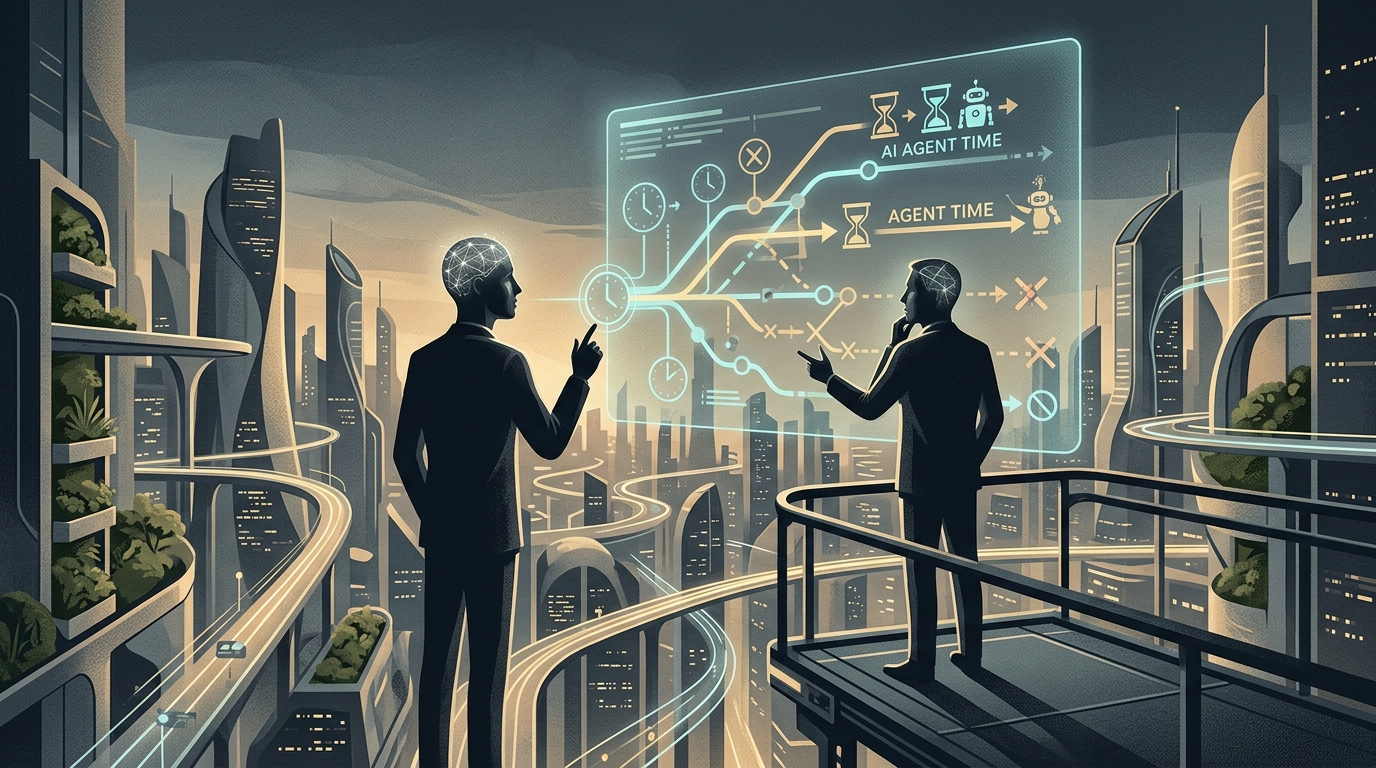
In the rapidly shifting landscape of artificial intelligence, 2026 marks a decisive turning point: the transition from static large language models to autonomous AI agents. Michael Richman, in a compelling analysis for StartupHub.ai, has introduced a concept that is already vibrating through Silicon Valley boardrooms and beyond: FOMAT (Fear of Missing Agent Time). If FOMO was about social exclusion, FOMAT is about corporate survival in a world where time is no longer measured solely in human man-hours, but in "agentic capacity."
The Anatomy of FOMAT
FOMAT is not just another trendy acronym. It represents the existential anxiety of business leaders that their competitors are gaining an irreversible lead—not because they have better software, but because their AI agents have already begun the process of learning and optimizing internal workflows. As Richman explains, "Agent Time" is a finite and compounding resource. Every day a company delays deploying agents to automate and evolve its processes is a day of proprietary data and operational wisdom lost forever.
Unlike traditional SaaS (Software as a Service), where you can buy a subscription and instantly achieve parity with your peers, AI agents operate cumulatively. They learn from the specific nuances of an organization—its culture, its data silos, and its edge cases. An agent that has been working within a supply chain department for six months is qualitatively superior to a "fresh" agent straight out of the box. This experience gap is the primary fuel for FOMAT.
The Shift from Chat to Action
For a long time, AI was confined to a conversational interface. Users asked questions, and the AI provided answers. Richman argues that this era of passivity is over. The autonomous agents of 2026 do not just wait for prompts; they execute complex chains of tasks, make decisions based on predefined guardrails, and interact with other software ecosystems without human intervention.
- Autonomy: Agents can manage entire projects, from initial planning to final execution.
- Specialization: Moving beyond generalist models to agents trained in specific verticals like legal discovery, logistics, or advanced DevOps.
- Interoperability: Multi-agent systems where different AI entities communicate to solve multi-faceted problems.
This evolution fundamentally alters the cost structure of knowledge work. A company suffering from FOMAT isn't just worried about a dip in productivity; it fears losing the ability to innovate at market speed. Agents reduce the marginal cost of intelligence and execution to levels that no human team, however talented, can compete with in isolation.
Strategic Responses: Beyond the Panic
Michael Richman does not stop at diagnosing the problem; he offers a roadmap for recovery. To defeat FOMAT, enterprises must stop treating AI as an "IT tool" and start viewing it as a "digital workforce." This requires a radical restructuring of corporate strategy.
"The greatest trap is not the failure of an AI experiment, but waiting for the 'perfect' model. In the world of agents, system experience is far more valuable than initial architecture."
Businesses must invest in "agentic infrastructure." This means clean data pipelines, secure API integrations, and, most importantly, a culture that accepts human-machine collaboration. Richman emphasizes that leadership must define clear ethical frameworks and "kill switches," ensuring that agent autonomy does not lead to a loss of corporate governance.
Human Capital in the Age of Agents
A critical question arising from the FOMAT analysis is the role of the human worker. If agents are occupying more and more "time," what is left for people? Richman’s answer is both optimistic and demanding: the human role is shifting from execution to orchestration. Tomorrow's leaders will be "Agent Managers," responsible for the guidance, ethical oversight, and strategic alignment of their digital subordinates.
FOMAT, ultimately, acts as a catalyst for evolution. It forces companies to overcome inertia and embrace a new reality where intelligence is abundant, but the time required to integrate it remains the most precious commodity. As Richman concludes, in the AI era, the only way to avoid falling behind is to start measuring your success in "agent hours" starting today.