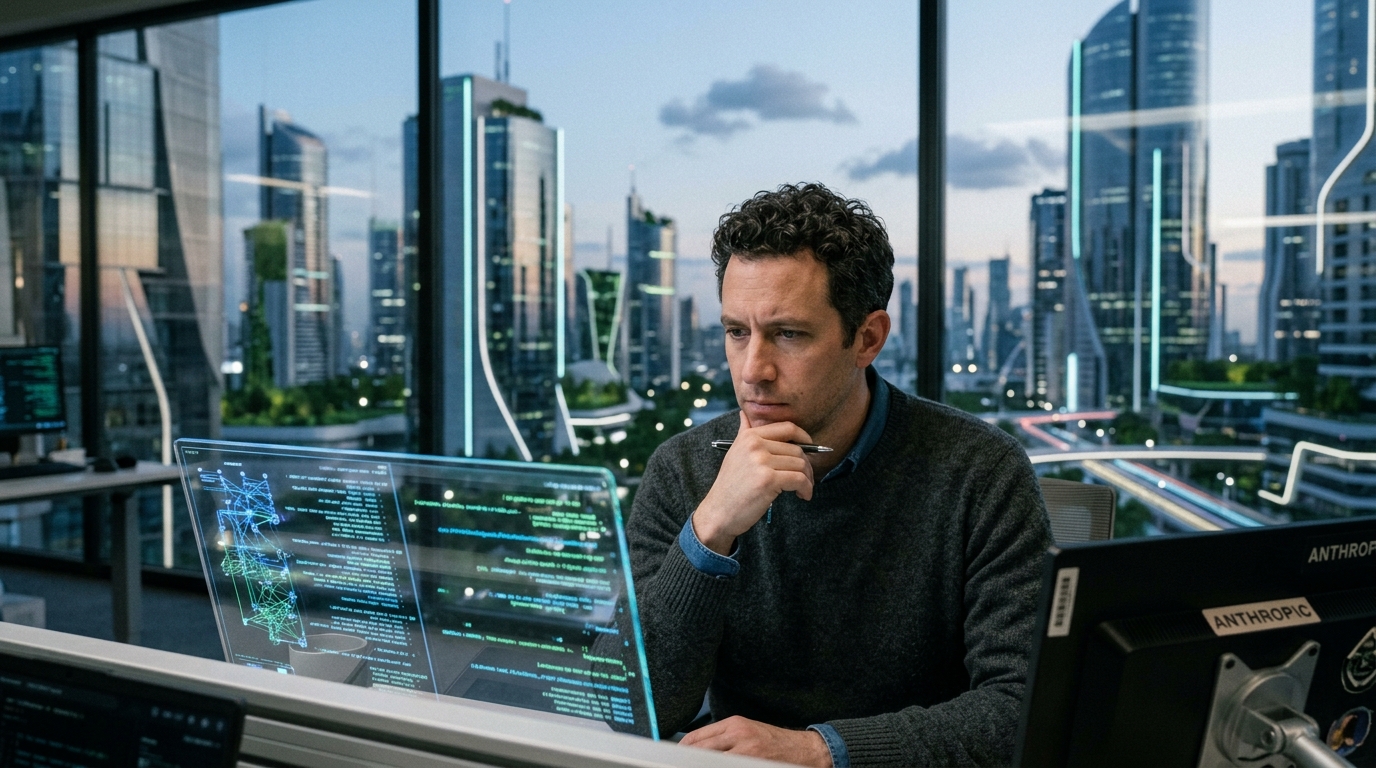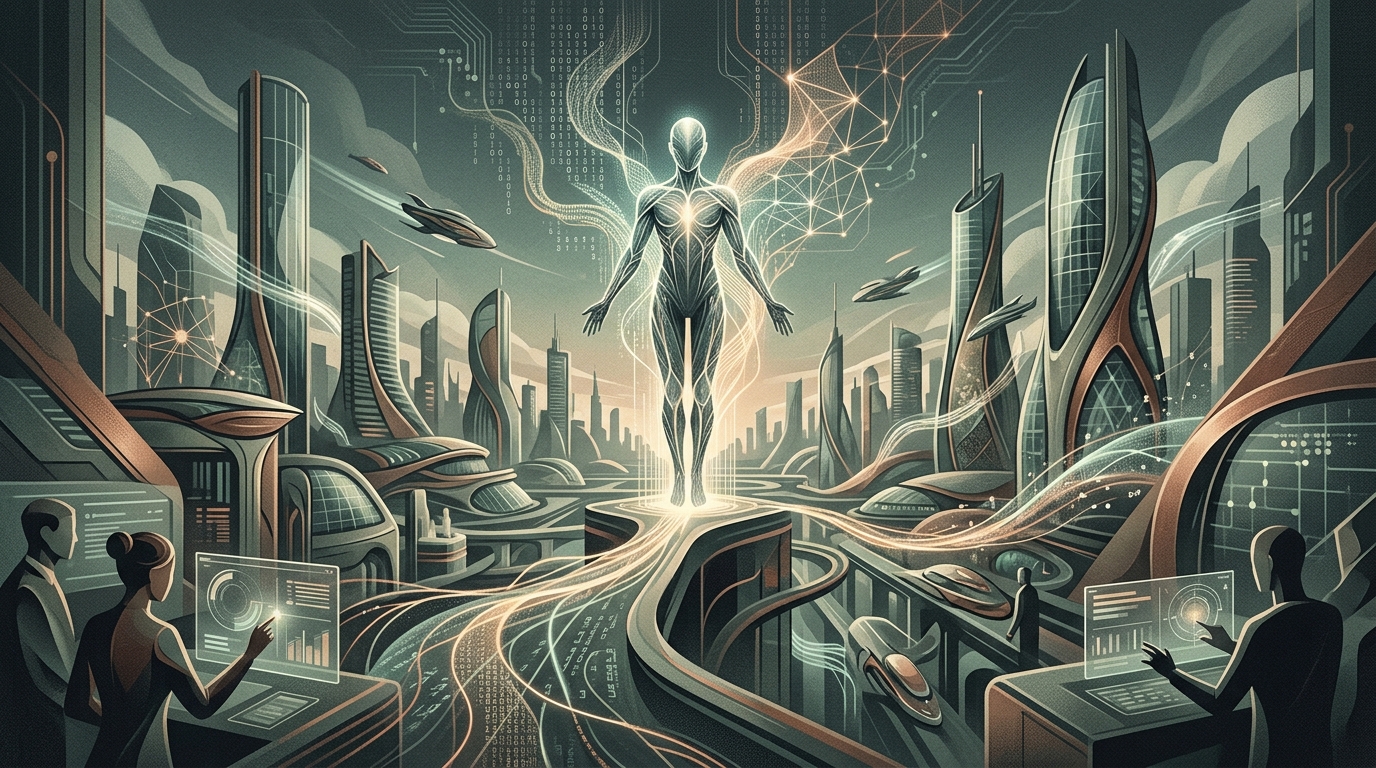
Silicon Valley is in a state of perpetual flux, but recent statements by Marc Andreessen, co-founder of Andreessen Horowitz (a16z) and one of the architects of the modern web, have caused a particular stir. Andreessen argues that AI "agents"—autonomous systems capable of executing complex tasks without constant human guidance—have already begun to outperform human programmers in critical domains. This is not merely a productivity boost; it is a fundamental re-evaluation of what it means to "build software" in the 21st century.
From Assistant to Autonomous Agent
Until recently, AI in programming was largely confined to tools like GitHub Copilot, which functioned as sophisticated autocomplete systems. Andreessen points out that we are now entering the era of "agents." These systems don't just suggest the next line of code; they can comprehend an entire codebase, identify bugs, design architectural solutions, and implement full-scale features from scratch.
The difference lies in the agents' ability to operate in feedback loops. An AI agent can write code, run it, observe the error, fix it, and repeat the process until the desired outcome is achieved. This trial-and-error process, which might take a human hours or days, is a matter of seconds for an AI agent. Andreessen emphasizes that the speed and precision of these systems make human intervention in low-level coding tasks almost redundant.
The Democratization of Creation and Jevons Paradox
One of the most compelling aspects of Andreessen’s analysis is the economic dimension. If the cost of producing software drops dramatically thanks to AI, will we see less or more software? Here, Andreessen implicitly references Jevons Paradox: when technological progress increases the efficiency with which a resource is used, the total consumption of that resource actually rises rather than falls.
- Lowering the Barrier to Entry: Individuals without deep technical backgrounds will be able to "program" using natural language, turning ideas into functional applications.
- Explosive Growth in Applications: Every small business or even individual could have bespoke software that previously would have cost hundreds of thousands of dollars.
- Focus on Architecture: Human programmers will transition from "builders" to "architects" and "judges," focusing on what should be built and why, rather than the mechanics of syntax.
"Software is eating the world, but now AI is eating software. The ability to produce high-quality code at zero marginal cost will change the structure of the global economy," Andreessen asserts.
Risks and the New Hierarchy of Skills
However, this transition is not without its pitfalls. Reliance on AI agents raises serious questions about code security and the potential for creating "technical debt" at an unprecedented scale. If an AI generates thousands of lines of code per minute, who is capable of fully auditing them for security vulnerabilities or logical flaws that might emerge over time?
Furthermore, the job market for junior developers is already under pressure. If AI agents can perform the work of a developer with two years of experience, how will the next generation gain the necessary expertise to become seniors? Andreessen remains optimistic, suggesting that the new roles created around auditing and synthesizing AI systems will more than offset the losses. The focus is shifting from knowing the syntax of a language (like Python or C++) to understanding systemic thinking and complex problem-solving.
The Future: From Code-First to Intent-First
The vision Andreessen describes leads to an "Intent-First" future. In this model, the human expresses an intent ("I want an app that manages my company's supply chain and predicts shortages"), and AI agents handle the implementation, testing, and maintenance. Programming, as manual digital labor, may become a specialized craft for a few, much like how hand-assembling watches remains a high-value art but is no longer the way the world tells time.
In conclusion, Andreessen's analysis is not just a technological prediction but a wake-up call for education and industry. The ability to collaborate with AI agents will be the premier skill of the next decade, and those who refuse to adapt risk being left behind in a world moving at the speed of silicon.