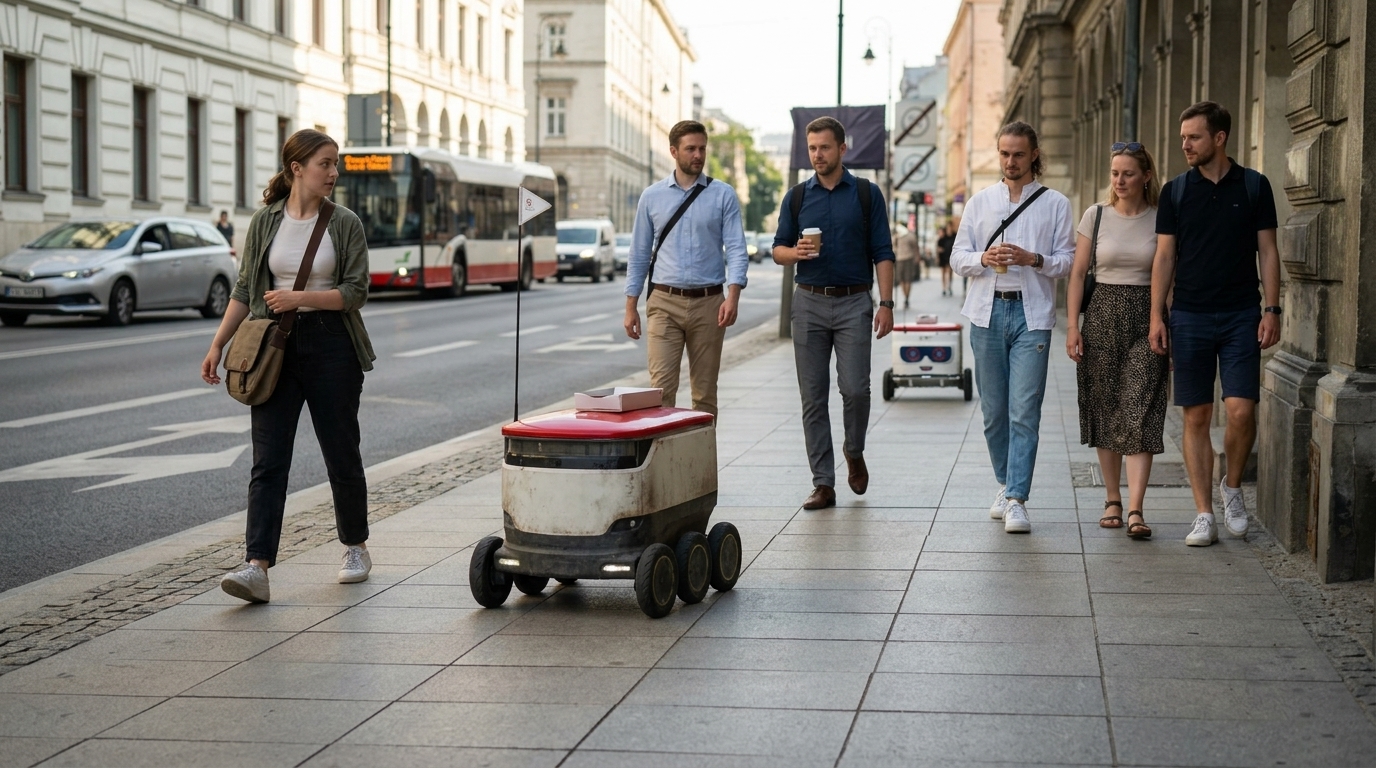
It is June 2026, and the sight of a small, six-wheeled robot navigating the sidewalks of major metropolitan areas is no longer a novelty; it is a standard feature of urban life. Starship Technologies, founded by the co-creators of Skype, has successfully transformed the "last mile" of delivery—the most expensive and inefficient segment of the supply chain—into a showcase of technological efficiency. The promise is both simple and revolutionary: your pizza, groceries, or parcels will arrive at your doorstep at a fraction of current costs, without the need for a human driver.
The Economics of the Last Mile
For decades, logistics companies have struggled with the same intractable problem. While transporting goods across continents is remarkably efficient thanks to massive container ships, moving a package from a local distribution center to a consumer's doorstep accounts for up to 50% of total shipping costs. The need for human labor, urban traffic congestion, and fuel consumption make traditional delivery an expensive and environmentally taxing process. Starship's robots are flipping this economic model. Operating on electric power and moving autonomously on sidewalks, they eliminate fuel costs and, crucially, the per-delivery cost of human labor.
- Cost reduction of up to 90% compared to traditional delivery methods.
- Zero emissions during the delivery process.
- 24/7 operational capability without labor law constraints.
Technological Sophistication and Safety
These robots are far more than mere boxes on wheels. They are equipped with a sophisticated sensor suite including 360-degree cameras, radar, ultrasonic sensors, and GPS. Utilizing advanced AI and machine learning, the robot maps its environment in real-time, identifying pedestrians, pets, traffic lights, and obstacles. In cities where sidewalks are often uneven or cluttered, the challenge is significant. However, Starship has developed algorithms that allow robots to "learn" from every journey, constantly improving their navigation capabilities. Should a robot find itself in an unsolvable situation, a remote human operator can intervene, ensuring the delivery is completed safely and efficiently.
"Automation is no longer a futuristic luxury but a necessity for the sustainability of urban centers," industry analysts observe.
Social and Labor Implications
The rise of robotic couriers inevitably raises critical questions about the future of work. Thousands of delivery workers globally rely on the gig economy for their livelihood. Replacing them with machines could lead to significant social friction. Conversely, proponents argue that robots will take over the most dangerous and repetitive tasks—such as navigating heavy traffic in bad weather—allowing humans to transition into higher-value roles in maintenance, fleet management, and programming. Furthermore, the reduction in delivery costs could revitalize local businesses, enabling them to compete with e-commerce giants by offering affordable, hyper-local delivery to their communities.
The Autonomous Future
As we move through 2026, public acceptance of these autonomous systems is growing. The robots have become part of the urban fabric, viewed by citizens with a mix of curiosity and, increasingly, familiarity. The challenge now shifts to the regulatory landscape. Who is liable in the event of an accident? How is pedestrian privacy protected given the robots' constant camera feeds? The answers to these questions will dictate the speed at which robotic delivery becomes the global standard. What remains certain is that the technology is here to stay, promising cities with reduced congestion, cleaner air, and significantly cheaper delivery services.