In an era where public discourse is dominated by the fear that Artificial Intelligence (AI) will displace white-collar jobs, Jensen Huang, the visionary leader of Nvidia, is pointing in an entirely different direction. During a recent address, his message was clear and unexpected: "This is your time," he said, addressing electricians, plumbers, and skilled tradespeople. This admission is not merely a compliment; it is a profound analysis of the physical reality hidden behind the "cloud."
The Physicality of Digital Intelligence
Artificial Intelligence is often portrayed as something ethereal—code living in an invisible digital space. However, the reality is far more tangible. To power Large Language Models (LLMs) and generative AI applications, massive data centers are required, which Huang refers to as "AI factories." These factories are not simple warehouses filled with servers; they are energy-hungry beasts requiring unprecedented levels of electrical power and sophisticated cooling systems.
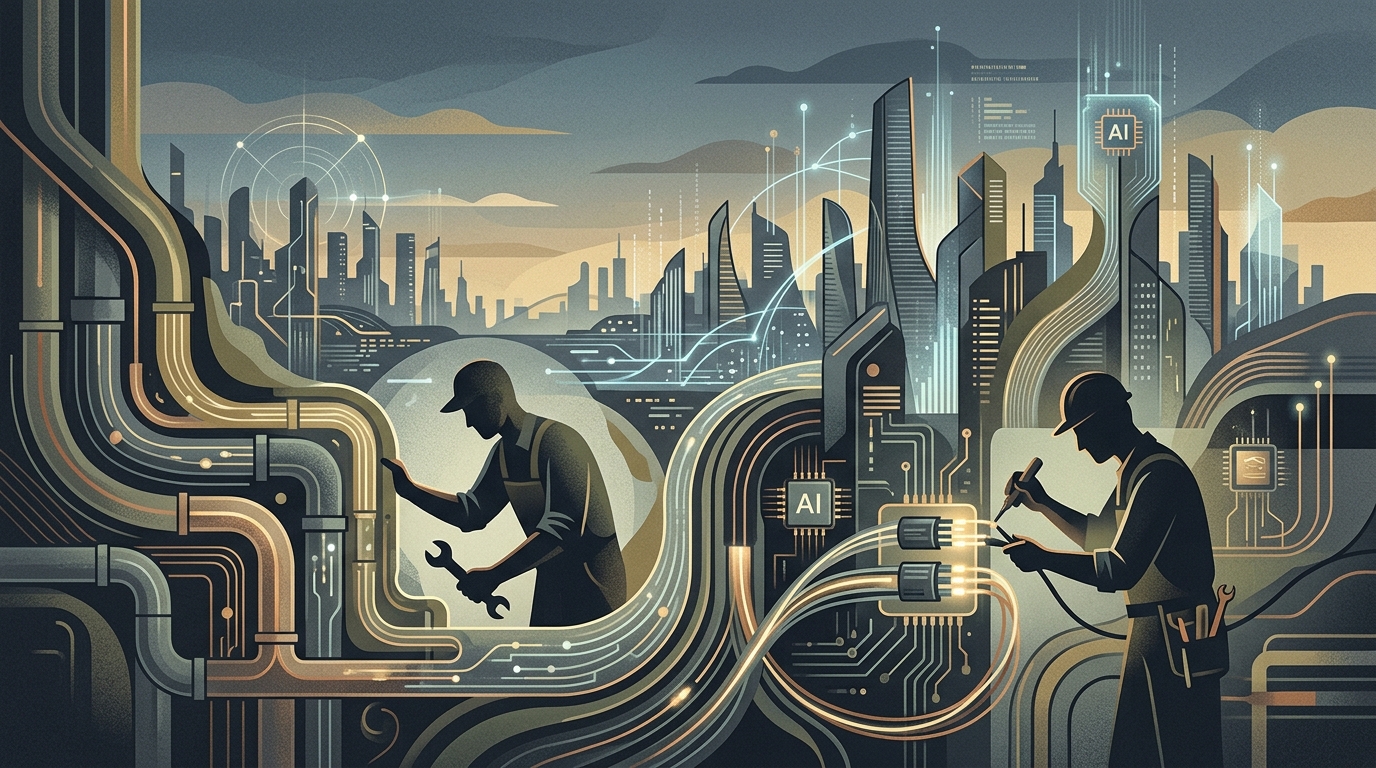
This is precisely where the trades come in. Constructing a modern data center requires miles of high-voltage cabling, substations capable of powering entire cities, and liquid cooling systems that resemble industrial chemical plants more than traditional office settings. "You cannot build the future of intelligence without the hands that know how to harness electricity and water," Huang emphasized, highlighting that the demand for specialized electricians and plumbers has skyrocketed to levels the labor market is struggling to meet.
The Revenge of the Skilled Trades
For decades, the social narrative pushed young people exclusively toward higher education degrees and white-collar roles. The rise of AI is flipping this hierarchy. While junior developers and data analysts see their tasks automated by tools like GitHub Copilot, an electrician installing Uninterruptible Power Supply (UPS) systems in a data center remains irreplaceable. Physical dexterity, real-time judgment, and the ability to solve problems in physical space are areas where robotics is still years away from full automation.
In Europe and the US, this trend creates a unique opportunity. As nations scramble to become data hubs with investments from Microsoft, Google, and Amazon, they face a critical shortage: who will build and maintain this infrastructure? A shift toward vocational training is no longer a fallback plan; it is a strategic career choice with earnings that often surpass those of academic professions. The "blue-collar" label is being rebranded as "essential infrastructure engineering."
The Energy Challenge and Sustainability
Another point Huang touches upon is the complexity of the energy transition. AI data centers don't just need power; they need green, stable power. This requires a new generation of tradespeople who understand photovoltaic systems, industrial-scale battery storage, and smart grids. The "plumber of the future" won't just be clearing pipes; they will be managing high-pressure liquid cooling loops that protect billions of dollars worth of processors from thermal meltdown.
In conclusion, Jensen Huang’s prophecy highlights a grand truth: technological progress is not a linear march toward the digitization of everything. It is a cyclical process that always returns to its foundation—to the infrastructure and the people who build it. Tradespeople are not merely support staff; they are the architects of the physical substrate upon which 21st-century intelligence will run. As aptly noted, if AI is the brain of the new world, electricians and plumbers are its nervous and circulatory systems.