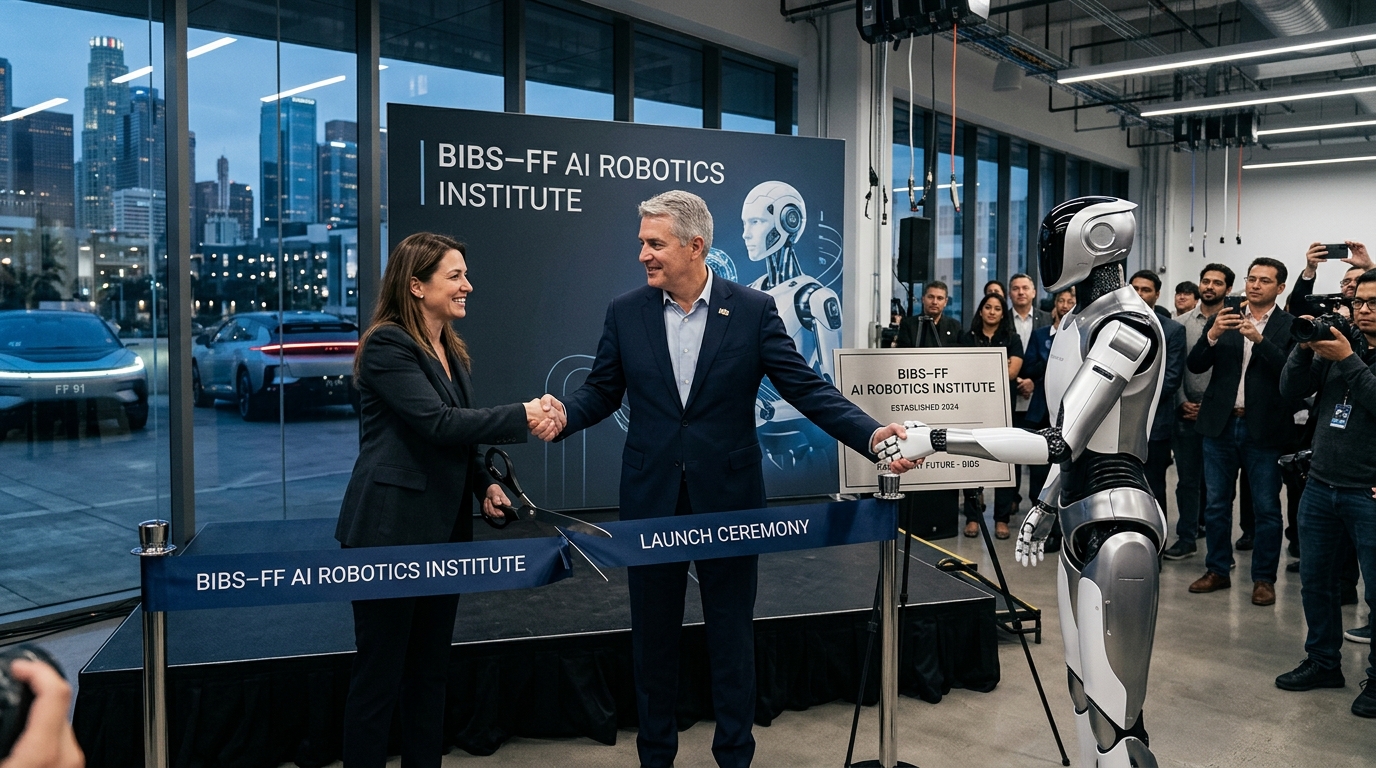
In a move that highlights the rapid transformation of the technology sector, Faraday Future (FF) has announced a groundbreaking strategic partnership with the Boston International Business School (BIBS). This alliance aims to establish the BIBS–FF AI Robotics Institute, which aspires to be the first industry-driven educational and research institution in the United States focusing exclusively on "Physical AI."
This news comes at a critical juncture for Faraday Future, a company that has experienced significant volatility in its journey within the electric vehicle (EV) space. By founding this institute, FF appears to be expanding its footprint beyond mere luxury car manufacturing, positioning itself at the core of the robotics and embodied intelligence revolution.
The Convergence of Academia and Industry
The BIBS–FF AI Robotics Institute is not just another research center. According to the announcement, the goal is to create an ecosystem where theoretical knowledge meets direct industrial application. Boston, a traditional hub of robotics innovation thanks to institutions like MIT and companies like Boston Dynamics, provides the ideal backdrop for this endeavor.
- Developing talent with expertise in next-generation robotics.
- Commercializing Physical AI technologies for industrial and consumer use.
- Creating a bridge between the U.S. and global technology markets.
Matthias Aydt, Global CEO of Faraday Future, emphasized that this partnership is part of the "Global AI EV Bridge Strategy." The company seeks to leverage its expertise in AI and software to create new revenue streams beyond the sales of its flagship FF 91 model.
What is Physical AI and Why Does It Matter?
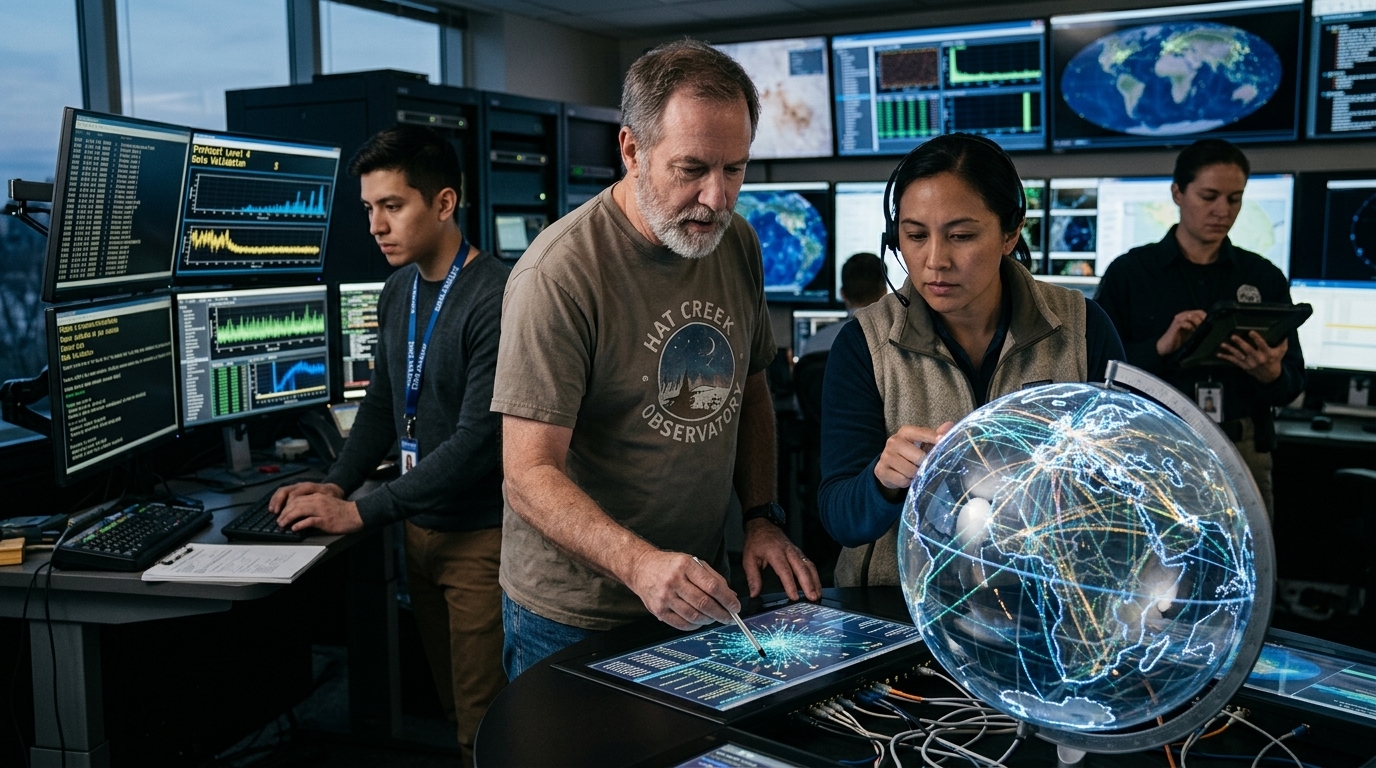
While Generative AI, such as ChatGPT, has dominated headlines over the past few years, Physical AI is considered the next great frontier. It refers to the ability of artificial intelligence to interact with the physical world through sensors, actuators, and robotic systems. This includes everything from autonomous vehicles and humanoid robots to smart manufacturing systems.
"The future of technology is not just on our screens, but in how intelligence is embedded into matter," the partnership announcement states.
The institute will focus on solving complex problems that hinder the mass adoption of robotics, such as precision in movement, real-time decision-making in unstructured environments, and safe human-machine collaboration. The involvement of BIBS ensures that technological progress will be accompanied by the right business strategy and market understanding.
Strategic Significance for Faraday Future
For Faraday Future, this move is multi-dimensional. After years of financial challenges, the company is attempting to redefine itself as a player in the broader AI ecosystem. Partnering with a prestigious educational institution in Boston lends credibility and access to a network of top scientists and business executives.
Furthermore, the focus on robotics allows FF to leverage investments it has already made in autonomous driving and connectivity. Electric vehicles are, in essence, "robots on wheels." Transferring this technology to other forms of robotics is a logical, if ambitious, step. Analysts estimate that the Physical AI market could surpass the value of AI software within the next decade as industries seek solutions for labor shortages and the need for increased productivity.
Challenges and Outlook
Despite the optimism, the venture is not without challenges. The robotics market is extremely competitive, with giants like Tesla and Amazon investing billions. Faraday Future will need to prove that it can deliver real value through the institute and not let it remain a move to impress investors.
However, the connection with Boston International Business School suggests a focus on the global dimension. FF aims to act as a bridge, facilitating technology transfer and business cooperation between the U.S. and other markets, particularly China, where the demand for automation is immense. The BIBS–FF AI Robotics Institute could be the foundation for a new generation of innovators who see robotics not just as a technical challenge, but as a global business opportunity.