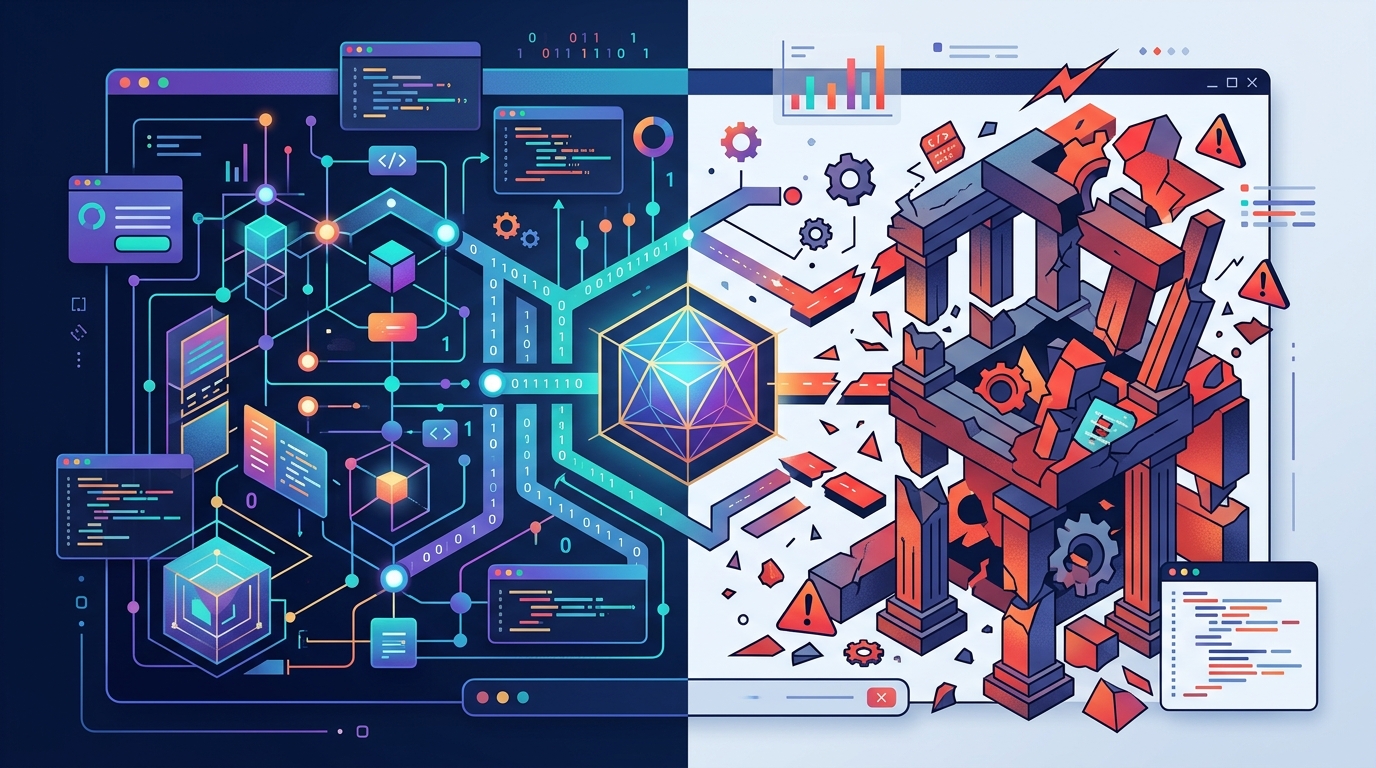
For over three centuries, scientific progress has been encoded in a specific format: the paper. Since 1665, when the Royal Society of London published the first issue of Philosophical Transactions, the structure has remained remarkably stable. An abstract, an introduction, methodology, results, and conclusions—all locked within a static text. However, as we move through 2026, the scientific community is realizing that this "container" of knowledge is no longer sufficient to hold the complexity of modern research.
The Crisis of Static Knowledge
The traditional scientific paper, in its digital form as a PDF, is nothing more than a digital ghost of a printed page. In a world where research relies on massive datasets and complex algorithms, attempting to compress this information into a few thousand words inevitably leads to the "reproducibility crisis." Scientists often struggle to replicate their colleagues' results because the code, data, and subtle experimental tunings remain hidden behind the prose.
Artificial Intelligence is accelerating this need for change. Today, the volume of publications is so vast that it is impossible for a human to keep up with developments even in a narrow subfield. The "unit of science" must now be readable not only by humans but also by machines. The question posed by The Transmitter and other leading analysts is clear: Can we replace the paper with something more vibrant?
From the Paper to the "Computational Notebook"
The leading alternative is the computational notebook, such as Jupyter or Observable. In these documents, text, code, and data coexist. The reader doesn't just see a graph; they can change parameters and watch the graph update in real-time. This transition turns science from a passive reading experience into an interactive one.
- Transparency: Every claim is accompanied by the code that produced it.
- Dynamic Updates: If an error is found in the data, the "document" can be updated automatically.
- AI-Readiness: LLMs can directly analyze the logic of the code, reducing misinterpretations.
However, the adoption of these tools hits a wall: the establishment of academic evaluation. Professors are judged by the number of publications in high-prestige journals (impact factor), which for the most part still require static files. Changing the unit of science, therefore, requires a radical restructuring of how we assign value and prestige to research.
The Role of AI as Co-author and Reviewer
In 2026, AI is no longer just a writing tool but an infrastructure. The new "documents" emerging are modular. Instead of a single text, we have "nanopublications"—small, verifiable units of knowledge linked together in a global knowledge graph. AI can synthesize these units in real-time to answer specific questions, making traditional literature searches obsolete.
"We are no longer writing to be read by humans, but to feed the collective intelligence of our species," notes a researcher in the article.
This evolution brings risks. The ease of content production by AI could overwhelm the system with "noise." If the unit of science changes, the peer review process must also change. Perhaps in the future, review won't be done by two or three experts, but by a continuous, decentralized process of code and data auditing by humans and algorithms simultaneously.
Conclusion: Science as Software
The transition from paper to bit is nearing completion. Science is beginning to look more and more like open-source software development. Publications become "versions" that evolve, and knowledge ceases to be a fossilized record to become a living organism. The bet for the next decade is whether universities and publishing houses can keep up with this speed, or if we will see the birth of a parallel, entirely digital knowledge ecosystem that will render traditional journals museum pieces.