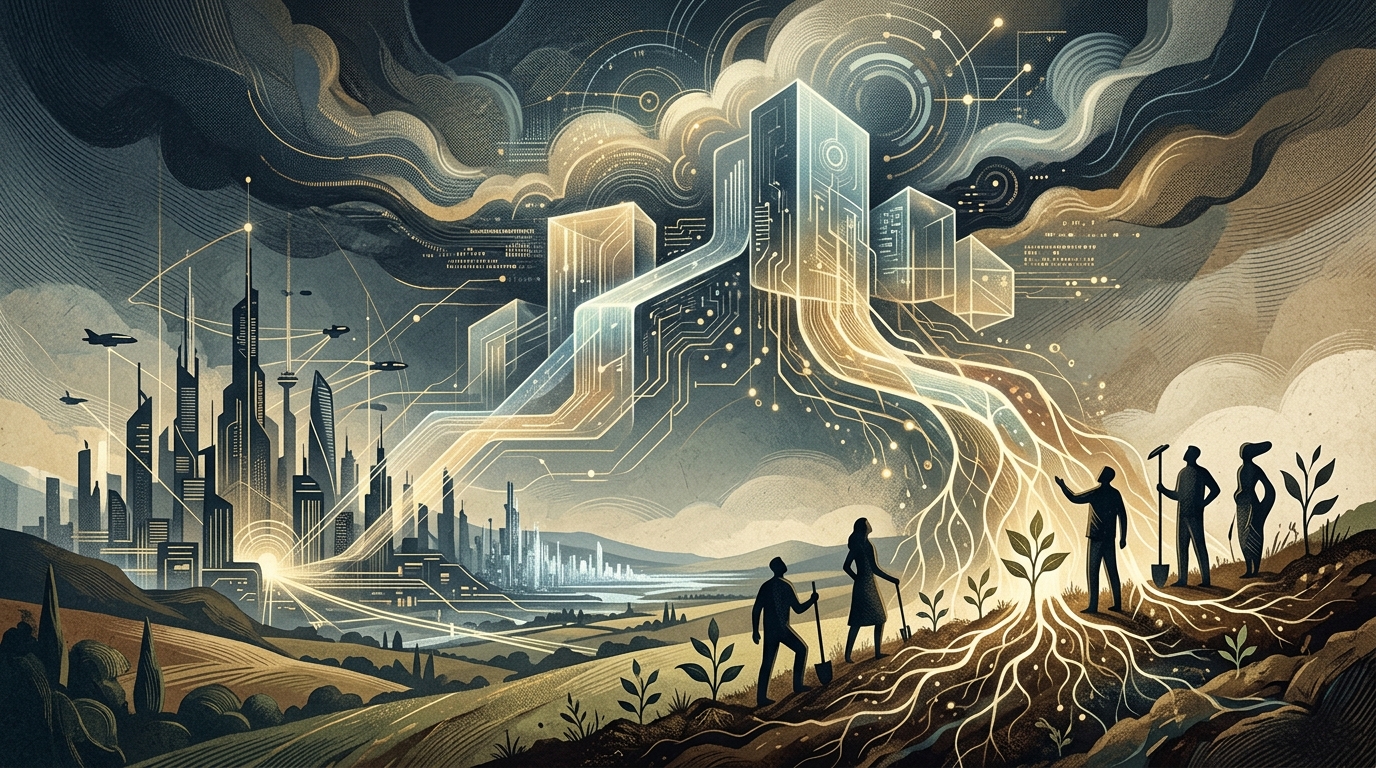
In the wake of the rapid evolution of autonomous systems, the latest analysis from The Economist warns of an impending "apocalypse" in the labor market. This is no longer a science fiction scenario, but an economic reality transforming how value is produced in the 21st century. As we move through May 2026, the transition from experimental AI use to full integration into production processes appears to be creating a gap that few are prepared to bridge.
The Great Shift: From Automation to Intelligence
Historically, technological revolutions replaced muscle power with machines. The current revolution, however, targets the core of human uniqueness: cognitive processing and decision-making. The Economist's report emphasizes that the "apocalypse" is not about the disappearance of work itself, but the complete devaluation of skills previously considered high-level. Lawyers, data analysts, programmers, and administrative executives are now on the front lines of exposure.
According to data, the adoption of Large Action Models (LAMs) and autonomous agents has begun to replace entire layers of middle management. Businesses are no longer just looking for "tools" to assist employees, but integrated systems that can execute complex workflows without human intervention. This leads to a violent reallocation of the workforce, where Schumpeterian "creative destruction" is occurring at speeds that social structures struggle to follow.
Economic Creative Destruction or Social Crisis?
The central question posed by the analysis is whether productivity gains will offset job losses. While optimists argue that AI will create new professions we cannot yet imagine, The Economist warns of the "adjustment period." This period could last decades and be characterized by intense social inequalities. Those who own capital (algorithms and computing power) see their profits soar, while labor as a factor of production loses its bargaining power.
"The challenge is not whether there will be jobs in the future, but whether those jobs will offer a decent wage and meaning in a world where machines can do everything better and cheaper."
In Europe, the implementation of the AI Act attempts to set rules, but the market moves faster than legislation. Countries with service-based economies find themselves at a critical crossroads. While some sectors require physical presence, their administrative and support structures are digitizing rapidly, reducing the need for human personnel in office roles.
The Global Perspective: Policy and Education
The report highlights that the divide between "AI-ready" nations and the rest of the world is widening. For the global labor market, the challenge is twofold: achieving digital transformation while maintaining social cohesion. The Economist underscores that countries investing in "just-in-time reskilling" will be the ones to survive the upheaval.
- Redefining education: Focusing on critical thinking and emotional intelligence.
- Social safety nets: Renewed debate on Universal Basic Income (UBI) as a response to structural unemployment.
- Investment in local AI ecosystems: Reducing dependence on US and Chinese tech giants.
In conclusion, the "apocalypse" described by The Economist is not the end of the world, but the end of the world as we knew it. Work is ceasing to be the primary source of identity and survival for a large segment of the population, forcing us to re-evaluate the very concept of social contribution. Adaptation will be painful, but inertia will be catastrophic.