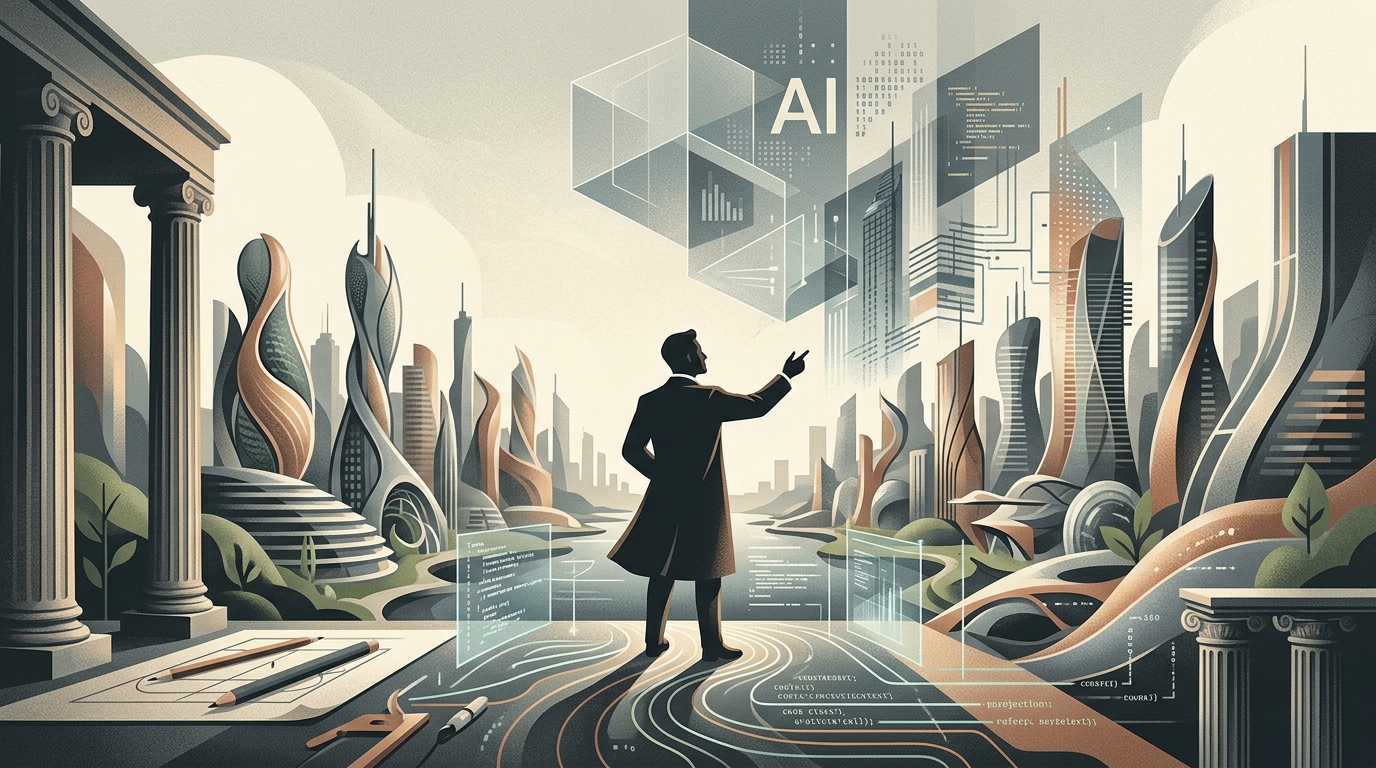
In an era where global urban centers find themselves at a critical crossroads, architecture is called upon to redefine its role. It is no longer just about creating aesthetically pleasing buildings, but about solving complex social, environmental, and technological puzzles. Dimitris Potiropoulos, head of the distinguished firm Potiropoulos+Partners, in a recent interview with Fortune Greece, sets the framework for this shift: architecture must be an "open field of research and experimentation."
This approach is not merely a theoretical pursuit but a necessity imposed by rapid technological advancements and the climate crisis. According to Mr. Potiropoulos, the traditional concept of architectural production, which focuses on execution and morphology, is giving way to a process more akin to the R&D (Research and Development) of major tech giants. The building ceases to be a static object and becomes a living organism interacting with its environment.
Technology as a Catalyst for Creativity
One of the central pillars of Potiropoulos+Partners' philosophy is the integration of new technologies at the heart of design. Artificial Intelligence (AI) and Building Information Modeling (BIM) are not just drafting tools but partners in the creative process. Mr. Potiropoulos points out that technology allows architects to test scenarios that would previously have required years of study in just a few minutes.
"Experimentation today is not just about form, but about functionality and resilience," he notes. Through Digital Twins, architects can predict how a building will behave fifty years from now, how it will manage energy, and how it will affect the microclimate of its area. This "research" is what separates modern architecture from mere construction activity. The ability to capture the complexity of life through algorithms gives the architect a new power, but also a massive responsibility.
Sustainability and the Ethics of Design
The discussion on sustainability is often exhausted in technical specifications and certifications. However, for Dimitris Potiropoulos, sustainability is an ethical stance. Architecture must respond to the challenges of climate change not as a regulatory compliance obligation, but as a structural element of inspiration. ESG (Environmental, Social, and Governance) criteria are now dynamically entering the industry, affecting not only design but also project financing.
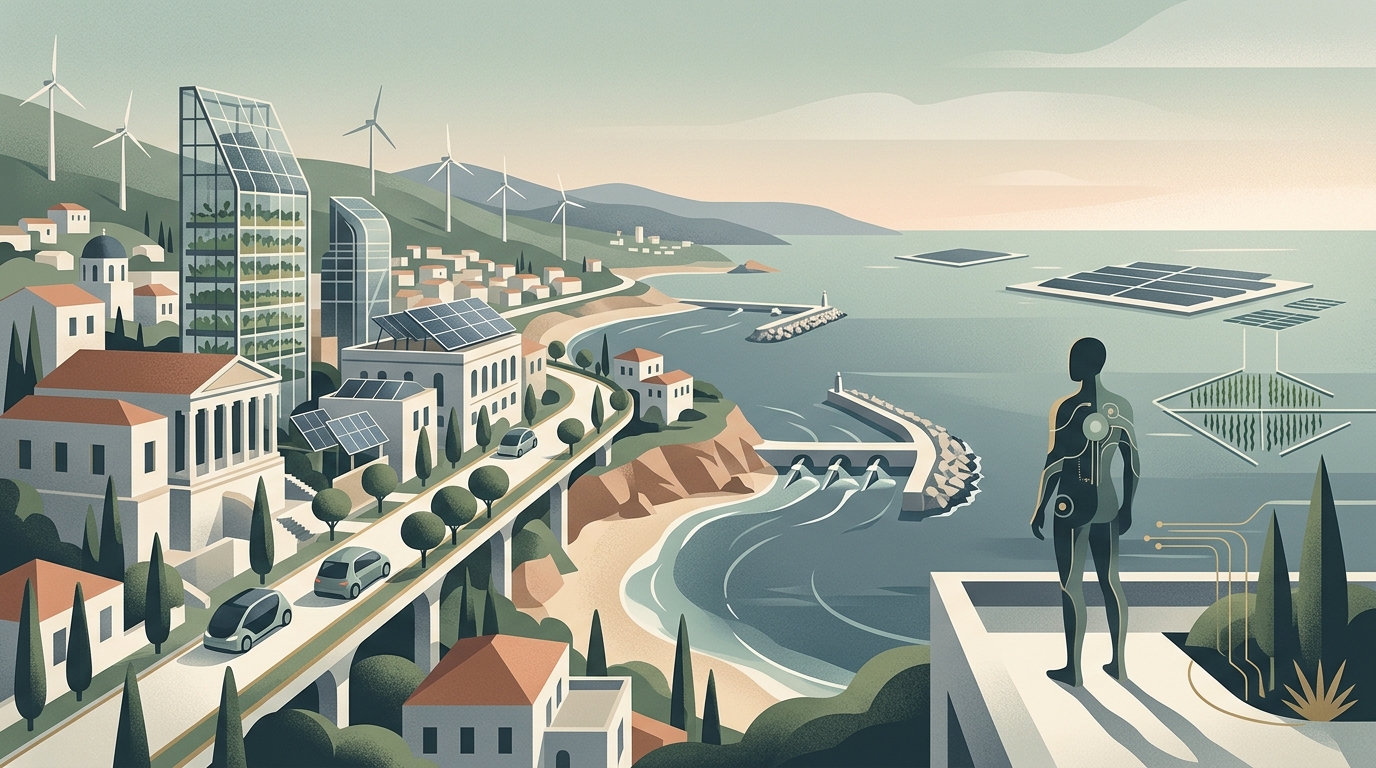
In Greece, the challenge is twofold. On one hand, there is the need to modernize the existing building stock, and on the other, the creation of new landmarks that will upgrade the urban landscape. Mr. Potiropoulos argues that research into materials and traditional techniques, combined with modern technology, can provide solutions that are both innovative and deeply rooted in the locale. Architecture cannot be a "copy-paste" from international magazines; it must be the result of a deep understanding of the local context through experimentation.
The Shift Towards a Human-Centric Model
Beyond walls and materials, architecture is about people. The way we live, work, and socialize has changed radically post-pandemic. Dimitris Potiropoulos emphasizes that spaces must be flexible and "inclusive." Research at his firm focuses on how space affects the user's psychology, an approach that combines architecture with neuroscience.
- Flexibility: Spaces that transform according to the needs of the day.
- Connection with Nature: Biophilic design as a tool for well-being.
- Social Cohesion: Buildings that encourage interaction rather than isolation.
In conclusion, Dimitris Potiropoulos's vision for the architecture of the future is one of dialogue. A dialogue between the past and the future, technology and nature, research and practice. As he concludes, architecture that does not dare to experiment is architecture that has already aged before it is even built. The challenge for the new generation of Greek architects is to embrace this "open field" and create spaces that will inspire future generations.