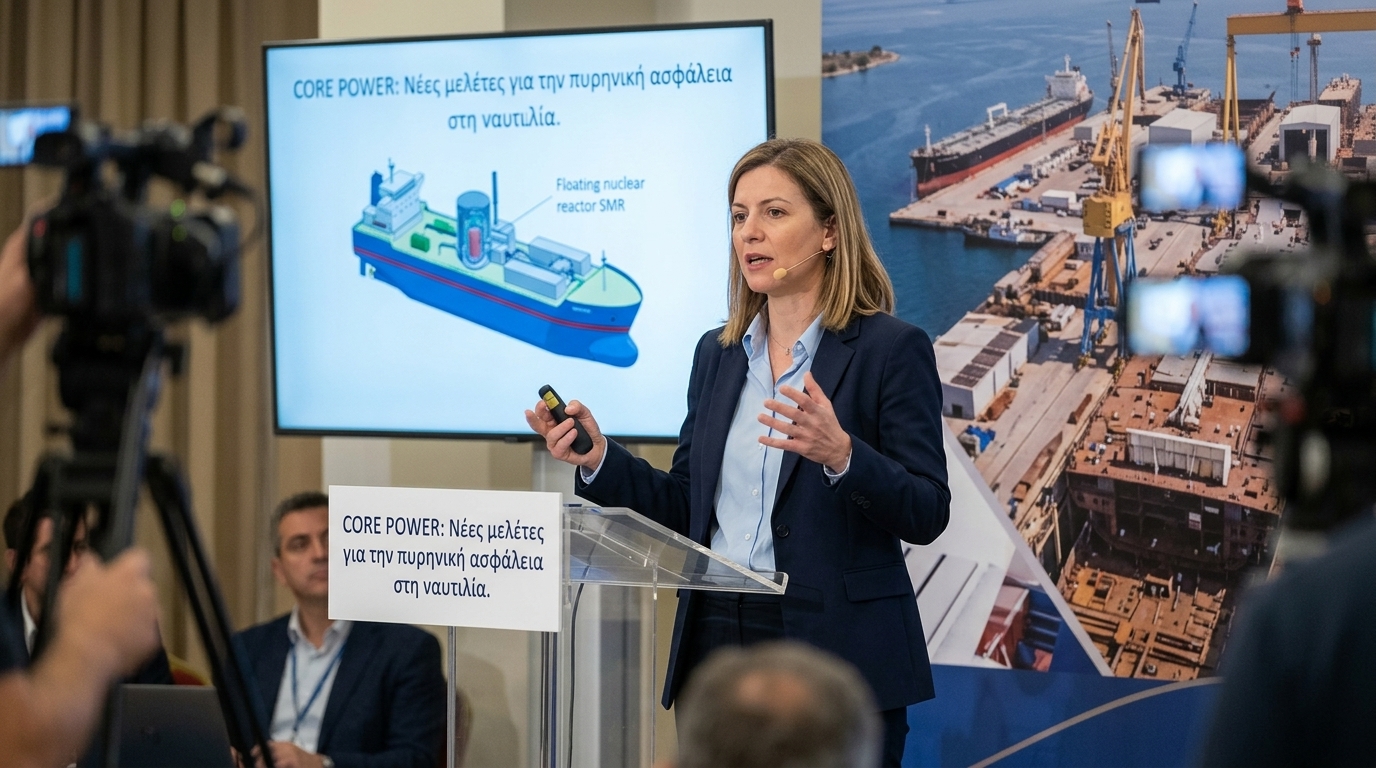
Global shipping is at a critical juncture. With the International Maritime Organization (IMO) setting increasingly stringent targets for emission reductions, the quest for the "holy grail" of fuels continues. While ammonia, methanol, and hydrogen dominate current discourse, a mature yet radically modernized technology is returning to the spotlight: nuclear energy. CORE POWER’s recent participation in the PHYSOR 2026 international conference in Turin was not merely a routine presentation; it was a strategic move to redefine nuclear safety for the maritime environment.
The Physics of Safety: From Land to Sea
The research presented by CORE POWER at PHYSOR 2026 focuses on a fundamental distinction: reactors destined for ships cannot simply be miniaturized versions of land-based power plants. The dynamic nature of the sea—characterized by rolling, pitching, and the risk of collisions—demands a different approach to reactor physics. The company’s studies center on Molten Salt Reactors (MSRs), which offer inherent safety advantages tailored for maritime use.
Unlike traditional Pressurized Water Reactors (PWRs), MSRs operate at near-atmospheric pressure. This means the risk of an explosive depressurization in the event of an accident is effectively eliminated. Furthermore, the fuel is in liquid form, mixed with the coolant. In the event of a leak or loss of power, the mixture naturally solidifies, trapping radioactive materials within a crystalline salt matrix and preventing environmental dispersal. This "passive safety" is the linchpin for gaining regulatory approval and public trust.
The Economic Puzzle and Energy Density
Why does shipping need nuclear power now? The answer lies in energy density. Alternative "green" fuels require vast storage spaces, significantly reducing a vessel's cargo capacity. A large Ultra Large Container Vessel (ULCV) powered by nuclear energy could operate for 25-30 years without refueling, maintaining high speeds that are currently economically unviable due to the soaring cost of conventional fuels.
- Zero CO2, NOx, and SOx emissions throughout the vessel's lifecycle.
- Increased operational availability by eliminating bunkering stops.
- Cost stability, decoupled from the volatility of oil or gas markets.
CORE POWER argues that nuclear energy is not just an environmental choice but a necessity for the survival of the global supply chain. With the introduction of carbon trading schemes like the EU ETS, the cost of fossil fuels will become prohibitive, making the high initial investment (CAPEX) of a nuclear-powered ship highly attractive over time due to its exceptionally low operating expenses (OPEX).
Geopolitical and Regulatory Hurdles
Despite technological progress, the path to commercialization is fraught with obstacles. The greatest challenge is not physics, but bureaucracy and politics. Entering a nuclear-powered commercial vessel into ports like Piraeus, Rotterdam, or Singapore requires a global legal framework that does not yet exist. CORE POWER is working closely with international bodies to establish standards for safe passage and berthing.
"Nuclear power in shipping is not the future; it is the present we are trying to unlock," industry experts suggest.
The geopolitical dimension is also critical. Nations that first adopt this technology will gain a massive strategic advantage in the global trade arena. China and Russia are already investing in floating nuclear units, and the West must respond through initiatives like CORE POWER to ensure that safety standards remain at the highest possible level.
Conclusion: A New Era for the Oceans
The presentation at PHYSOR 2026 marks the beginning of a period of rigorous scientific validation. Nuclear energy at sea is no longer the exclusive domain of submarines and aircraft carriers. It concerns the very heart of the global economy. If CORE POWER’s safety studies are validated in practice, the shipping industry of the 2030s and 2040s will be unrecognizable: cleaner, faster, and more autonomous than ever. The challenge remains bridging the gap between scientific certainty and public perception.