For more than two decades, the tech world's mantra was clear: "software is eating the world." However, as we navigate through 2026, Artificial Intelligence has upended this hierarchy, thrusting hardware back to the center of the global stage. The next level of AI doesn't just require clever code; it demands massive amounts of raw computing power, specialized semiconductors, and energy-efficient infrastructure. This transition has ignited a "clash of titans" among global giants, the repercussions of which are reaching the Greek business reality, causing intense anxiety and insecurity.
The Return of Silicon: From Cloud to Edge
The era when hardware was considered a mere commodity with low profit margins is long gone. The rise of Large Language Models (LLMs) and generative AI has made Graphics Processing Units (GPUs) the most valuable currency in the digital economy. Nvidia, dominating over 80% of the AI chip market, sees its valuation reach unprecedented heights, while competitors like AMD and Intel struggle desperately to bridge the gap.
But the battle isn't limited to chipmakers. The so-called Hyperscalers—Microsoft, Google, Amazon, and Meta—have entered a race to design their own in-house processors (ASICs). Their goal is to reduce dependence on Nvidia and optimize performance for their specific AI needs. This vertical integration is changing the rules of the game, creating a closed ecosystem where access to hardware is the ultimate competitive advantage.
The Greek Dilemma: Cost and Resilience
In Greece, tech companies and IT service providers are watching developments with bated breath. The explosive increase in equipment prices—exceeding 40% in some cases within a single year—threatens the viability of investment plans. Greek enterprises, traditionally reliant on imported hardware, face a double blow: lack of availability and increased borrowing costs to purchase this equipment.
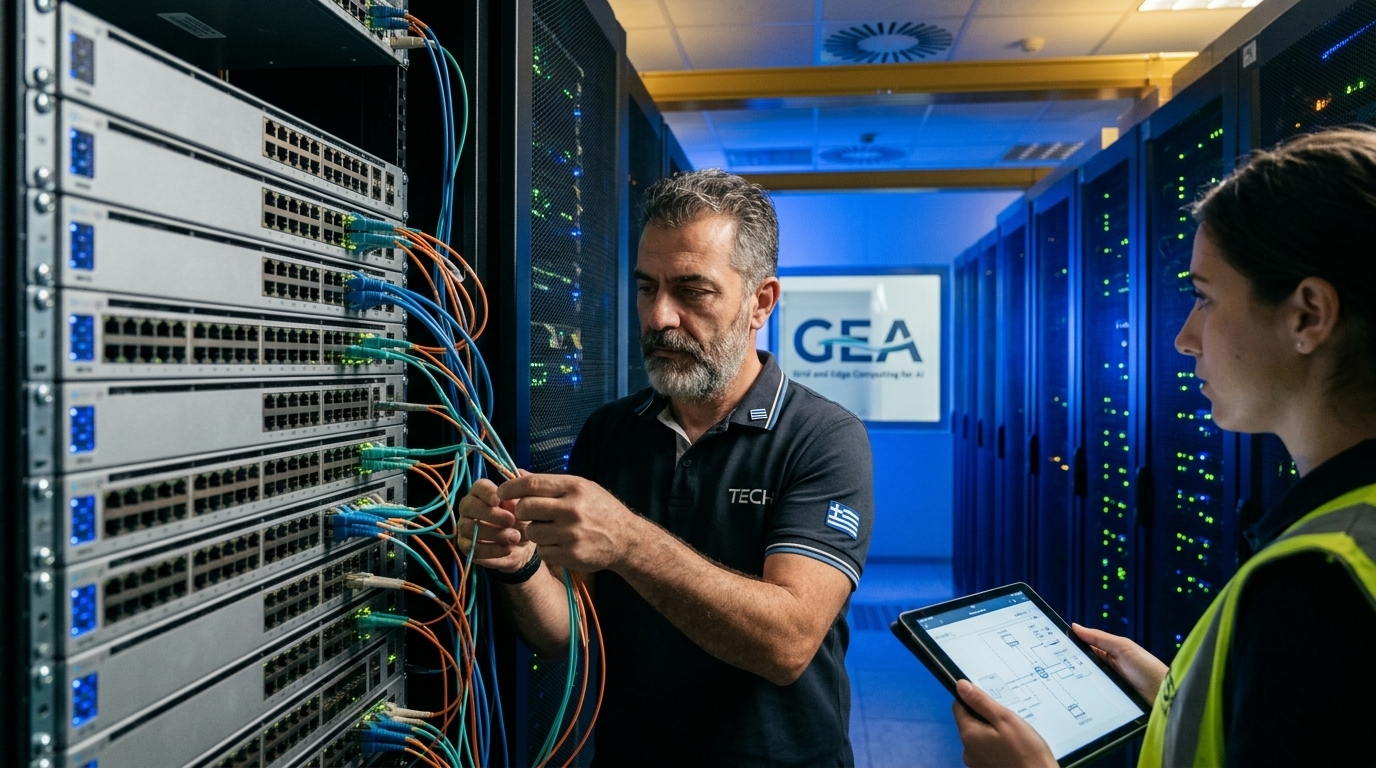
According to market analysts, the risk of a new "digital divide" is real. While large multinationals have the resources to secure priority in hardware orders, Greek Small and Medium Enterprises (SMEs) and startups may be left behind. The "next stage" of AI requires investments in local data centers and specialized servers capable of running AI models locally (edge computing) to ensure data security and low latency. Without state support or European funds specifically targeting infrastructure, Greek innovation risks being trapped in the role of a mere reseller of foreign cloud services.
Energy and Infrastructure: The Invisible Constraint
Beyond the cost of the chips themselves, the new era of hardware brings the issue of energy to the forefront. Power consumption by data centers supporting AI has skyrocketed. For Greece, a country striving to become an energy hub, this presents a unique opportunity but also a massive challenge. Developing green data centers powered by renewable energy sources is the only sustainable solution.
However, power grid infrastructure requires immediate upgrades to handle the load. Greek tech companies are now called to invest not just in servers, but in advanced cooling and energy management systems. The "clash of titans" is therefore not just about chips, but about the entire support ecosystem that allows AI to function. Greece's ability to attract investments in such infrastructure will determine its position in the new global division of AI labor.
Conclusions: The Strategy for Survival
The return of hardware to the spotlight serves as a reminder that the digital economy is not intangible. It has weight, consumes energy, and depends on complex supply chains. For Greek businesses, the survival strategy requires flexibility and partnerships. Forming consortia for joint equipment procurement or pivoting to hybrid cloud-edge models may provide a way out.
What is certain is that the "next level" of AI will not forgive delays. As industry executives point out, hardware is now the "railway" of the 21st century. Those who do not own the tracks will never be able to run the train of innovation. Greece must view hardware not as an expense, but as a strategic investment in its national sovereignty and economic resilience.