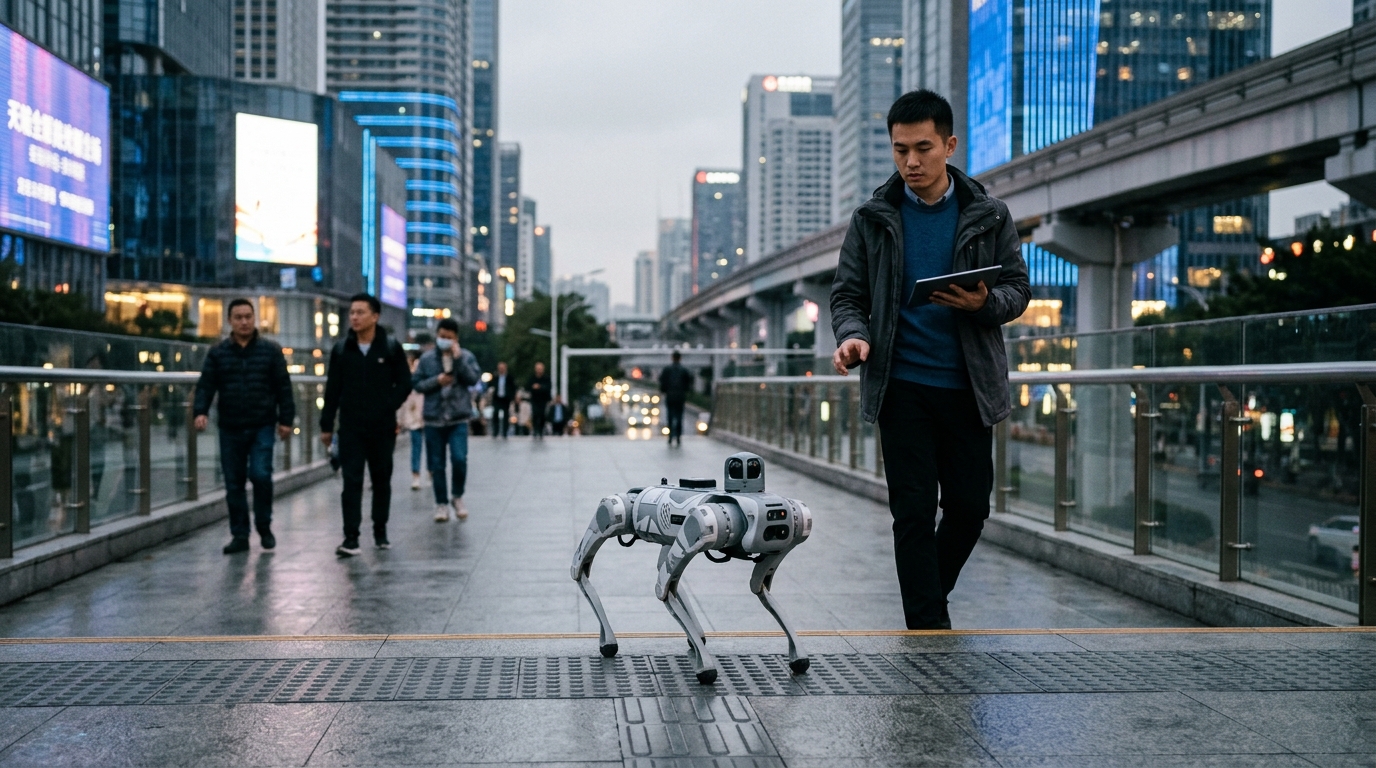
The era when Artificial Intelligence (AI) was confined to a chat window or an image generator is officially over. As we move through the second quarter of 2026, the technology industry is experiencing what analysts call "The Great Leap Outward": the transition from Large Language Models (LLMs) to Large Behavior Models (LBMs). According to a recent analysis by CNBC via 'The China Connection' newsletter, China is not merely seeking to follow this trend but to define it, converting digital intelligence into physical action at a pace that leaves the West reeling.
The Rise of Embodied AI
The concept of "Embodied AI" refers to the integration of advanced algorithms into physical entities—ranging from humanoid robots to autonomous vehicles and smart industrial units. While 2024 and 2025 were spent refining natural language processing, 2026 is the year of movement. China, leveraging its unparalleled manufacturing base, has managed to bridge the gap between software and hardware in a way that the US is struggling to replicate.
Companies like Unitree and Xiaomi have already introduced humanoid robots that cost less than an average family car, making robotics accessible not just to heavy industry but also to small and medium-sized enterprises. Beijing's strategy is clear: dominance in the supply chain of components (sensors, actuators, batteries) is just as vital as dominance in the algorithms themselves.
The Chinese Manufacturing Advantage
Why is China moving faster? The answer lies in the ecosystem of Shenzhen and Shanghai. There, the cycle from prototype to production takes weeks, not months. The CNBC newsletter highlights that the Chinese government has funneled billions into subsidies for "smart manufacturing," aiming to address the country's demographic crisis. With a rapidly aging population, the need for robotic arms that can think and adapt is a matter of national survival.
- Production Scaling: The ability to produce thousands of humanoid units monthly drastically reduces costs through economies of scale.
- Data Integration: Chinese models are trained on massive real-world datasets, thanks to the widespread adoption of autonomous systems in ports and warehouses.
- Government Strategy: The "Made in China 2025" program has evolved into a broader 2030 ambition, where AI forms the backbone of physical infrastructure.
Geopolitical Implications and the Western Response
Washington is watching with growing concern. China's progress in embodied AI is not just an economic threat but a military one. Robots capable of navigating rugged terrain or performing delicate surgical procedures have obvious battlefield applications. The US response, led by companies like Tesla (with its Optimus program) and Figure AI, focuses on the superiority of American software and Nvidia’s chips. However, the question remains: can Silicon Valley win a battle that is decided on the factory floor?
"The battle for AI is no longer fought in the data centers of Virginia, but on the assembly lines of Guangdong," a senior tech executive noted in the report.
Ethical and Social Dilemmas
As AI gains a physical presence, ethical risks multiply. A glitch in a chatbot might lead to misinformation; a glitch in a 150kg humanoid robot could be fatal. Furthermore, the mass replacement of unskilled labor by robots in China could trigger social unrest, despite efforts to retrain the workforce. Europe, meanwhile, attempts to set boundaries through the AI Act but risks falling behind in the innovation race, caught between two superpowers that prioritize speed over precaution.
Conclusion: The World as a Training Ground
2026 marks the end of AI as a "tool" and the beginning of AI as a "partner" in physical space. China has taken the lead in embodied intelligence, turning its territory into a giant laboratory. For the rest of the world, the challenge is not just to compete technologically but to understand how to coexist with machines that no longer just think, but act, feel, and move among us.