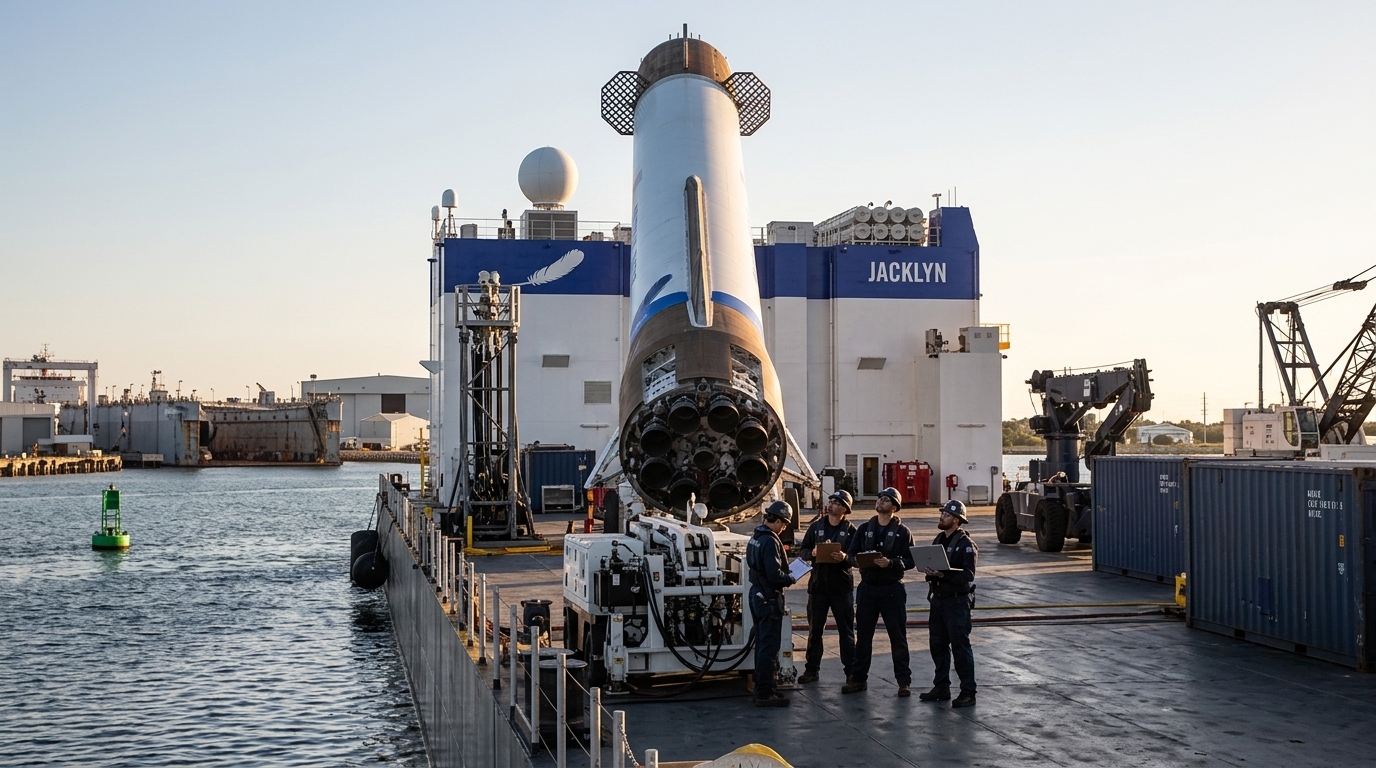
The history of space exploration is punctuated by moments where triumph and disappointment coexist in a single breath. The maiden launch of Blue Origin’s New Glenn rocket, a colossal vehicle designed to reshape the global space market, has become the latest example of this fine line. While the rocket successfully lifted off and executed the initial phases of its flight, the final deployment of the satellite resulted in what the company termed an “off-nominal orbit.”
The Strategic Weight of New Glenn
For over a decade, Blue Origin has operated under the motto “Gradatim Ferociter” — Step by Step, Ferociously. New Glenn, named after John Glenn, the first American to orbit the Earth, is not merely a rocket. It is Jeff Bezos’ definitive answer to SpaceX’s Falcon Heavy and Starship. Standing nearly 98 meters tall with a massive payload capacity to Low Earth Orbit (LEO), New Glenn is the cornerstone of the company’s strategy to support NASA’s Artemis program and deploy its own satellite constellation, Project Kuiper.
This launch was anticipated with bated breath by the global aerospace community. After years of delays and technical hurdles involving the BE-4 engines, seeing New Glenn on the pad at Cape Canaveral was viewed by many as the moment Blue Origin would transition from a perennial underdog to a peer competitor in the orbital economy.
Anatomy of an “Off-Nominal” Setback
In aerospace parlance, “off-nominal” is a polite way of saying things did not go according to plan. According to Blue Origin’s official statement, while the satellite successfully separated from the rocket’s second stage, the orbit it entered was incorrect. This implies that the satellite may not be able to fulfill its intended mission, as using its own onboard thrusters to correct the trajectory could significantly shorten its operational lifespan or render it entirely useless.
- BE-4 Engine Performance: Despite the orbital issue, the first-stage engines appeared to perform within specifications, marking a partial victory for the reliability of the core technology.
- Second Stage Scrutiny: Analysts are focusing on the rocket’s second stage, which is responsible for precise payload delivery. An early shutdown or a guidance system glitch could be the culprit.
- The Reusability Factor: Blue Origin aims for full reusability of the first stage, a strategy essential for cost competition with SpaceX’s Falcon 9.
This failure comes at a critical juncture. Amazon, Bezos’ other empire, is committed to launching thousands of satellites for Project Kuiper, and New Glenn is the primary vehicle designated for this gargantuan task. Any delay or doubt regarding the rocket’s reliability translates into billions of dollars in potential losses and looming regulatory deadlines.
The Competitive Landscape and the Future
Elon Musk and SpaceX have set an extraordinarily high bar. With nearly weekly launches and a proven ability to iterate rapidly through failures, SpaceX dominates the commercial market. Blue Origin, despite the vast financial resources of its founder, is struggling to prove it can offer the same level of operational consistency. The New Glenn anomaly will be analyzed for months, and NASA will be watching closely, as it relies on Blue Origin for the Blue Moon lander—the vehicle intended to carry astronauts to the lunar surface.
“Space is hard, but the market is harder. Blue Origin no longer has the luxury of a slow learning curve,” says a senior industry analyst.
In conclusion, New Glenn’s first flight is a stark reminder that precision engineering in space leaves zero room for error. While the liftoff was a technical milestone, the failure to deliver the payload accurately shows that the climb to the top is still steep. For Jeff Bezos, the stakes are not just technological but existential for his vision of building “a road to space” for future generations.