The announcement of the Mythos model by Anthropic is not just another entry in the AI arms race. For the manufacturing and heavy industry sectors, it represents a fundamental paradigm shift. As we move through the first half of 2026, the convergence of Large Language Models (LLMs) with physical production systems is reaching a critical tipping point. Mythos, designed with a focus on reliability and interpretability, promises to bridge the gap between digital intelligence and physical execution.
Beyond Chatbots: Industrial Reasoning in the Factory Floor
Until recently, the use of AI in industry was limited to isolated applications: predictive maintenance, supply chain data analysis, or simple customer service interfaces. Mythos changes the game by offering what analysts call "Industrial Reasoning." Unlike its predecessors, Mythos has been trained on massive datasets including engineering blueprints, OSHA safety protocols, and fluid dynamics, allowing it to understand the "why" behind a mechanical failure, not just the "when."
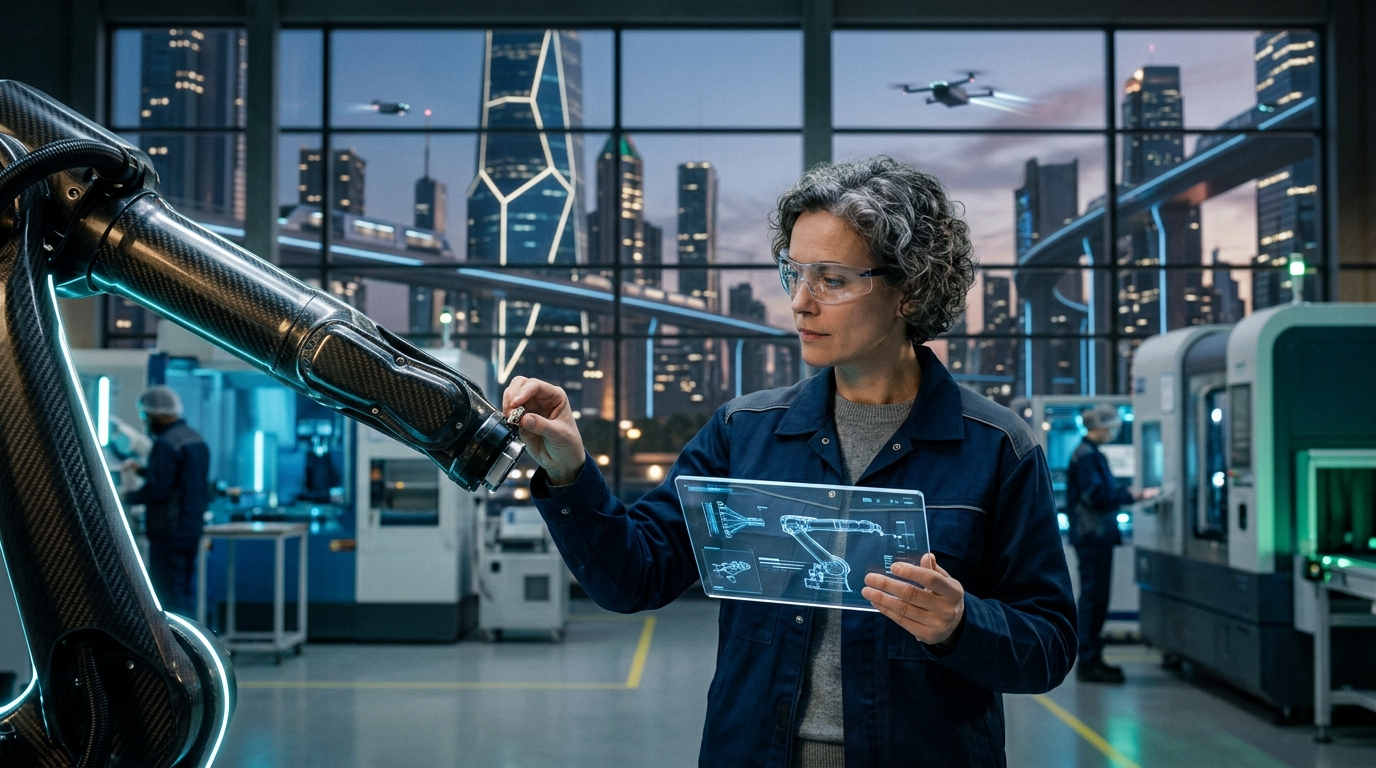
In a factory environment, this translates into systems that can self-correct in real-time. Imagine an assembly line where the AI doesn't just detect a faulty part but automatically reconfigures the parameters of robotic arms to compensate for a slight deviation in ambient temperature or raw material quality. This capacity for "sentient" perception of the industrial space is what makes Mythos an indispensable tool for Industry 5.0.
Safety as the Foundation of Industrial Trust
One of the biggest hurdles to AI adoption in heavy industry has always been the fear of the "black box"—the inability to predict how a model will react in extreme conditions. Anthropic, true to its philosophy of "Constitutional AI," has embedded within Mythos a rigorous framework of rules aligned with international industrial safety standards. This means the model is programmed to reject commands that could compromise equipment integrity or worker safety, even if those commands seem logical from a productivity standpoint.
- Interpretability: Mythos can explain the reasoning behind every decision, allowing engineers to vet its suggestions before implementation.
- Adaptability: The model learns from the specifics of each particular facility, creating a "Digital Twin" that evolves alongside the physical factory.
- Resilience: Designed to operate in edge computing environments, Mythos does not rely solely on cloud connectivity, ensuring production continuity.
This approach reassures plant managers who have traditionally been hesitant to hand over control to algorithms. The ability of Mythos to provide guarantees for its actions puts it at an advantage over more "unconstrained" models that may exhibit hallucinations or unpredictable behaviors.
The Human Factor and the Skills Transition
The introduction of Mythos does not mean the elimination of the human workforce, but its upgrade. Production line workers are being transformed into "AI system supervisors." Mythos acts as an omniscient assistant that can guide a less experienced technician through a complex repair via augmented reality (AR), providing step-by-step instructions and warning of potential hazards.
"Mythos doesn't replace the engineer; it gives them the eyes of a sensor and the memory of an entire library of manuals," says an executive from a major automaker involved in the trials.
However, the challenge remains in training. Industries must invest heavily in reskilling. Understanding how to interact with models like Mythos will be the core skill for the next decade. Countries with a growing industrial base have a unique opportunity: to adopt these technologies to close the productivity gap, focusing on sectors like shipbuilding and food processing, where precision and safety are paramount.