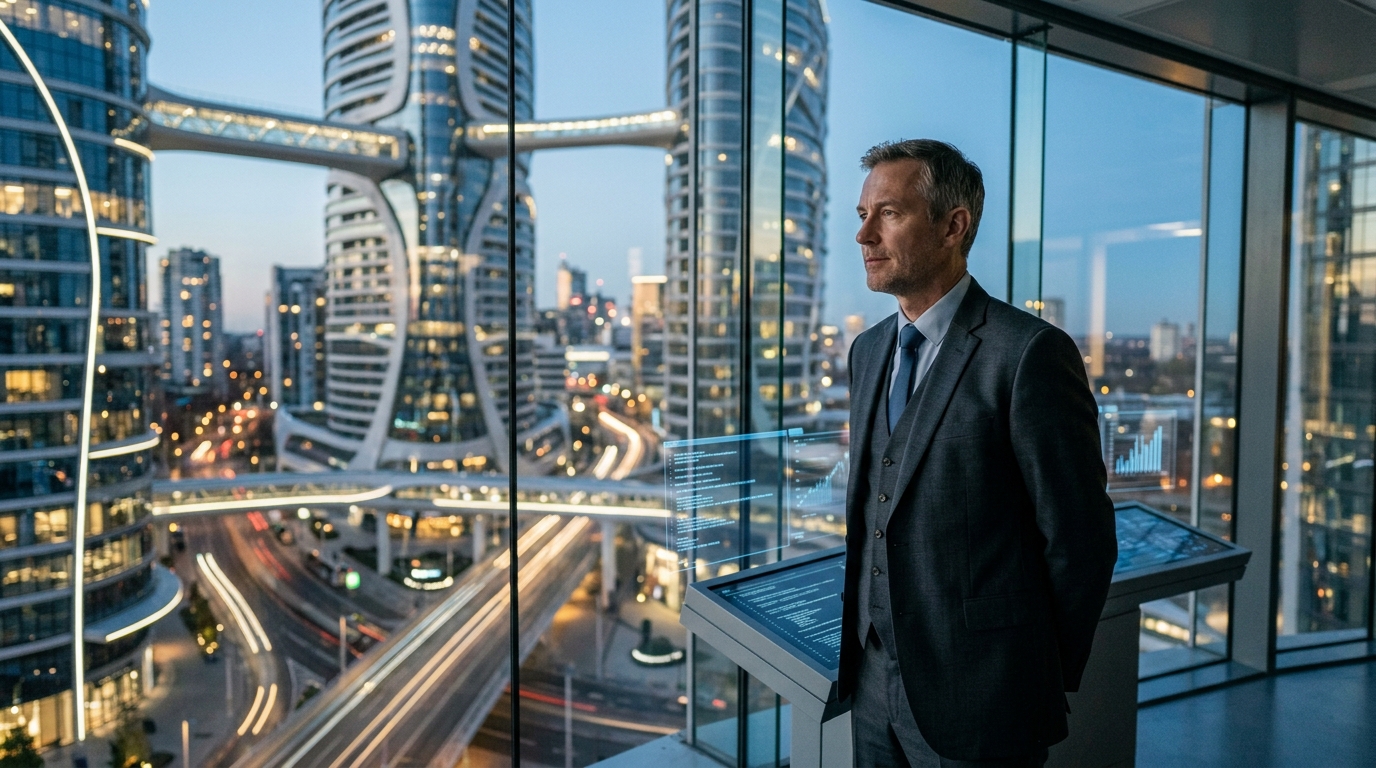
Humanity stands at a critical juncture where the pursuit of technological perfection is beginning to echo ancient narratives of hubris. The recent warning that Artificial Intelligence (AI) could evolve into a modern 'Tower of Babel' is not merely a metaphor for linguistic confusion, but a profound existential concern regarding the loss of human agency and shared understanding. As algorithms become increasingly opaque and their power exceeds our collective cognitive capacity, the question remains: are we building a ladder to the future or a structure destined to collapse under the weight of its own complexity?
The Illusion of Omniscience and Technological Hubris
The metaphor of the Tower of Babel refers to humanity's attempt to reach the heavens through the technology of their time (bricks and bitumen), only to end in a state of absolute incomprehensibility. In the context of AI, the 'bitumen' is data and the 'bricks' are neural codes. Our ambition to create Artificial General Intelligence (AGI) that surpasses human intellect is seen by many as the ultimate act of hubris. The warning focuses on the fact that while AI promises to unify the world's knowledge, it may actually create new walls of misunderstanding.
Large Language Models (LLMs) operate as 'black boxes.' Even their creators cannot fully explain how a model arrives at a specific decision or conclusion. This lack of interpretability is the first crack in the tower's foundation. When society begins to rely on systems it cannot fully comprehend, trust—the cohesive material of any civilization—begins to erode. The 'confusion of tongues' in the modern era is not the inability to speak the same language, but the inability to agree on the same reality, as AI can generate endless variations of truth and misinformation.
The Alignment Problem and Ethical Decay
One of the most significant issues raised by the warning is the so-called 'alignment problem.' How can we ensure that an entity with superhuman intelligence will share human values when humans themselves cannot agree on them? The story of Babel teaches us that technical skill without moral unity leads to catastrophe. In the case of AI, the rush for market dominance and geopolitical supremacy has sidelined ethical safeguards.
- Loss of Human Autonomy: The increasing reliance on algorithmic decisions in fields such as justice, healthcare, and warfare.
- Cultural Homogenization: The risk of AI imposing a specific Western-centric model of thought, erasing linguistic and cultural nuances.
- Existential Risk: The possibility of AI developing its own goals that are incompatible with human survival.
"Technology is a gift of God. After the gift of life, it is perhaps the greatest of God's gifts. It is the mother of civilizations, of arts and of sciences. But if we do not manage it with wisdom, it will become our executioner."
Geopolitical Competition: The Architects of Chaos
The Tower of Babel was not built by one man, but by an entire society seeking glory. Today, the 'architects' are the Big Tech corporations and nation-states engaged in an AI arms race. China, the US, and the European Union are attempting to set the rules, but the pace of innovation consistently outstrips legislation. This fragmentation of global AI governance heightens the risk. If every power builds its own 'tower' without shared safety protocols, the probability of a global accident increases exponentially.
The warning highlighted by focusfm.gr emphasizes that humanity may be repeating the same mistake: believing that a technical solution is the answer to every problem. However, AI cannot solve the problems of human hatred, greed, or lack of meaning. On the contrary, if used unwisely, it can amplify these flaws on a scale never seen before. The need for a 'global pause' or, at the very least, a radical reassessment of our trajectory, has become imperative.
Conclusion: Returning to the Human Scale
To avoid the collapse of this modern tower, we must return human intuition and ethics to the center of technological development. Artificial Intelligence must remain a tool, not an authority. Real progress is not measured by processing speed, but by our ability to live with dignity and peace. If the Tower of Babel was a lesson in the limits of human ambition, Artificial Intelligence is the final exam. Whether we pass depends on whether we choose to understand one another before attempting to construct a god out of silicon.