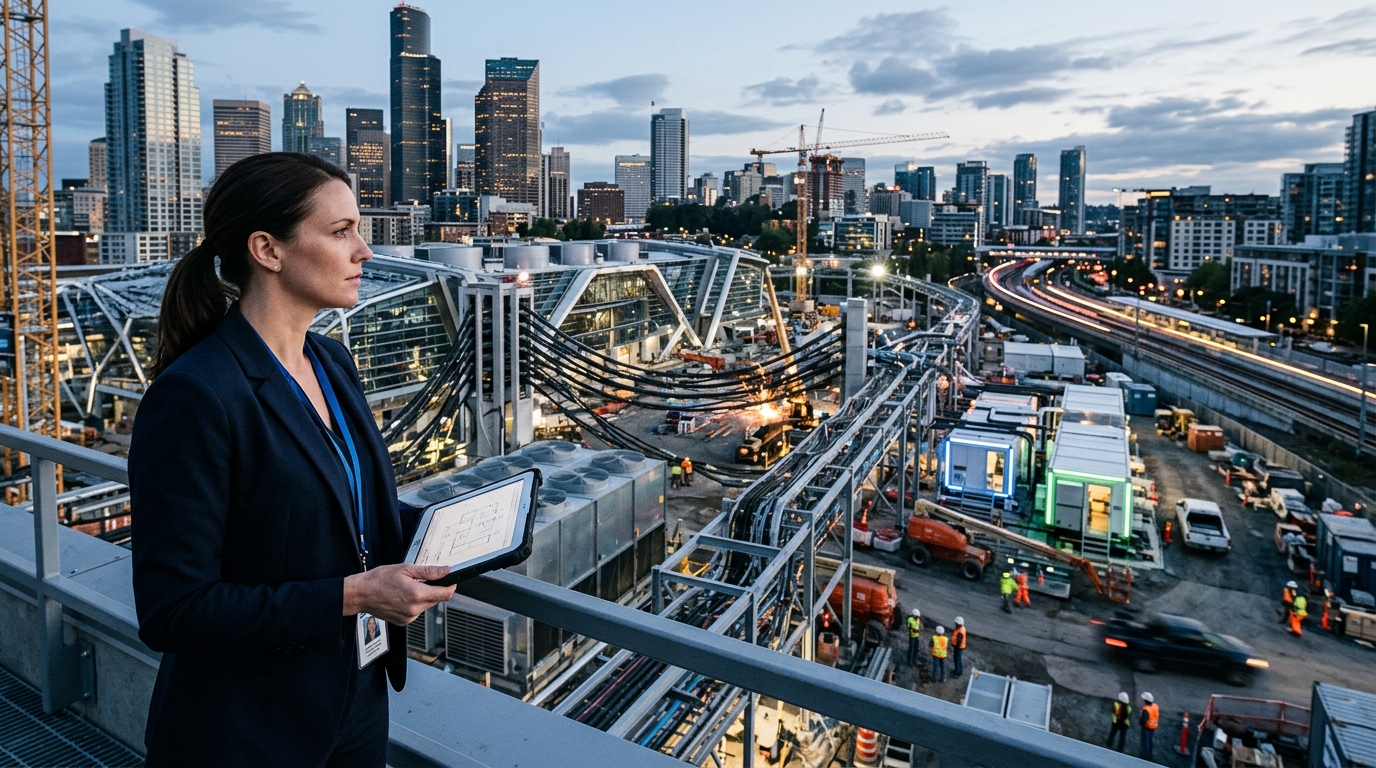
In the annals of human history, few technological leaps have reshaped the physical map of the planet as profoundly as the 19th-century railroad expansion. Today, as we navigate the first half of 2026, CBRE, the global commercial real estate titan, argues that we are on the precipice of a transformation of similar magnitude. The build-out of Artificial Intelligence (AI) infrastructure is not merely a digital upgrade; it is a physical, energetic, and economic revolution that rivals the Steam Age in scale and impact.
The Physicality of Digital Intelligence
Despite the prevailing notion that AI resides in the ephemeral "cloud," its reality is deeply grounded. The demand for massive data centers, fiber-optic networks, and, crucially, power generation facilities is creating a thirst for land that has no modern precedent. CBRE points out that the current expansion of data centers mirrors the way railway lines once stitched continents together, creating new economic poles where only empty space previously existed.
According to the analysis, investment in AI infrastructure is expected to outpace all forecasts over the next five years. It is no longer just about installing servers; it is about the wholesale redesign of urban and industrial zones. Cities that can offer the necessary electrical load and cooling capacity will become the "hubs" of the new era, much like Chicago or London became centers of global trade due to their rail connectivity.
Energy: The New Steel of the Economy
If steel was the fundamental material of the railroads, electricity is the building block of AI. The CBRE report highlights a critical challenge: the energy hunger of Generative AI models. Power demand from data centers is projected to double in many regions, forcing governments and utilities to seek solutions far beyond traditional grids.
- The development of private microgrids to ensure 24/7 operational continuity.
- A strategic pivot toward Small Modular Reactors (SMRs) and large-scale renewable projects.
- The repurposing of legacy industrial sites to host massive computational power.
This need for power is also shifting the geography of investment. We are seeing massive projects sprout in regions traditionally considered "tech deserts," provided they offer access to stable and affordable power. This decentralization is a direct parallel to the Westward Expansion in the US or the development of the Eurasian interior through rail arteries.
Impact on Real Estate and Employment
For the real estate market, the rise of AI represents the most significant pivot of the decade. With traditional office markets facing headwinds from remote work, investors are flocking to industrial assets and data centers. CBRE notes that valuations for these assets are skyrocketing, as the availability of suitable land with high-voltage grid access becomes the new "gold rush."
"We are not just building warehouses for computers; we are building the nervous system of the future global economy," a CBRE executive notes in the report.
Furthermore, construction activity around these projects is generating thousands of jobs in specialized fields, from electrical engineering to advanced cooling mechanics. However, there is a risk of regional exclusion for areas that cannot keep pace with this development, potentially creating a new "digital and physical divide" between hub regions and the periphery.
Conclusion: A Permanent Legacy
The comparison to railroads is no hyperbole. Just as the tracks changed how we perceive distance and time, AI infrastructure is changing how we produce and consume intelligence. The challenge for 2026 and beyond will be ensuring that this massive build-out is conducted with sustainability and social equity in mind, avoiding the excesses and environmental degradation that often accompanied the industrial revolutions of the past.