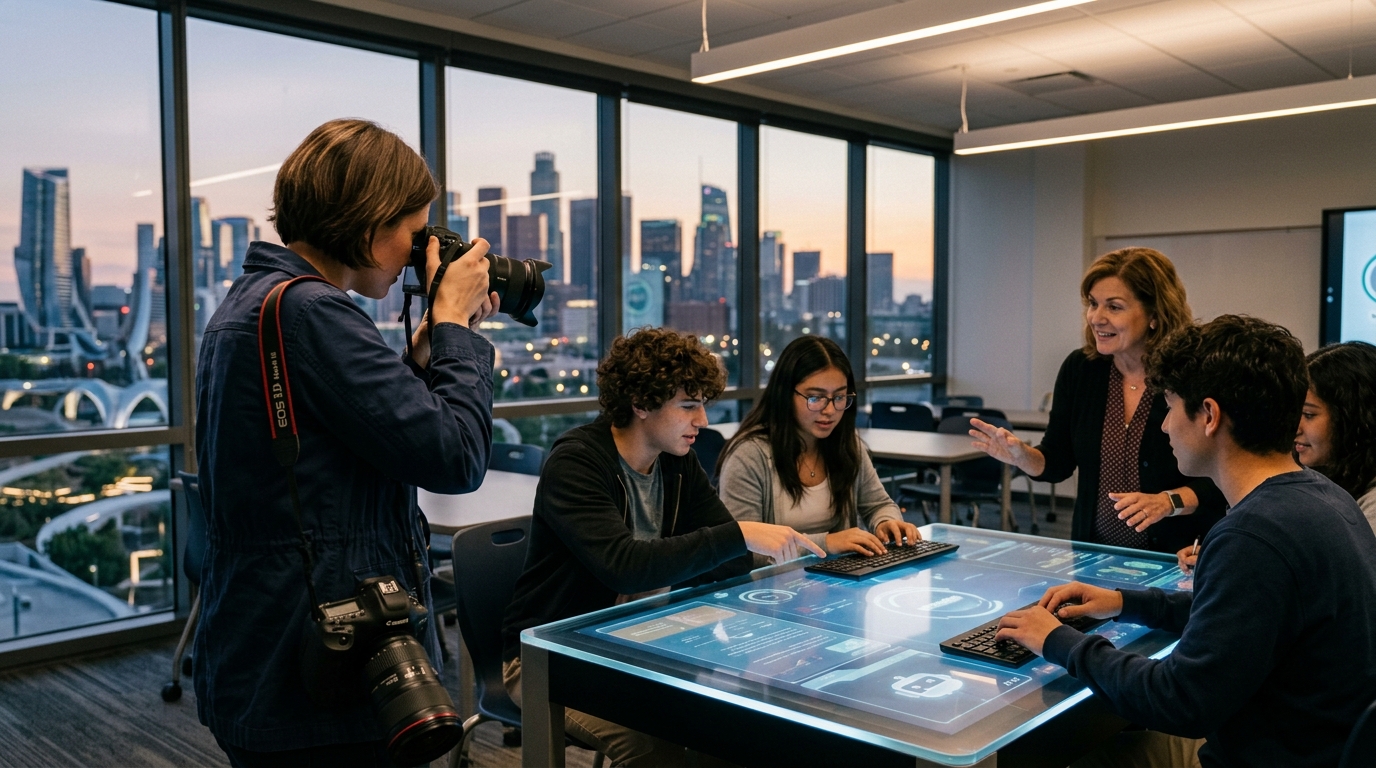
The global educational landscape is at a critical juncture, and the recent deliberations within the Orange County Public Schools (OCPS) in Florida serve as a vital case study for the future of learning. As generative AI tools like ChatGPT become ubiquitous, school districts are moving beyond the initial phase of reactionary bans toward a more nuanced strategy of integration. The conversation in Orange County highlights a fundamental shift: AI literacy is no longer an elective skill but a foundational requirement for the modern student.
From Prohibition to Integration: A Necessary Evolution
When generative AI first burst onto the scene, the immediate reaction from many school boards was one of defensive prohibition. Concerns over plagiarism and the erosion of academic integrity led to widespread bans on district networks. However, as OCPS officials have noted in recent discussions, these bans were largely ineffective and potentially harmful. Students will inevitably encounter AI in their future careers; depriving them of formal guidance on its use creates a disadvantage in an increasingly competitive global economy.
The current focus is on shifting the pedagogical approach. Instead of viewing AI as a tool for cheating, educators are being encouraged to treat it as a 'co-pilot.' This involves teaching students how to craft effective prompts, how to verify AI-generated information against primary sources, and how to recognize the inherent biases within algorithmic outputs. The goal is to move from rote memorization to high-level synthesis and critical evaluation.
The Teacher as a Technological Orchestrator
A central theme in the Orange County discourse is the transformation of the educator’s role. Far from being replaced by machines, teachers are finding that AI can serve as a powerful administrative assistant. By automating routine tasks such as lesson planning, drafting rubrics, and performing initial assessments, AI allows teachers to reclaim their most valuable resource: time. This time can then be reinvested into direct student mentorship and addressing the complex socio-emotional needs of the classroom.
- Personalized Learning Pathways: AI can analyze student performance data in real-time to provide tailored exercises that meet each learner at their current level.
- Administrative Efficiency: Reducing the 'paperwork' burden allows educators to focus on creative and interactive teaching methods.
- Future-Proofing Skills: Integrating AI into the curriculum ensures that students graduate with the digital fluency required by modern industries.
Ethical Hurdles and the Equity Gap
Despite the potential benefits, the integration of AI is fraught with ethical complexities. Orange County board members have raised significant concerns regarding data privacy and the protection of student information under statutes like COPPA and FERPA. There is a valid fear that student data could be harvested by private corporations to refine their commercial models without adequate consent or transparency.
"Artificial Intelligence is not just another tool in the shed; it is a paradigm shift that requires us to rethink what it means to be 'educated' in the 21st century," one official noted during the strategic planning session.
Furthermore, the 'digital divide' remains a pressing issue. If access to premium AI tools is restricted to those who can afford private subscriptions, the gap between privileged and marginalized students will only widen. To combat this, OCPS is exploring the implementation of district-wide, secure AI platforms that provide equal access to all students, ensuring that technological advancement does not come at the cost of social equity.
Conclusion: Navigating the New Frontier
The steps being taken in Orange County represent a proactive attempt to master a technology that is already reshaping society. The success of this transition will depend on continuous professional development for teachers and a commitment to maintaining human-centric values in the classroom. AI should not be seen as a replacement for the intellectual struggle inherent in learning, but as a catalyst that can amplify human potential. As we move forward, the challenge will be to foster a generation of students who are not just passive users of technology, but critical, ethical, and creative masters of it.