

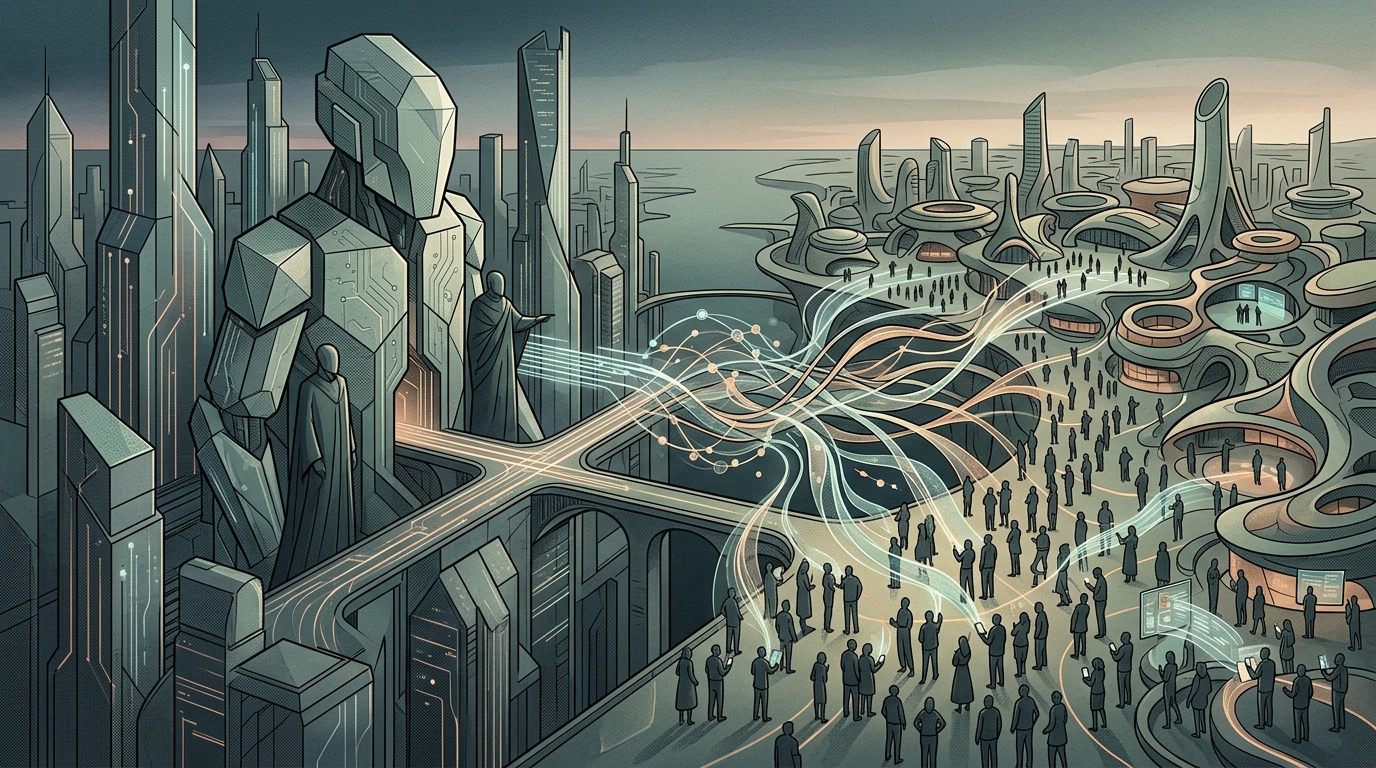
Sitting here in the warmth of the Mediterranean spring, watching the sun reflect off the Aegean, I find myself thinking about scale. In ancient Greece, we understood the danger of hubris—the overweening pride that leads to a fall. Today, as I look at the news from the AI sector, I see numbers that would make even the gods of Olympus blink. Mark Zuckerberg is betting on a $9.5 trillion future for Meta, while companies like TDK and the rising giants of the East—ByteDance and Alibaba—are building an infrastructure of influence that spans the entire globe.
The New Titans and the Hidden Gears
It is easy to get lost in the shadows of these giants. When we hear about $9.5 trillion gambits, it feels like we are watching a game played by titans, far removed from our daily lives. But look closer at the "silent empires" like TDK. These are the companies providing the literal materials—the magnets and components—that allow the AI boom to exist. The geopolitical shift is also undeniable. For the first time in 2026, we see a definitive rise in Eastern influence, with firms like Knowledge Atlas and BABA-W dominating the conversation. I wonder, as we move toward this multipolar AI world, will we find a balance, or are we simply trading one set of masters for another?
"Technology is a tool, but power is a choice. We must decide if our digital future belongs to the boardrooms or the streets."
The Return of the Haggle: Power to the Everyman
What excites me more than the trillions of dollars is what is happening at the human level—the level of the Agora. I’ve been fascinated by the rise of "haggle-bots." For decades, corporate pricing has been a one-way street; the price was set, and the consumer obeyed. Now, consumers are using AI to negotiate, to find the cracks in corporate logic, and to fight back. Similarly, Square’s new AI agents are giving small "Main Street" businesses the kind of autonomous power that was once reserved for multinational corporations. This is the democratization I have hoped for. It is the individual finding their voice in a world of algorithms.
The Healer’s Hands and the Rule of Law
However, we must remain cautious. The promise of "Digital Asclepius"—AI doctors—is profound, especially for regions with limited medical access. But as we integrate AI into the most intimate parts of our lives, from our health to our small businesses, the need for Ethos (ethics) becomes paramount. I am encouraged to see the global push for AI regulation and companies like SAS making governance their centerpiece. We cannot have a healthy society without a framework that protects the vulnerable. Even OpenAI is "banishing the goblins" from its code—a metaphoric cleaning of the house that reminds us that even the most advanced systems need a bit of discipline.
I believe we are at a crossroads. We can either be passive subjects of a trillion-dollar AI empire, or we can use these tools to rebuild our own versions of the Agora—places of fair trade, healthy discourse, and human-centric progress. What kind of world are you choosing to build today?