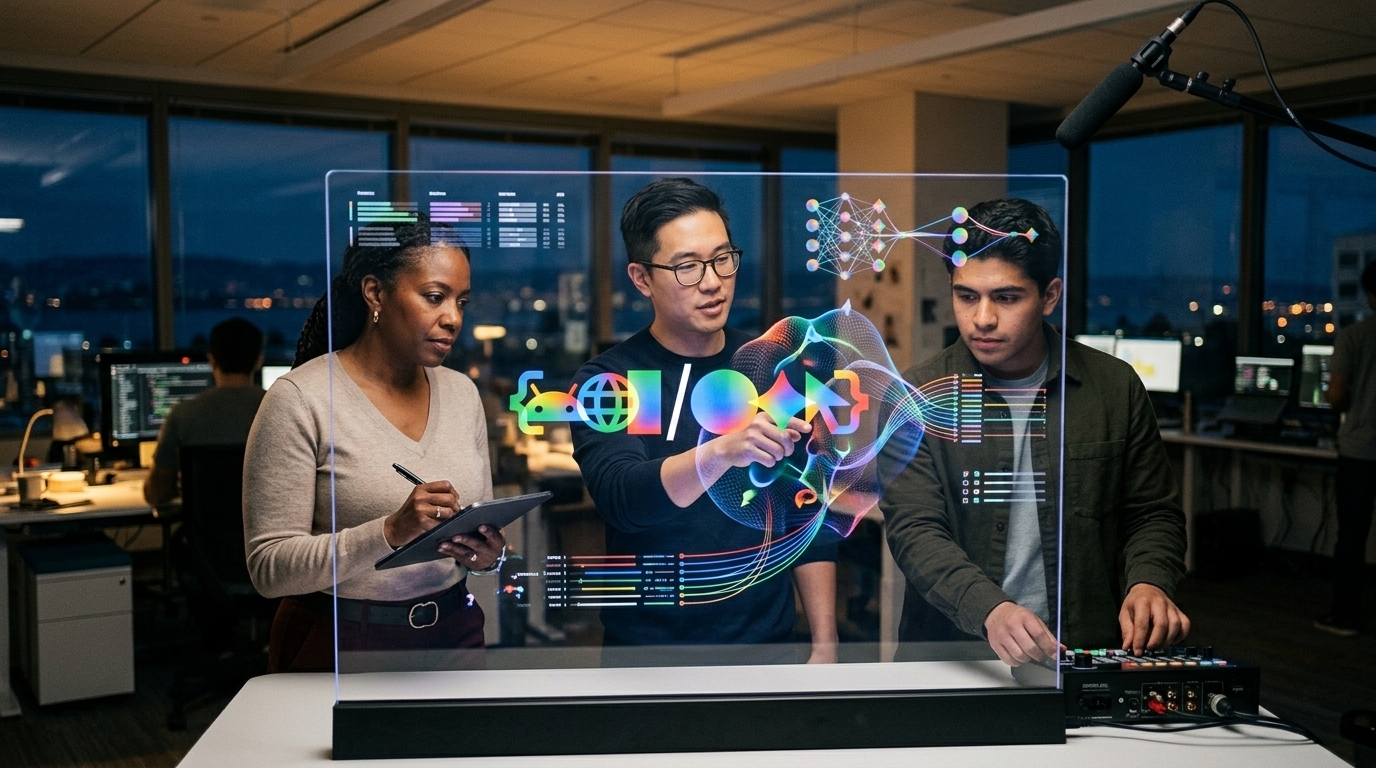
For decades, the promise of higher education was a secure desk job, far removed from the physical strain of manual labor and the volatility of industrial production. However, the advent of Generative AI is violently upending this social contract. What was once considered an "intellectual fortress"—report writing, data analysis, legal discovery, and administrative support—is crumbling under the pressure of algorithms that perform these tasks in fractions of a second and at a negligible cost.
The Illusion of Office Safety
The current technological revolution is fundamentally different from those of the past. While industrial automation replaced muscle, Artificial Intelligence is replacing the routine of thought. White-collar workers, who long considered themselves shielded by their degrees and professional credentials, now find themselves on the front lines of job displacement. According to recent analyses, roles centered on information processing are the most exposed. It is no longer about whether a machine can lift a weight, but whether it can draft a legal brief, synthesize a complex report, or write functional software code.
The "deletion" of routine white-collar jobs is not a distant threat; it is a present reality. Global corporations are already freezing hires in departments like human resources, accounting, and middle management, handing the reins to AI-driven systems. The question arising is not merely economic but deeply existential: what remains for the human worker when "cognitive labor" becomes a low-value commodity?
The Hollowing Out of the Middle Class
The primary concern for sociologists and economists is the "hollowing out" of the labor market. AI tends to eliminate the middle tiers of the corporate hierarchy. On one hand, there remains a demand for high-level strategic decision-making (requiring human judgment, ethics, and empathy). On the other, there is a continued need for specialized manual tasks that robotics has yet to master. The vacuum created in the middle—where the middle class has traditionally resided—threatens to widen social inequality to unprecedented levels.
- Automated data analysis reduces the need for junior analysts and researchers.
- Chatbots and virtual assistants are replacing customer service and administrative roles.
- AI-assisted coding is transforming the landscape for entry-level software developers.
This shift demands a radical overhaul of our educational systems. If the skills taught in universities are the very ones AI performs best, we are producing graduates for a labor market that is rapidly vanishing. The focus must shift from information retention to critical thinking, complex problem-solving, and emotional intelligence.
Navigating the Post-Routine Economy
Political leadership worldwide appears to be in a state of paralysis. The speed of change is outpacing the ability of legislators to respond. Discussions surrounding Universal Basic Income (UBI) are resurfacing not as a utopian dream, but as a potential necessity for maintaining social cohesion. Furthermore, the concept of taxing robots and AI is being scrutinized as a means to fund the massive reskilling efforts required for the displaced workforce.
"We are not just facing a new technology; we are facing a new form of capital that does not require labor to reproduce itself," note market analysts.
The transition to an AI-driven economy requires a new social contract. Companies must be incentivized to use AI as an augmentative tool rather than a total replacement for human staff. While AI can liberate us from the drudgery of repetitive tasks, without proper governance, it risks becoming the primary tool of economic marginalization. The challenge of the coming decade will be to ensure that the dividends of AI productivity are shared equitably across society, rather than being concentrated in the hands of a few tech giants.