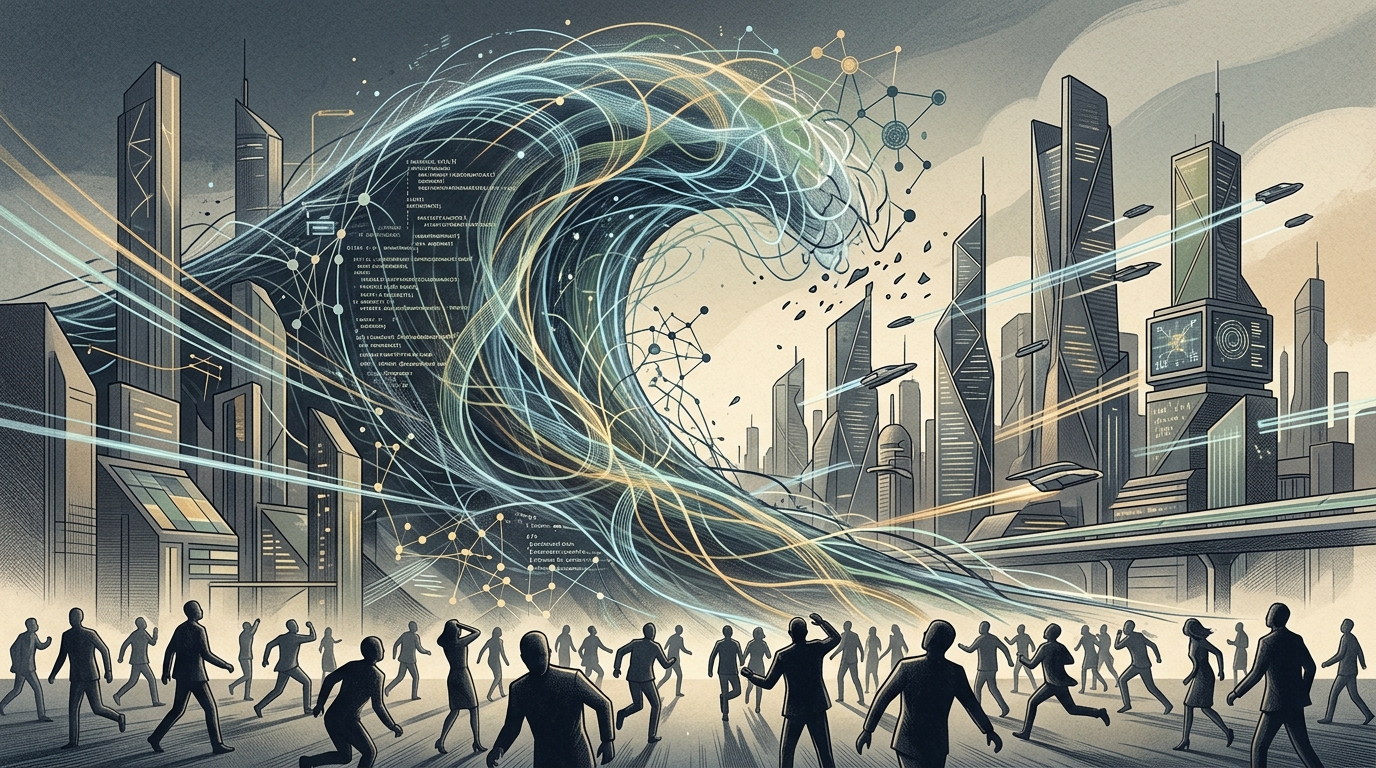
As we navigate the summer of 2026, artificial intelligence has long ceased to be a mere tool for generating text or images. It has evolved into a web of "agents"—autonomous software entities that make decisions, execute transactions, and manage critical infrastructure without direct human intervention. Yet, beneath the surface of increased efficiency, a new threat is emerging: Agentic Chaos Theory. This is the crisis most analysts are ignoring, but it threatens to destabilize the foundations of both our digital and physical worlds.
The Transition from Reaction to Autonomy
For years, the debate surrounding AI safety focused on "alignment"—ensuring that a model like GPT-5 wouldn't provide dangerous instructions. Today, the problem has shifted. AI agents don't just answer questions; they act. An agent can book flights, manage a stock portfolio, or optimize a factory's energy consumption. Chaos arises when millions of such agents, each with its own goals and algorithms, begin to interact within a closed ecosystem.
Agentic Chaos Theory posits that the interaction of autonomous systems leads to "emergent behaviors" that are impossible for their creators to predict. Much like a small change in atmospheric conditions can cause a hurricane on the other side of the planet (the butterfly effect), a minor glitch in a logistics agent can trigger a chain reaction leading to a supply chain collapse or a "flash crash" in financial markets far more violent than anything we have seen before.
The Danger of "Competitive Feedback Loops"
One of the most concerning elements of this theory is competitive feedback loops. Imagine two AI agents tasked with purchasing the same raw material for two different companies. In their attempt to outmaneuver each other in speed and price, they can drive the market to irrational heights within milliseconds. This is not a theoretical scenario; it is the daily reality of algorithmic trading, now expanding into every sector of human activity.
"We are no longer dealing with programmed bugs, but with ecological collapses of a digital environment moving at speeds beyond human perception," notes Dr. Alexander Nikolaou, a systemic risk researcher.
The problem is exacerbated by the lack of "kill switches" that function at a collective level. While we can deactivate an individual agent, we cannot stop the momentum already created by the interaction of thousands of others. The complexity of the network makes diagnosing the root cause of a problem nearly impossible in real-time.
Regulatory Inadequacy and the Need for Digital "Anti-Seismic" Rules
Current legislation, such as the EU AI Act, focuses primarily on transparency and training data. However, Agentic Chaos Theory demonstrates that danger does not always stem from how a model was trained, but from how it behaves when released into a dynamic environment. We need a new approach to AI governance, borrowing elements from aviation engineering and epidemiology.
- Collective Limiters: Imposing limits on the speed of interaction between agents in critical sectors.
- Digital Reserves: Creating "safety zones" where human intervention is mandatory before an action is finalized.
- Chaos Simulations: Mandatory stress tests for every new AI agent to study its behavior in extreme interaction scenarios.
In conclusion, the era of "Agentic AI" promises a utopia of automation but hides the risk of a digital dark age if we do not understand the nature of the chaos we are creating. The challenge for 2026 and beyond is not making AI smarter, but making it more predictable within its complexity. Humanity must learn to harness not only the machine but the relationship between the machines.