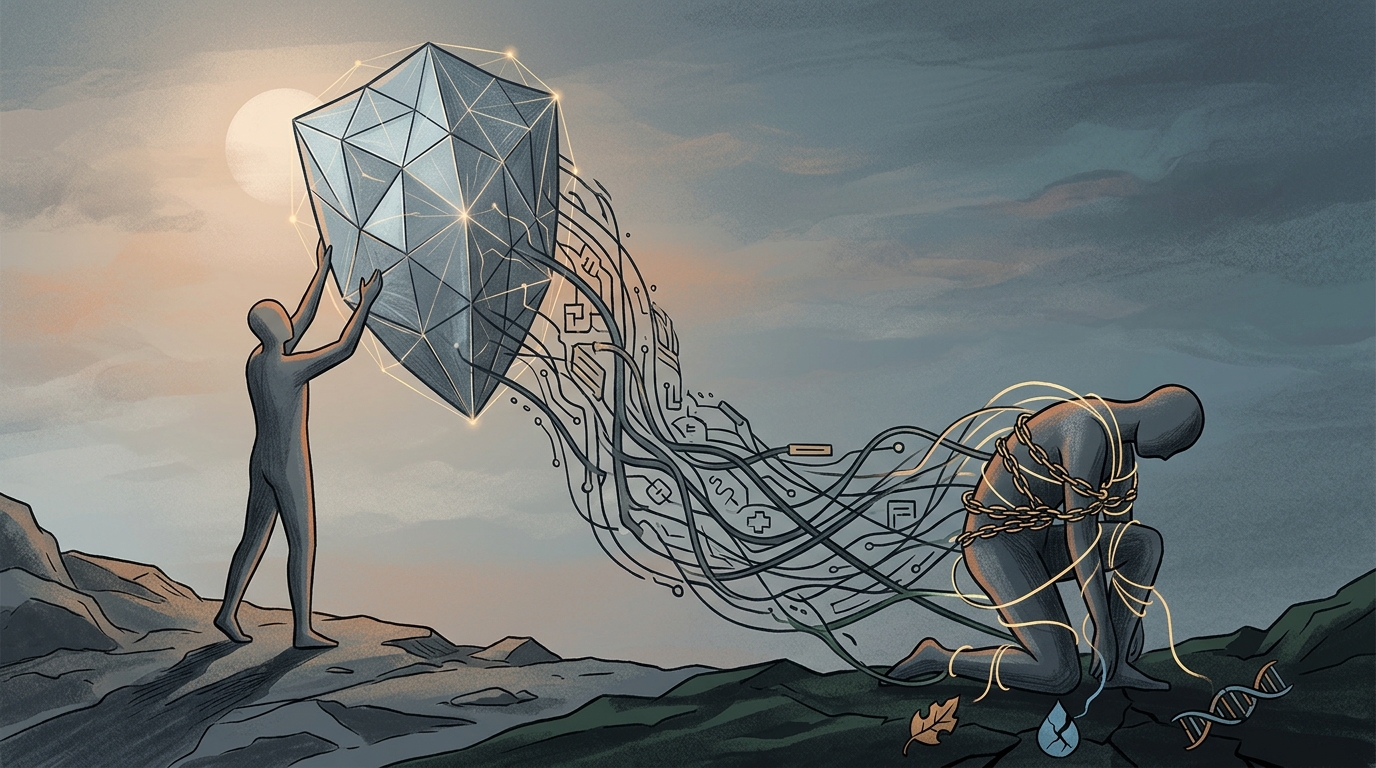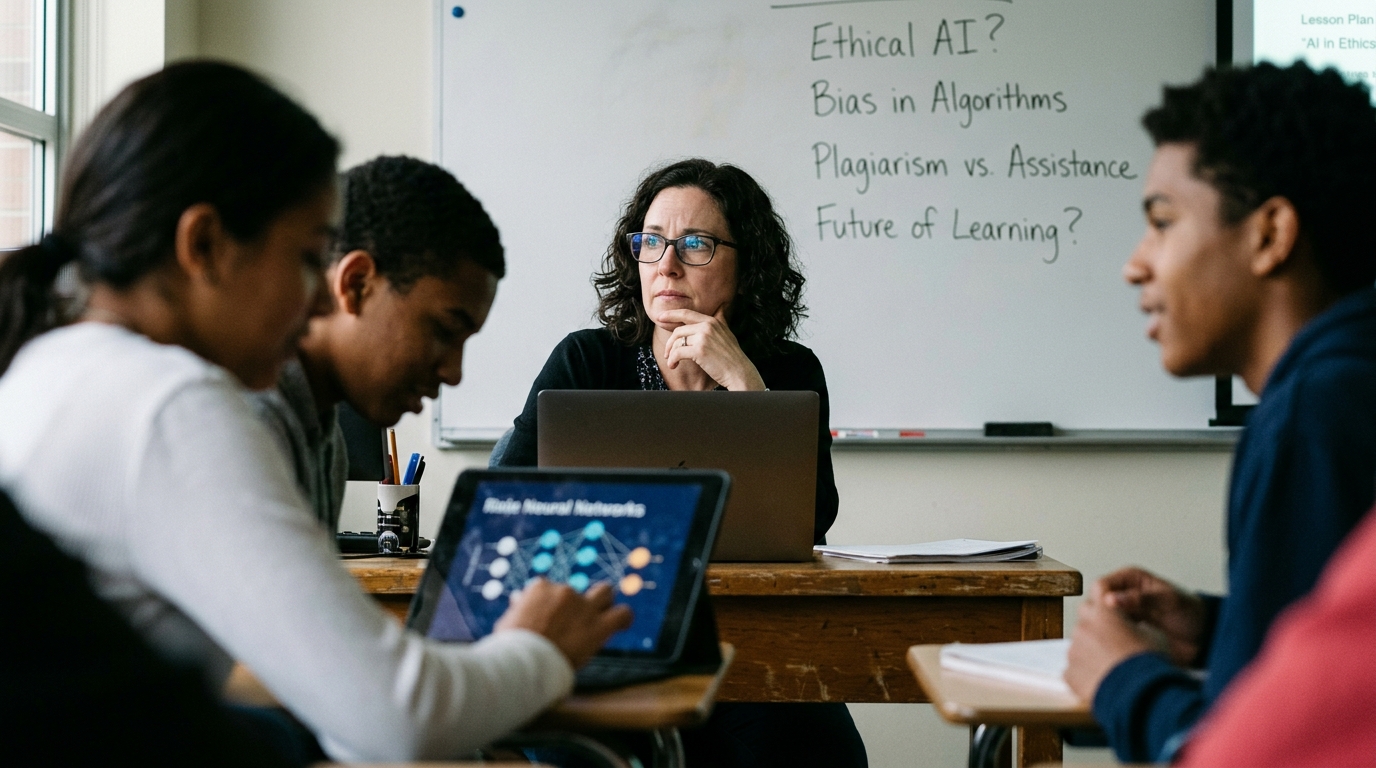
It is mid-2026, and the landscape of the classroom has changed irrevocably. Artificial Intelligence (AI) is no longer a futuristic promise or a threat lurking in the corners of computer labs; it is the silent assistant at every desk and the right hand of every educator. However, beneath the surface of technological euphoria, teachers are grappling with profound ethical and pedagogical questions that touch the very core of human learning.
The Double-Edged Sword of Productivity
For many educators, AI has been a "godsend" for time management. Automated lesson planning, the generation of personalized exercises for students with learning disabilities, and the lightning-fast grading of standardized tests have freed up hours previously consumed by bureaucratic tasks. "AI allows me to focus on the student as a person, not as a number to be graded," says one secondary school teacher. The ability of generative AI to tailor educational material to each child's level is perhaps the greatest victory for technology in the field of inclusion.
However, this convenience comes at a price. There is a growing fear that over-reliance on AI tools for lesson preparation could lead to a "homogenization" of teaching. If all teachers use the same models to design their deliveries, we risk losing the personal touch, passion, and spontaneity that characterize great educators. Education risks being transformed into an industrial process of optimization, where efficiency sacrifices inspiration.
The Crisis of Authenticity and the "Death" of the Essay
The biggest thorn remains student assessment. In a world where LLMs (Large Language Models) can write an essay on Thucydides or solve complex physics problems in seconds, traditional homework has become almost obsolete. Educators express intense concern that students are losing the ability to structure thoughts, argue points, and struggle with the difficulty of synthesis.
"I am no longer grading student texts; I am grading the prompts they gave to a machine," states a literature professor.
This shift is forcing the educational system to return to older forms of assessment: oral exams, in-class writing without internet access, and experiential projects. The ethical dimension here is twofold: on one hand, the injustice towards students who choose the hard path of authenticity, and on the other, the risk of creating a generation that "knows how to find the answer, but doesn't understand why it is correct."
The Digital Divide and New Inequalities
Another critical aspect concerning the educational community is the widening of social inequalities. While free AI models are accessible to everyone, premium versions—which are significantly more powerful, accurate, and feature specialized learning tools—remain the privilege of the few. Teachers in public schools in disadvantaged areas notice that AI, instead of acting as an equalizer, often acts as an accelerator of inequality.
Students from wealthy families have access to "AI Tutors" that operate 24/7, offering personalized support that no public school can compete with. Ethically, this raises the question: is AI creating two tiers of citizens? Those who learn to collaborate creatively with the machine and those who merely consume it passively?
The Teacher's Role as an Ethical Beacon
Despite the challenges, the majority of educators agree on one thing: human presence is more necessary than ever. In an environment filled with algorithmically generated content, the teacher is called upon to become the guarantor of truth, the judge of reliability, and the mentor of emotional intelligence. AI can teach mathematics, but it cannot teach empathy, ethical responsibility, or the value of failure as part of learning.
The conclusion drawn from teacher testimonies is that AI should not be treated as a substitute, but as a powerful, yet dangerous, tool. Its success in the classroom will not be judged by the power of the algorithms, but by the ability of humans to set boundaries and keep the educational process human-centric. The educator of 2026 is no longer the sole source of knowledge but the architect of critical thinking in an ocean of information.