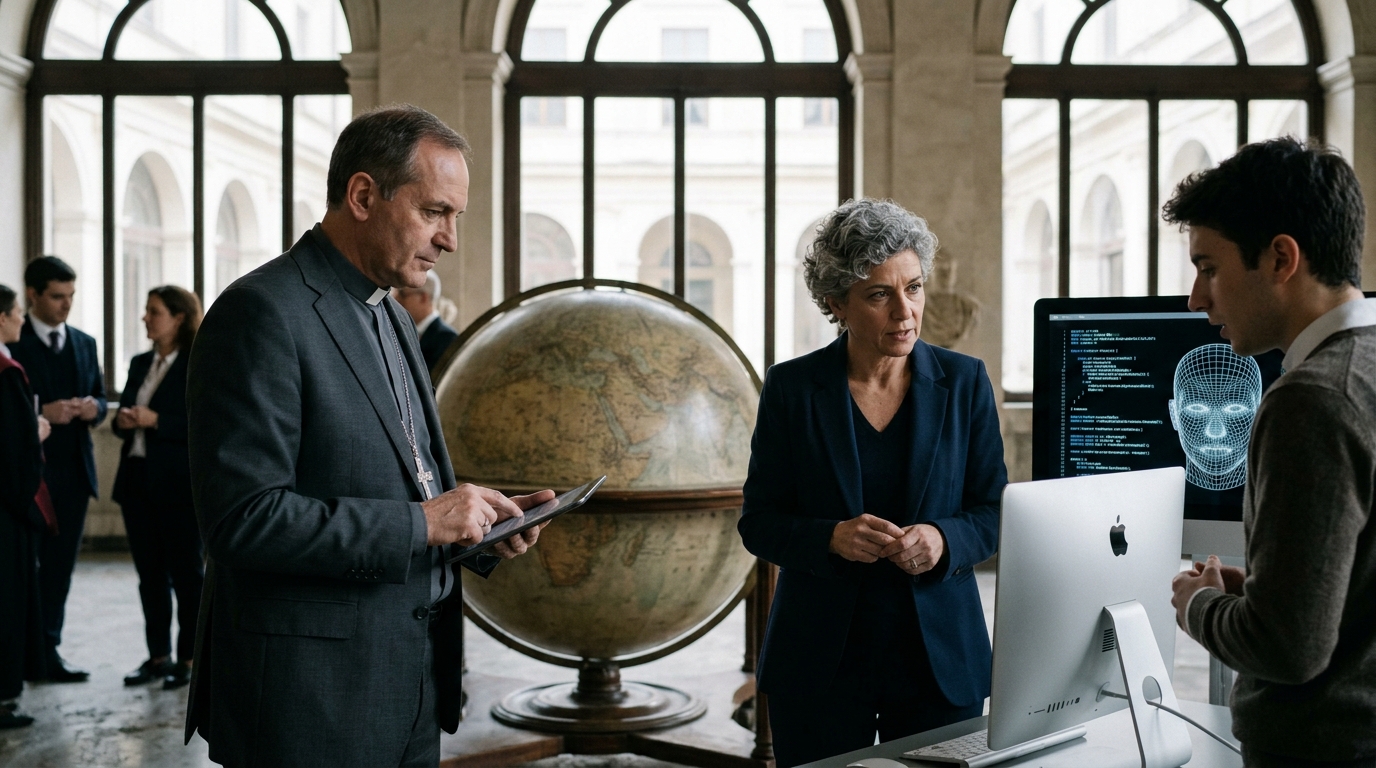
In the heart of Rome, amidst Renaissance masterpieces and ancient traditions, an unexpected revolution is taking place. The Vatican, an institution often seen as the guardian of the past, has positioned itself at the forefront of one of humanity's most contemporary challenges: the ethical governance of Artificial Intelligence (AI). The anticipation for the upcoming papal encyclical—the highest level of teaching letter from the Catholic Church—underscores the seriousness with which the Holy See views the digital transformation of our world.
The Birth of "Algor-ethics"
The term "algor-ethics," coined by the Vatican’s Pontifical Academy for Life, is not merely a play on words. It represents a fundamental philosophical stance: that ethics must be embedded within the very code and design of algorithms. Pope Francis has repeatedly emphasized that technology is not neutral. Every line of code contains values, biases, and worldviews. "Algor-ethics" seeks to ensure that these values align with human dignity and the common good.
According to the Vatican, AI risks exacerbating the "throwaway culture" that the Pope systematically condemns. If algorithms are used to marginalize the weak, reinforce inequalities, or automate warfare, then humanity is regressing despite its technological progress. The forthcoming encyclical is expected to codify these concerns into a unified theological and social framework.
The Rome Call for AI Ethics and Global Diplomacy
The Vatican's intervention is not limited to prayers. In 2020, the Holy See spearheaded the signing of the "Rome Call for AI Ethics," a commitment signed by giants such as Microsoft and IBM, as well as the UN’s FAO. This document sets out six core principles: transparency, inclusion, responsibility, impartiality, reliability, and security. The fact that tech titans sought the Vatican’s moral "seal of approval" reveals a vacuum of ethical authority in the modern secular world.
- Transparency: Algorithms must be explainable and not "black boxes."
- Inclusion: AI must benefit everyone, not just wealthy nations and elites.
- Responsibility: There must always be a human responsible for the decisions of machines.
The Church's diplomatic power has also extended interreligiously, with Jewish and Muslim leaders joining the initiative, recognizing that AI represents a shared challenge for all of humanity.
Historic Address at the G7 and Autonomous Weapons
In June 2024, Pope Francis became the first pontiff to participate in a G7 summit. His address was a stern warning against Lethal Autonomous Weapons Systems (LAWS). "No machine should ever choose to take the life of a human being," he stated, calling for a ban on "killer robots." This position puts the Vatican on a collision course with major military powers investing billions in the automation of war.
"Artificial intelligence is both an exciting and fearsome tool. It can set us free or imprison us in a new form of digital feudalism."
The Pope’s concern also extends to labor. With the encyclical, he is expected to propose a new social contract that protects workers from unchecked automation, promoting the idea that technology should complement rather than replace human creativity.
Conclusion: A Moral Beacon in the Silicon Age
The upcoming encyclical will not just be a religious text, but a manifesto for the 21st century. In a world where technological development outpaces legislative regulation, the Vatican offers a timeless perspective based on anthropology and social justice. The challenge for the Holy See will be to convince not only the faithful but also the developers in Silicon Valley that ethics is not an obstacle to innovation, but the essential prerequisite for the survival of human civilization.