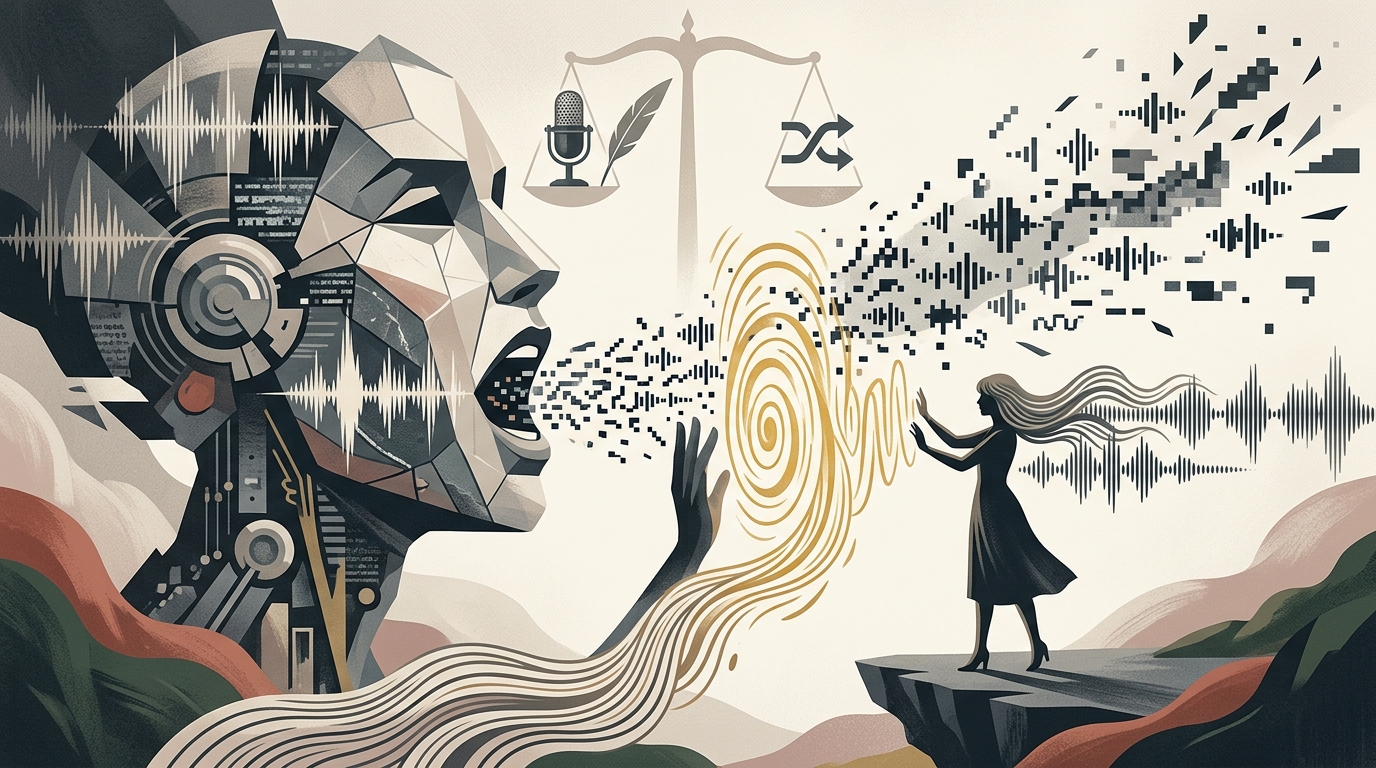
In the landscape of the modern music industry, Taylor Swift is more than just a performer; she is an institution that consistently redefines the boundaries of entrepreneurship and creator rights. Her recent move to seek trademark protection for her voice is not a mere act of vanity, but a strategic fortification against the encroaching tide of Artificial Intelligence. As Generative AI tools become increasingly capable of replicating a singer's timbre, style, and even their breathwork with uncanny precision, Swift is attempting to build a legal moat around her 'sonic identity' as a distinct financial asset.
The Voice as a 'Trademark': A Legal Revolution
Traditionally, trademarks protect names, logos, and slogans that identify the source of a product or service. However, Swift’s legal team argues that her voice is so uniquely recognizable and intrinsically linked to her brand that any unauthorized use—especially by algorithms—constitutes consumer confusion and unfair competition. This approach moves beyond the narrow confines of the 'right of publicity' and enters the realm of commercial law, potentially offering more robust tools for taking down AI-generated content on platforms like YouTube and TikTok.
This maneuver comes at a time of significant industry upheaval. Following the viral success of the AI-generated track 'Heart on My Sleeve,' which featured cloned vocals of Drake and The Weeknd, it became evident that existing copyright laws have massive loopholes. Copyright protects the composition and the specific recording, but not necessarily the 'biological' texture of the voice itself. By trademarking her voice, Swift can claim damages not just for the theft of her work, but for the misappropriation of her very essence as a commercial entity.
The Ethics of Digital Replication
Beyond the legal technicalities, Swift’s decision raises profound ethical questions. In a world where AI can be 'trained' on thousands of hours of an artist’s recordings, who ultimately owns the right to create? If a fan uses an AI model to hear Swift sing a track she would never personally choose to perform, is her artistic integrity being violated? Swift, who has famously fought for her master recordings, seems to recognize that in the AI era, the 'product' is no longer just the song, but the biological signature of the artist themselves.
- Securing artistic identity against sophisticated deepfakes.
- Establishing a legal precedent for the ownership of human timbre.
- Pressuring digital platforms to implement stricter AI content filters.
- Strengthening the bargaining power of creators against tech giants.
The Future of Music and the 'Swift Precedent'
This isn't the first time Taylor Swift has forced the industry to adapt. From pulling her catalog from Spotify to re-recording her entire discography to regain control, her strategy has always been about total autonomy. If her trademark application is successful, we may witness a mass migration of artists toward similar protections. This could lead to a new era where voices are officially licensed for AI applications, turning vocal timbre into a digital commodity with strict terms of service and usage rights.
"An artist's voice is their most personal tool. Turning it into a trademark is the ultimate defense against a technology that seeks to decouple creation from the creator."
In conclusion, Swift's move represents a milestone in the history of intellectual property. As the lines between human and artificial creation blur, the need for new legal frameworks becomes imperative. Swift isn't just protecting her own interests; she is charting a course for how humanity will define self-ownership in the age of digital eternity.