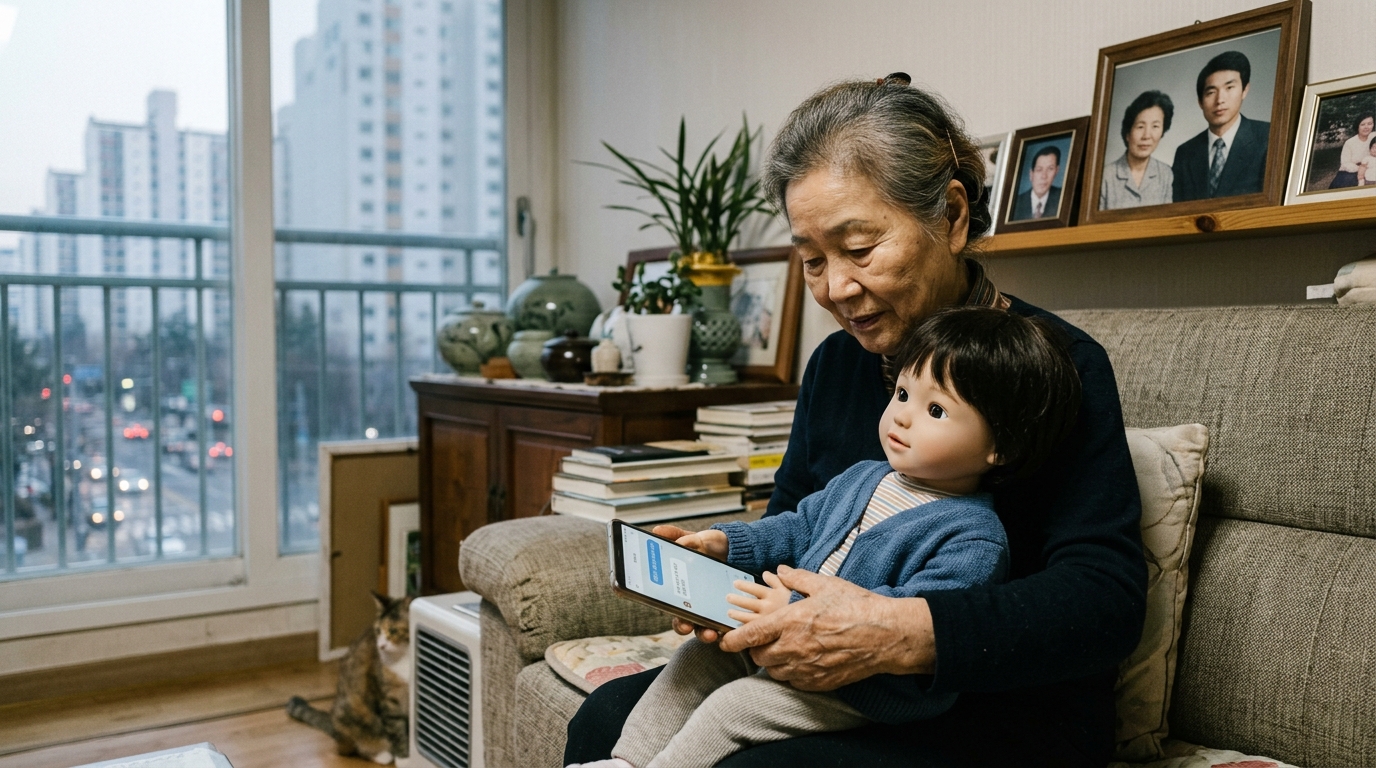
In South Korea, a nation at the forefront of the global demographic collapse, technology is being summoned to fill a void once occupied by family warmth. In remote villages and densely populated urban centers, thousands of elderly citizens living alone now have AI-powered dolls as their primary companions. These devices, which resemble plush toys or small children, are not merely decorative; they are sophisticated monitoring and psychological support tools promising to combat the scourge of loneliness and "lonely deaths" (Godoksa).
The Technology of Artificial Companionship
AI dolls, such as the popular "Hyodol," are equipped with motion sensors, natural language processors, and internet connectivity. They can initiate conversations, remind the elderly to take their medications, encourage them to exercise, or even sing traditional songs. The interaction is not one-sided; the doll reacts to touch, recognizes its owner's voice, and learns their habits through machine learning algorithms.
For many elderly South Koreans, the doll becomes more than a device. They name them, dress them, and speak to them as if they were their grandchildren. This "personification" of technology is intentional. Manufacturers aim to create an emotional bond that can reduce levels of depression and anxiety, which are particularly high among the country's aging population. However, the effectiveness of this approach is accompanied by a troubling realization: technology is being called upon to substitute for the human contact that society can no longer provide.
The Scourge of Godoksa and State Intervention
The phenomenon of "Godoksa" — the death of individuals living alone whose bodies are discovered days or even weeks later — has reached the proportions of a national crisis in South Korea. With the world's lowest fertility rate and a social structure traditionally based on children caring for parents, rapid urbanization and shifting values have left millions of elderly people on the margins. The government, seeing the cost of social welfare skyrocket, has turned to AI dolls as a cost-effective solution.
More than 100 municipalities in South Korea now distribute these dolls for free or with heavy subsidies. The dolls also function as safety systems: if they detect no movement for a specific period, they send an automatic alert to social workers or emergency centers. This digital surveillance has already saved lives, preventing deaths from strokes or falls that would have gone unnoticed. However, their use raises the question of whether the state is using technology as a "band-aid" on a deep social wound instead of investing in human care infrastructure.
Ethical Dilemmas: Illusion or Comfort?
Ethicists and sociologists warn of the risks of "dehumanizing" care. When an elderly person develops an emotional bond with a machine, they enter a state of "artificial reality." Is it ethical to allow vulnerable people to believe that a doll "loves" them or "cares" for them in the human sense? Furthermore, there are serious privacy concerns, as these devices constantly record sounds and movements within the private sphere of the home.
"Technology should not be a substitute for human empathy, but a supplement to it," bioethics experts state.
Despite reservations, South Korea's reality is relentless. With the population of those over 65 expected to reach 46% by 2067, the need for care far exceeds the number of available caregivers. AI dolls, with all their ethical burdens, offer a form of dignity and safety to people who would otherwise face absolute silence. Korea's experiment serves as a mirror for the future of the entire developed world, where artificial intelligence may be the last friend to hold our hand.