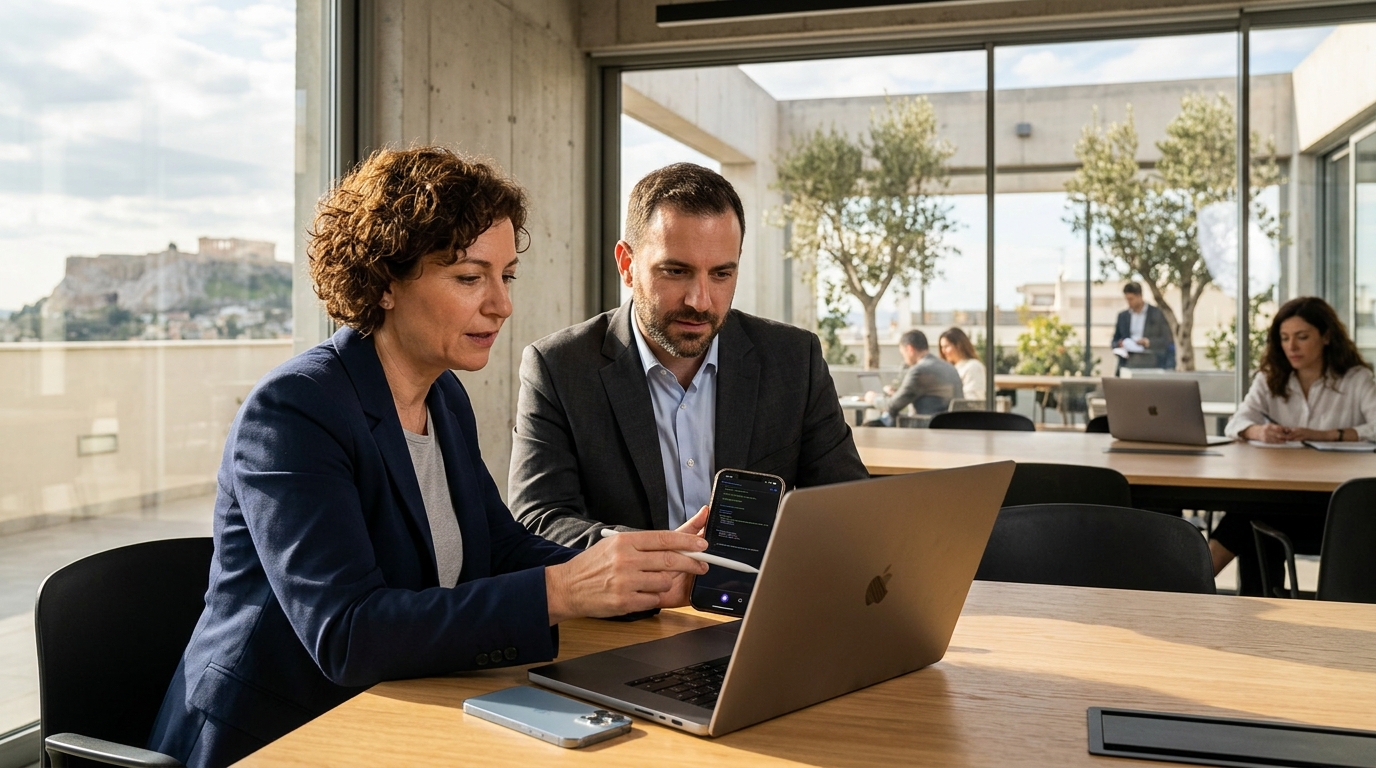
Apple, a company that often prefers to be the best rather than the first, is now at the center of one of the most significant technological transitions in its history. With the introduction of Apple Intelligence and the radical overhaul of Siri, the Cupertino tech giant is attempting to prove that Artificial Intelligence (AI) is not just a productivity tool, but an integral part of our daily experience that respects privacy.
The Transformation of Siri: From Assistant to Digital Agent
For years, Siri was considered the 'underdog' of digital assistants, limited by a lack of contextual understanding and an inability to perform complex tasks. With the new architecture based on Large Language Models (LLMs), Siri no longer just listens for keywords but understands user intent. The new Siri features on-screen awareness, meaning it can interact with the content the user is currently viewing. For instance, if a friend sends you an address in Messages, you can simply say, 'Add this address to his contact card' without further clarification.
Apple is investing in what it calls 'Personal Context.' The company's AI has access to your emails, calendars, photos, and messages—not to send them to the cloud, but to synthesize information that concerns you personally. This ability to connect data across different applications is what differentiates Apple's approach from competitors like Google or Microsoft.
The Economic Stake and the Upgrade Cycle
From a business perspective, Apple Intelligence is the most powerful driver for a new 'super-cycle' of device upgrades. As advanced AI features require the latest A-series and M-series chips, millions of older iPhone users face the dilemma of upgrading. Apple is no longer just selling a better camera or a faster screen, but the ticket to the era of personal artificial intelligence.
- Increased hardware sales through exclusive AI features.
- Strengthening the Services ecosystem with new subscription possibilities.
- Strategic partnerships, such as with OpenAI, allowing Apple to offer top-tier models without bearing the full cost of training.
The market has reacted positively, seeing Apple bridge the gap with its rivals while maintaining its high-profit margins. However, challenges remain in Europe and China, where regulatory bodies and geopolitical balances create hurdles for the full deployment of these services.
Privacy: The Ultimate Advantage or Just Marketing?
Apple's grand narrative is Private Cloud Compute (PCC). The company promises that even when an AI request is too complex to be processed locally on the device and must be sent to a server, the data is neither stored nor accessible by Apple. This 'cryptographic isolation' aims to reassure users concerned about their digital security.
"Privacy is not just a feature; it is the foundation upon which we build the future of intelligence," a company executive recently stated.
However, critics point out that relying on third-party providers like OpenAI for specific queries creates 'holes' in Apple's otherwise closed system. The balance between ease of use and absolute security will be the battlefield on which the success of this venture is judged in the coming years.
The European Challenge and the Future
In Europe, the implementation of the Digital Markets Act (DMA) has caused friction, with Apple delaying the release of certain AI features due to compliance concerns. This creates a 'two-tier' Europe in technology, where users might not have access to the same capabilities as those in the US. Despite the difficulties, the direction is clear: AI will become the invisible interface through which we control everything from our homes to our work. Apple is betting that the world will prefer an intelligence that 'knows them' but 'does not betray them.'