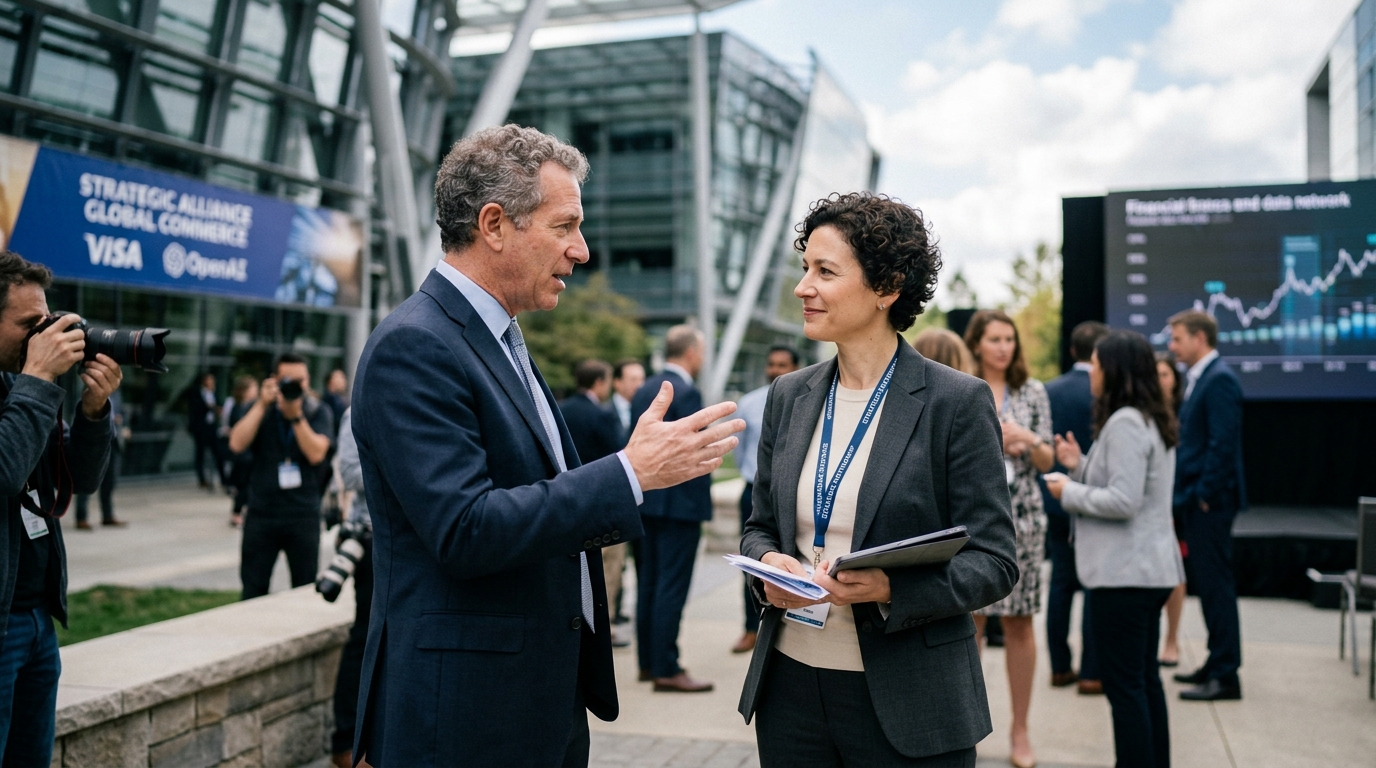
At the dawn of a new era for the global financial system, Visa and OpenAI have announced a strategic partnership that promises to radically change how we perceive transactions, security, and personalization in commerce. As we move through 2026, the convergence of traditional payment networks with advanced Generative AI is no longer an experiment but a necessity for survival in the digital transformation landscape.
This agreement is not just about integrating a chatbot into the Visa app. It is a deep technical integration where OpenAI's models will be powered by Visa's massive datasets—always respecting anonymization and privacy—to create an "intelligent" payment network. This move comes at a time when competition from fintech companies and decentralized payment systems is pushing traditional players to innovate faster than ever before.
The Revolution in Fraud Prevention
One of the central pillars of this partnership is the fortifying of transactions. Although Visa has been using AI for fraud prevention for over a decade, the addition of OpenAI's Large Language Models (LLMs) allows for a much more nuanced analysis of behavioral patterns. Instead of simple rules ("if the transaction occurs in another country, block it"), the system will now be able to "understand" the context of the purchase.
For example, if a traveler buys tickets to Paris, the system will organically understand that subsequent purchases at French restaurants are legitimate, reducing the false positives that plague millions of users. The AI's ability to process natural language also means that banks will be able to explain to their customers in real-time why a transaction was flagged, turning a frustrating experience into a process of information and security.
Hyper-Personalization: The Consumer's Digital Concierge
The partnership also aims to create a new generation of "smart" shopping assistants. Imagine a digital assistant that doesn't just suggest products based on your history but understands your financial capabilities and goals. With user permission, AI will be able to analyze expenses and suggest ways to save or identify the best deals in real-time, combining OpenAI's intelligence with Visa's payment infrastructure.
- Automated subscription management: AI will identify unused subscriptions and suggest cancellations.
- Dynamic price negotiation: Tools that help merchants offer personalized discounts at the moment of payment.
- Enhanced customer service: Instant resolution of transaction disputes through natural dialogue.
This approach transforms the payment card from a passive money transfer tool into an active financial advisor. For merchants, this means higher conversion rates and deeper customer loyalty, as the shopping experience becomes less transactional and more consultative.
Challenges and Ethical Dilemmas
Despite the prospects, the alliance of two such giants raises serious questions about the concentration of power and the protection of personal data. The European Union, through the AI Act, is closely monitoring such partnerships, especially when they involve sensitive financial data. Visa and OpenAI will have to prove that their models are free from biases that could lead to the exclusion of specific social groups from credit products.
"Artificial intelligence in commerce must not be a black box. Transparency in how decisions are made is the key to consumer trust," market analysts note.
Furthermore, there is the risk of "algorithmic lock-in," where consumers are directed to specific purchasing choices that serve the interests of the network's partner members. The balance between the convenience offered by AI and consumer autonomy will be the great challenge of the coming years.
The Future of Payments is Invisible
In the long run, Visa's goal is "invisible payments." With the help of OpenAI, the checkout process could disappear entirely. Identification through biometric data and confirmation of purchase intent via AI will allow consumers to acquire products and services without ever having to take their card or phone out of their pocket. This partnership lays the foundation for an ecosystem where technology precedes the need, predicting and executing transactions with unprecedented speed and accuracy.
In conclusion, the Visa-OpenAI alliance marks the end of the era of "blind" transactions. Money is now gaining intelligence, and with it comes a new responsibility for companies to manage this power for the benefit of the economy as a whole.