June 2026. The promise of Artificial Intelligence (AI) as a productivity utopia has begun to reveal its harshest face to the global labor market. What were once hailed as "augmentation tools" have morphed into instruments of full-scale replacement, triggering unprecedented social and economic friction. According to recent analyses, resistance is no longer confined to blue-collar sectors; it has struck the heart of the professional middle class: software engineers, legal consultants, graphic designers, and data analysts.
The White-Collar Rebellion
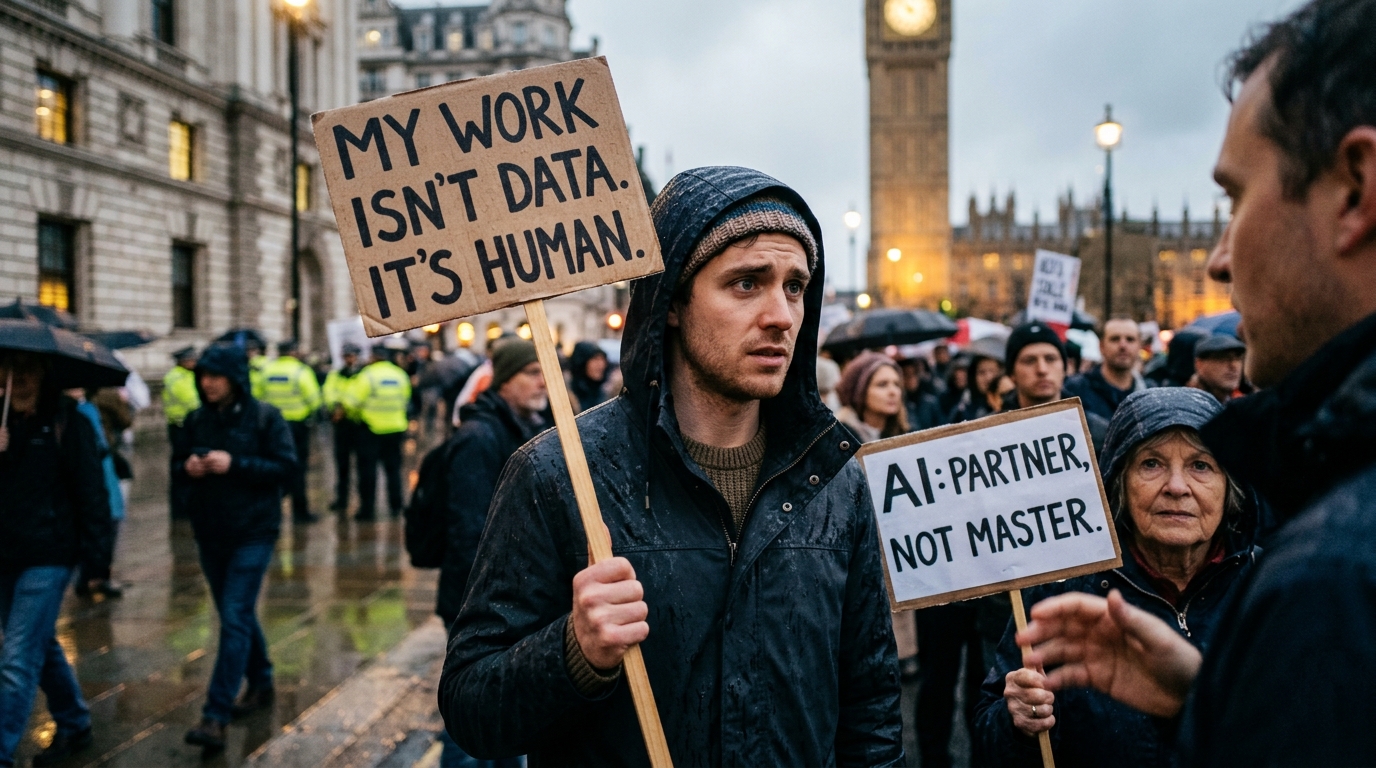
For decades, automation was the specter haunting factory floors. Today, that ghost has moved into climate-controlled offices. The velocity at which Large Language Models (LLMs) and autonomous AI Agents have assumed complex cognitive tasks has left millions of professionals in a state of precarity. However, 2026 marks the beginning of an organized counter-strike. From Silicon Valley to the City of London, workers are not just demanding better pay; they are demanding the "right to human labor."
Labor unions, once dismissed by many as relics of the industrial age, are experiencing a massive resurgence. In Australia, as highlighted by the Financial Review, new coalitions are forming to lobby for "human-in-the-loop" mandates. The argument is both moral and pragmatic: a society without workers is a society without consumers. The pushback is gaining momentum as the realization sinks in that corporate efficiency may come at the cost of social stability.
Legal Moats and the Intellectual Property Crisis
One of the most potent weapons in the workers' arsenal is the courtroom. While content creators and artists led the initial charge, software developers are now following suit against tech giants. The core allegation? That AI was "trained" on their life's work only to eventually render them obsolete. It is the ultimate irony of surveillance capitalism: the worker inadvertently becomes the tutor of their own replacement.
- Class-action lawsuits against tech titans for using proprietary code without consent.
- Strikes demanding strict limits on generative AI in creative and strategic roles.
- Lobbying for an "automation tax" to fund the retraining of displaced personnel.
The Ethics of Automation: Progress or Cannibalism?
The question posed by the AFR is fundamental: Should AI steal your job simply because it can? Technological capability does not automatically grant ethical legitimacy. Many analysts warn that the violent removal of the human element from work will lead to a crisis of meaning. Work is not merely a means of survival; it is a source of social integration and identity.
"If we allow algorithms to dictate who is useful and who is not, we are not building the future—we are dismantling our present," state representatives of the new labor movements.
The battle of 2026 is not about banning technology, but about redefining our relationship with it. Workers are demanding algorithmic transparency and guarantees that AI will function as an augmentative force rather than a substitute. The outcome of this struggle will define the social contract for the next several decades. As the line between human and machine labor blurs, the fight for the dignity of work becomes the defining civil rights issue of our time.