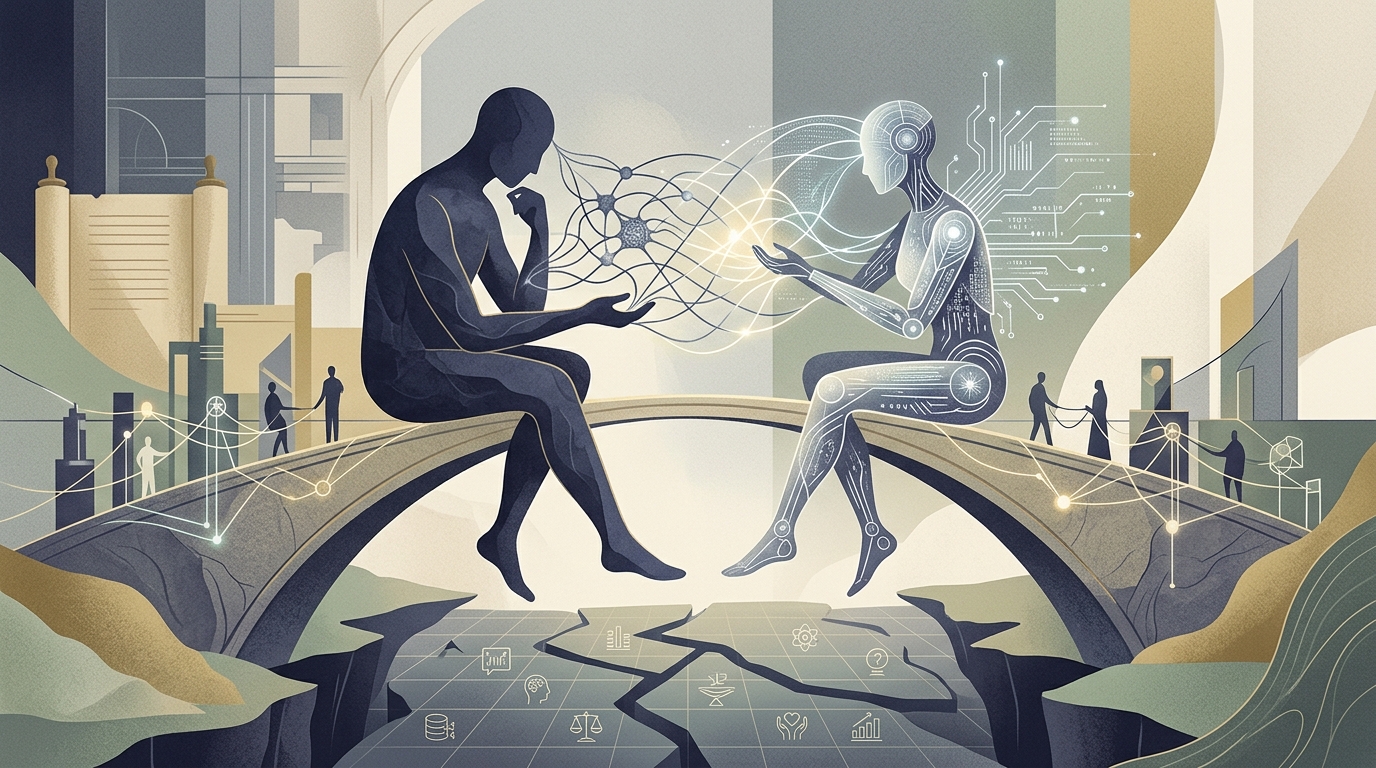
The era of unbridled AI optimism is rapidly shifting toward a period of intense skepticism and legal retrenchment. According to recent reporting from STAT News, the tech industry is facing a critical juncture: the so-called 'deposition deadlock.' This refers to a calculated strategy by AI companies to refuse disclosure of their algorithms' internal workings during litigation, citing the protection of trade secrets. This practice, however, raises fundamental ethical questions, particularly when AI is deployed in high-stakes sectors like healthcare.
The Wall of Trade Secrecy
At the heart of the issue lies a clash between the necessity for transparency and the capitalist model of data protection. When an algorithm makes a decision that alters a patient's life—such as a diagnosis or a treatment recommendation—legal accountability requires that we understand the 'why.' Yet, AI firms argue that revealing the weights of neural networks or the specifics of training data would be equivalent to handing the 'keys to the kingdom' to their competitors. This stance creates a legal vacuum where technology becomes a 'black box' inaccessible even to the halls of justice.
STAT News highlights that this deadlock is not merely a technicality but a systemic threat. If judges cannot compel companies to explain the logic behind their models, the concept of negligence or malpractice becomes a dead letter. In healthcare, where the doctrine of 'First, do no harm' reigns supreme, the use of opaque tools is an ethical time bomb. Clinicians are being asked to trust systems that the creators themselves refuse to explain under oath, creating a crisis of confidence that could stall medical innovation.
The 'Pump the Brakes' Movement
The pressure to slow down AI is not coming solely from legal circles; it is bubbling up from within the medical community itself. There is a growing sense that the velocity at which AI tools are being integrated into hospital workflows far outpaces our ability to safely evaluate them. The phrase 'pump the brakes, buddy' captures a widespread fatigue with constant hype that lacks empirical backing in safety and efficacy. Doctors are now demanding more rigorous testing protocols, akin to clinical trials for pharmaceuticals, before AI becomes an inextricable part of patient care.
- The lack of explainability undermines the foundational trust between patient and physician.
- The deposition deadlock prevents the establishment of legal precedents for digital harm.
- Ethical liability is being shifted to the end-user, while developers remain shielded.
This shifting of liability is perhaps the most disturbing element. When an AI company is legally fortified, the physician who used the tool is left exposed. If the system fails, who is at fault? The 'proprietary' code or the human who was encouraged to trust it? The STAT report suggests that without clear liability frameworks, the healthcare industry may face a wave of litigation that it is currently ill-equipped to handle.
Toward a New Social Contract for Technology
Breaking the deadlock requires a new approach that balances innovation with accountability. Some experts propose the creation of 'independent auditing bodies' that would have access to proprietary code under strict confidentiality, acting as intermediaries between tech firms and the courts. Others argue that certain AI models, especially those impacting public health, should be 'open source' by default or at least subject to rigorous government oversight that transcends corporate interests.
'Artificial intelligence cannot be above the law simply because it is complex. Complexity is not a valid excuse for opacity,' notes a legal consultant involved in ongoing AI malpractice cases.
In conclusion, as of May 2026, we are witnessing a maturation of the AI discourse. The allure of the new has been replaced by a demand for protection. 'Pumping the brakes' on AI is not necessarily a regressive move; rather, it is a necessary pause to ensure that our digital future is equitable and, above all, human-centric. The legal battle over depositions is merely the opening salvo in a broader conflict over who controls the truth in the age of algorithms. If we do not demand transparency now, we risk building a society governed by machines that no one—not even their creators—can hold to account.