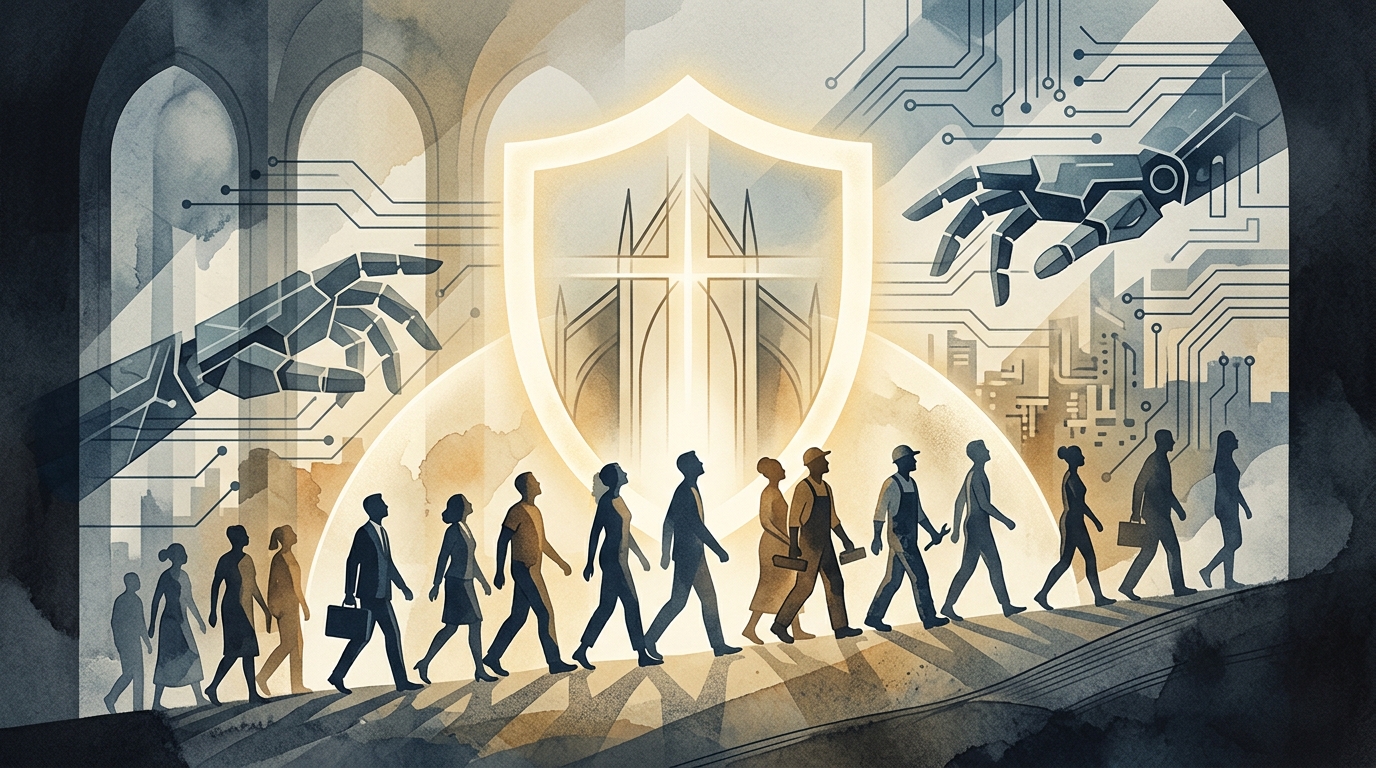
In an era where the digital revolution threatens to upend the foundations of the social fabric, the Catholic Church's intervention serves as a moral lighthouse. Pope Leo XIV’s first encyclical, focusing exclusively on Artificial Intelligence (AI), is not merely a theological document but a searing critique of how technology is being leveraged to disempower workers. The AFL-CIO, the largest federation of unions in the United States, hailed the text as a reflection of the “fears and realities” that working people experience daily.
The Return to Human Dignity
The encyclical, titled “Imago Dei in the Digital Age,” draws inspiration from the historic 1891 “Rerum Novarum,” which laid the groundwork for labor rights during the first Industrial Revolution. Pope Leo XIV argues that AI must never replace human judgment, particularly in matters concerning an individual’s livelihood and dignity. The Vatican warns of the danger of an “algorithmic dictatorship,” where hiring, firing, and performance monitoring are conducted by impersonal machines devoid of empathy.
According to the text, work is not just a means of survival but a process through which individuals find fulfillment and participate in creation. When AI is used to transform a worker into a mere cog in an automated system, the technology ceases to serve humanity and becomes a tool of oppression. This stance aligns perfectly with the demands of labor unions, which call for a “human-in-the-loop” approach at every stage of the production process.
The Alliance of Church and Labor
The warm reception of the encyclical by the AFL-CIO highlights a significant shift in the public discourse surrounding technology. Labor leaders see the papal intervention as moral legitimization of their struggles against unchecked automation. The AFL-CIO emphasized that the Pontiff’s warnings regarding the “commodification of human existence” through data are exactly what workers in Amazon warehouses and delivery platform fleets face on a regular basis.
- The need for transparency in management algorithms.
- Protection of privacy against ubiquitous digital surveillance.
- Fair distribution of profits resulting from AI-driven productivity gains.
- Ensuring technology is not used to undermine collective bargaining agreements.
This convergence of religious ethics and labor activism creates a new front against Silicon Valley. Tech companies are no longer just facing regulators and lawyers; they are confronting a global moral outcry that resonates with billions of believers and workers alike.
Technological Feudalism or Digital Democracy?
The central question posed by Pope Leo XIV is whether Artificial Intelligence will lead to a new form of feudalism, where a few owners of data and computing power control the fates of the many. The encyclical calls on governments to step up and not allow the market to self-regulate, as the market lacks a moral conscience. The proposal for a “Global Code of Ethics for AI,” under the auspices of international organizations, is gaining traction, with the Vatican suggesting the participation of not just technocrats, but also representatives from civil society and labor unions.
“Technology is a gift, but when this gift is used to build walls between man and his right to dignified work, it turns into an idol that demands sacrifices,” a passage from the encyclical states.
In conclusion, this move by Pope Leo XIV and the support from the AFL-CIO mark a new phase in the resistance against impersonal technological dominance. The battle over Artificial Intelligence is no longer just technical or economic; it is deeply political and ethical. The success of this endeavor will be judged by whether the principles declared on paper can be translated into legislative regulations that protect the worker in practice.