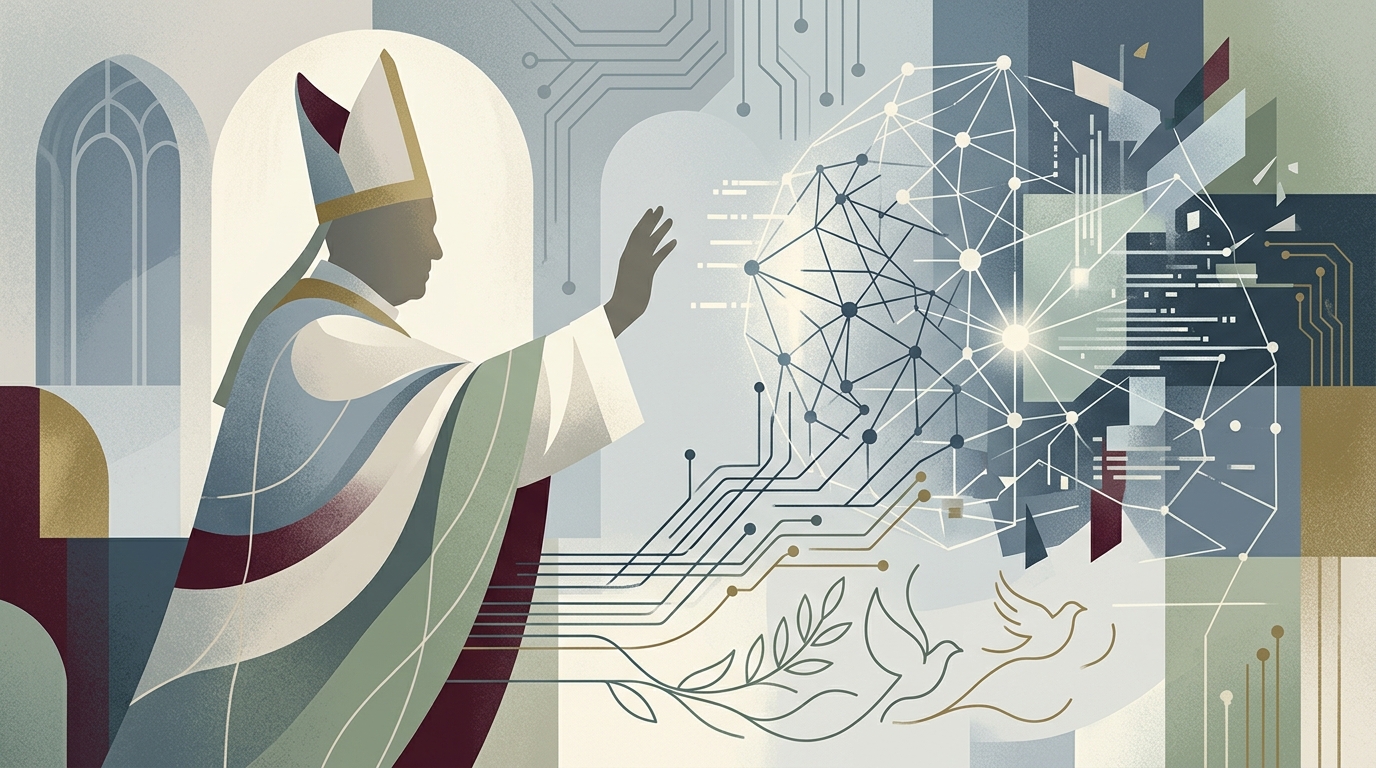
In an era where technological acceleration outpaces the capacity for legislative oversight, the Church intervenes with a message that sounds both ancient and prophetic. Pope Leo XIV, speaking at the International Conference on the Ethics of Artificial Intelligence at the Vatican, issued a dramatic plea for the "disarmament" of Artificial Intelligence (AI). This intervention is not merely about autonomous weapons systems but a deeper, structural demilitarization of the logic governing algorithmic development.
The Theology of Algorithms and Digital Humanism
The Pontiff argued that AI has been transformed into a "weapon of mass persuasion and social division." In his address, which lasted over an hour, he expanded on the concept of "algorethics" — a term the Vatican has been systematically promoting in recent years. According to Leo XIV, technology is never neutral. "Every line of code contains a moral choice," he emphasized, adding that when this choice is driven solely by profit or power, it becomes a tool of oppression.
The Catholic Church's approach focuses on protecting the "Imago Dei" — the image of God in man — which is threatened by the objectification imposed by Big Data. The Pope warned that converting human experience into measurable data strips the individual of the sanctity of their unpredictable nature, leaving them at the mercy of predictive models that function as "digital cages."
From Lethal Weapons to Cognitive Manipulation
Particular emphasis was placed on Lethal Autonomous Weapons Systems (LAWS). The Pope called for their complete and universal ban, arguing that the decision over life and death can never be delegated to an algorithm. "A machine has no soul, therefore it can have no mercy. And without mercy, justice turns into tyranny," he stated, sparking a wave of emotion in an audience that included tech leaders and politicians.
However, the "disarmament" Leo XIV refers to extends beyond the battlefield. It encompasses the "cognitive manipulation" exercised by social media and generative AI systems. The ability of these models to construct false realities (deepfakes) and polarize societies is viewed by the Vatican as a form of "hybrid warfare" against truth. The Pope called on tech companies to "disarm" their algorithms of elements that promote hatred and disinformation, prioritizing the common good over shareholder dividends.
An International Treaty for Digital Peace
The Vatican's proposal is not limited to moral exhortations. Pope Leo XIV called on the international community to forge a "Global Treaty for Digital Peace," modeled after nuclear non-proliferation treaties. This treaty would provide for:
- Full transparency in algorithms affecting public services and human rights.
- The establishment of a "right to human contact," ensuring that critical decisions (health, justice, labor) are always made by humans.
- The imposition of strict sanctions on states and companies using AI to suppress civil liberties.
Concluding his speech, the Pope posed a question that will haunt humanity for decades: "Will we allow technology to become our new idol, or will we subject it to the service of love and fraternity?" The Vatican's stance is clear: Artificial Intelligence must serve humanity, not replace or enslave it.
"Technology is a gift, but when the gift is used to build walls instead of bridges, then we have a duty to disarm it." - Pope Leo XIV
The reaction from Silicon Valley was measured, with some CEOs welcoming the ethical guidelines while others expressed concerns about how such restrictions might stifle innovation. Nevertheless, the moral weight of the Pope's voice is undeniable, especially at a time when trust in technology is at an all-time low.