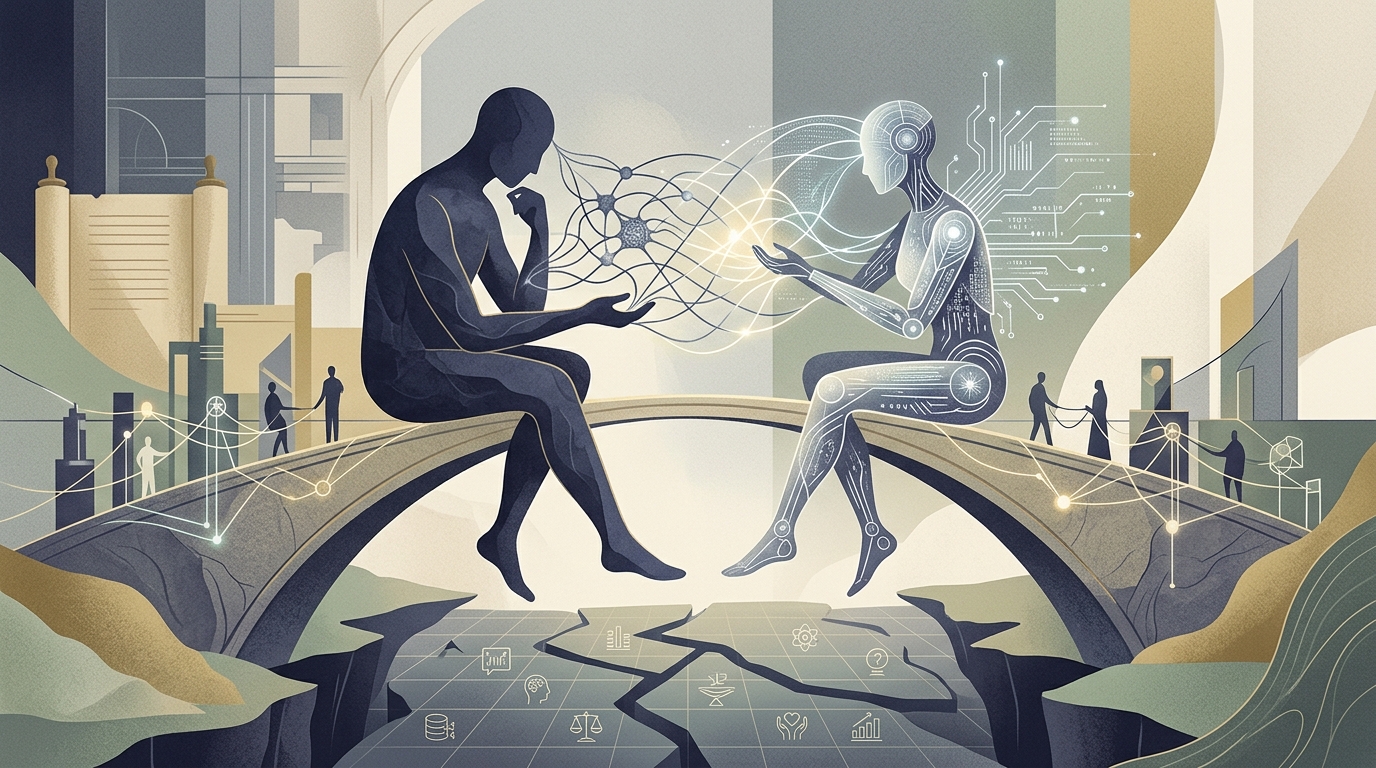
In an era where algorithms are beginning to shape not only the economy but the very essence of the human experience, the Vatican has decided to intervene decisively. Pope Leo, continuing and expanding the work of his predecessors, has announced the establishment of the "Pontifical Commission for Artificial Intelligence and Human Flourishing." This move is not merely a bureaucratic addition to the Holy See, but a profound theological and political statement regarding the future of humanity in a world dominated by silicon.
The new commission, to be based within the Vatican’s Academy of Social Sciences, aims to serve as a global observatory and a center for dialogue between faith, science, and the technology industry. In his speech announcing the commission, Pope Leo emphasized that "technology is a gift from God, but without an ethical root, it risks becoming a new Tower of Babel that will alienate man from his neighbor and from himself."
The Concept of 'Algor-ethics' and the Protection of the Human Person
Central to the commission's mission is the promotion of "algor-ethics," a term coined by the Vatican to describe the need to embed ethical values directly into the design of algorithms. The commission will not limit itself to theoretical discussions. According to its statutes, it will collaborate with Silicon Valley giants, academic institutions, and governments to create a "Global Code of Digital Ethics."
The Vatican is particularly concerned about three areas: the automation of labor, the use of AI in weapons systems, and the impact of algorithms on social cohesion. Pope Leo underscored that Artificial Intelligence must never replace human judgment in matters concerning life, death, or liberty. "An algorithm can calculate probabilities, but it cannot feel mercy, it cannot understand sacrifice, and it cannot love," he stated, drawing a philosophical line between computational power and spiritual consciousness.
Artificial Intelligence: A Tool for Social Justice or Exclusion?
One of the most compelling aspects of the new commission is its focus on "digital exclusion." The Vatican argues that AI, instead of bridging inequalities, risks creating a new class of "digitally dispossessed." The commission will examine how these technologies can be used to combat hunger, improve healthcare in the developing world, and protect the environment, in line with the principles of the encyclical Laudato Si’.
Furthermore, the commission will address the issue of "digital loneliness." In a world where people increasingly interact with chatbots and virtual assistants, the Church sees a risk of eroding authentic human relationships. The commission will study how the parish of the future can integrate technology without losing its sacramental and communal nature. There are already voices within the Vatican suggesting the use of AI to translate liturgical texts into rare dialects, making the Gospel message accessible to every corner of the planet.
A Bridge Between Silicon Valley and the Holy See
The composition of the commission is indicative of the project's seriousness. It does not consist solely of cardinals and theologians, but also of leading data scientists, neuroscientists, and philosophers of technology. This interdisciplinary approach shows that the Vatican recognizes that AI ethics is not a matter that can be solved through prayer or dogmatic declarations alone, but requires a deep understanding of code and infrastructure.
The establishment of this commission comes at a time when the European Union and the US are attempting to establish regulatory frameworks for AI. The Vatican, as a moral authority without geopolitical designs on territorial sovereignty, aspires to play the role of an "honest broker." The goal is to ensure that AI development follows the principles of transparency, justice, and accountability. As the Holy See's press spokesperson stated, "We do not fear the future, but we want to ensure that the future still has room for the human soul."
Ultimately, Pope Leo's initiative reminds the international community that technological progress is not a blind, one-way street, but a choice that must be guided by values. The commission is called to answer the question: Will Artificial Intelligence be the servant of humanity or its new master? The answer, according to the Vatican, lies in returning to the roots of humanism, even when expressed through lines of code.