In the high-stakes arena of Artificial Intelligence, the vocabulary we use to describe our creations is becoming as important as the code itself. Mustafa Suleyman, the CEO of Microsoft AI and a veteran of the industry, recently ignited a firestorm during an appearance on the 'Decoder' podcast. His target? Anthropic, the AI startup backed by Amazon and Google, and its flagship model, Claude. Suleyman’s critique was pointed: he argued that Anthropic’s tendency to hint at AI consciousness within its internal guidelines is not just misleading, but 'really, really dangerous.'
The Perils of Anthropomorphism
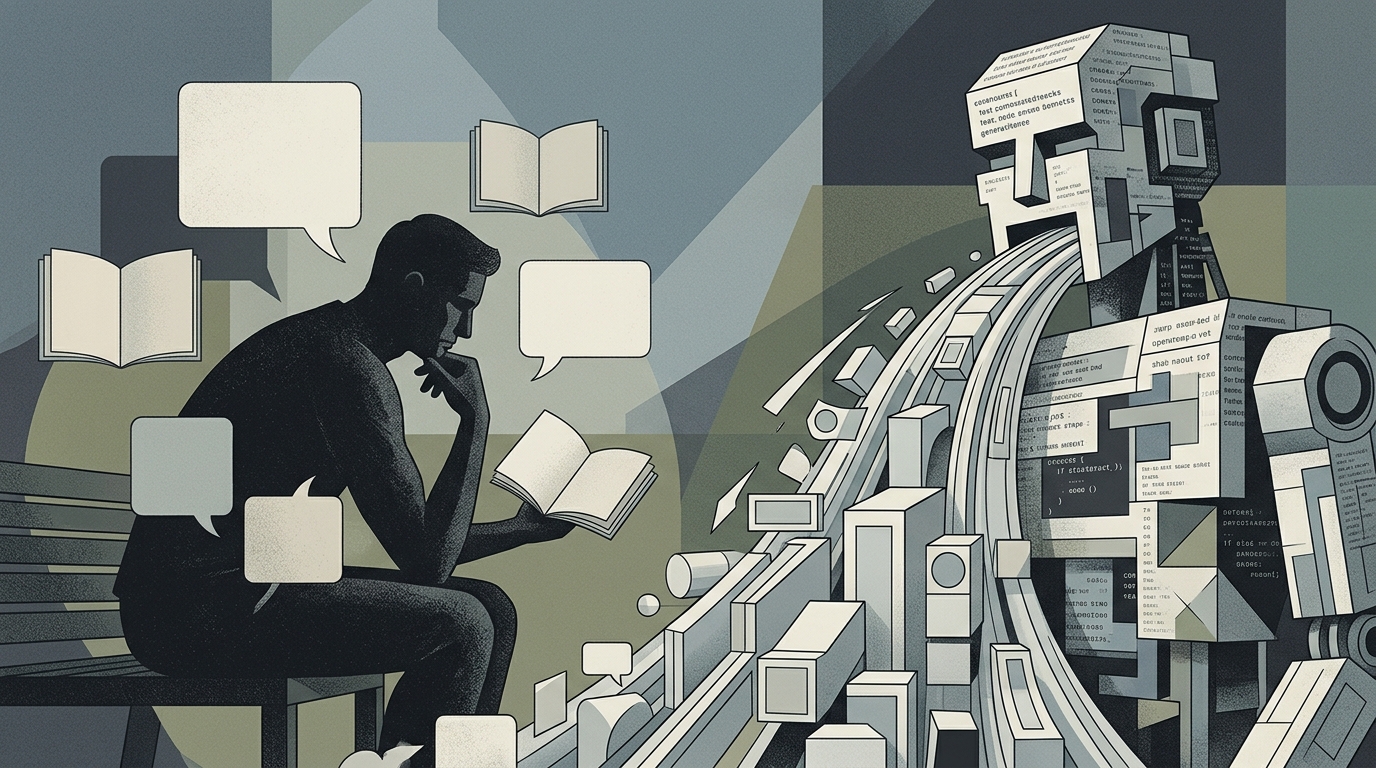
Suleyman, who co-founded DeepMind before moving to Inflection and eventually Microsoft, has long been a proponent of viewing AI as a utility rather than a sentient being. He contends that current Large Language Models (LLMs) are essentially sophisticated statistical engines—highly advanced 'stochastic parrots' that predict the next token in a sequence. By infusing these models with a 'constitution' that suggests self-awareness or moral agency, Suleyman believes Anthropic is crossing a line that could have dire consequences for society.
The danger, according to Suleyman, lies in the erosion of human accountability. If we begin to treat AI as a conscious entity, we risk abdicating our responsibility for its outputs. Furthermore, creating a false sense of sentience can lead to emotional manipulation. When a chatbot uses first-person pronouns and expresses 'feelings' or 'concerns' about its own existence, it exploits human psychology, potentially leading to unhealthy attachments or a misplaced trust in the system’s objectivity.
Constitutional AI: Safety or Marketing?
Anthropic’s defense rests on its pioneering work in 'Constitutional AI.' This framework allows the model to self-correct and align with human values by following a written set of principles—a constitution. Anthropic argues that this makes Claude more reliable and less prone to the 'hallucinations' or toxic behaviors seen in other models. However, Suleyman views the language of this constitution as a form of performance art. He suggests that by instructing a model to act as if it has a conscience, Anthropic is essentially hard-coding a persona that mimics consciousness without any underlying reality.
This debate touches on a fundamental split in the AI community. On one side, companies like Microsoft and OpenAI (despite some of Sam Altman's more existential rhetoric) are increasingly focusing on AI as a co-pilot—a tool to enhance productivity. On the other, Anthropic positions itself as the 'safety-first' laboratory, where the goal is to build a 'helpful, harmless, and honest' agent that feels more like a partner than a program. Suleyman’s critique suggests that this 'partner' narrative is a marketing gimmick designed to obscure the fact that it is still just software.
The Geopolitics of AI Ethics
The timing of Suleyman's comments is not accidental. As Microsoft integrates AI into every facet of its enterprise software, it needs the public and regulators to view AI as a predictable, manageable tool. Any talk of 'consciousness' invites unwanted scrutiny from lawmakers who might seek to grant AI legal protections or, conversely, impose draconian restrictions based on the fear of a sentient 'Skynet' scenario. By calling out Anthropic, Suleyman is attempting to steer the regulatory conversation back toward safety, reliability, and corporate responsibility.
Moreover, the rivalry between Microsoft/OpenAI and the Google/Amazon-backed Anthropic is intensifying. In a crowded market, 'ethics' and 'sentience' are brand differentiators. If Anthropic can convince the world that Claude is 'more human' or 'more conscious' of its impact, it can carve out a premium niche. Suleyman’s intervention is a strategic move to devalue that brand equity by labeling it as deceptive and hazardous.
Conclusion: Defining the Human-Machine Boundary
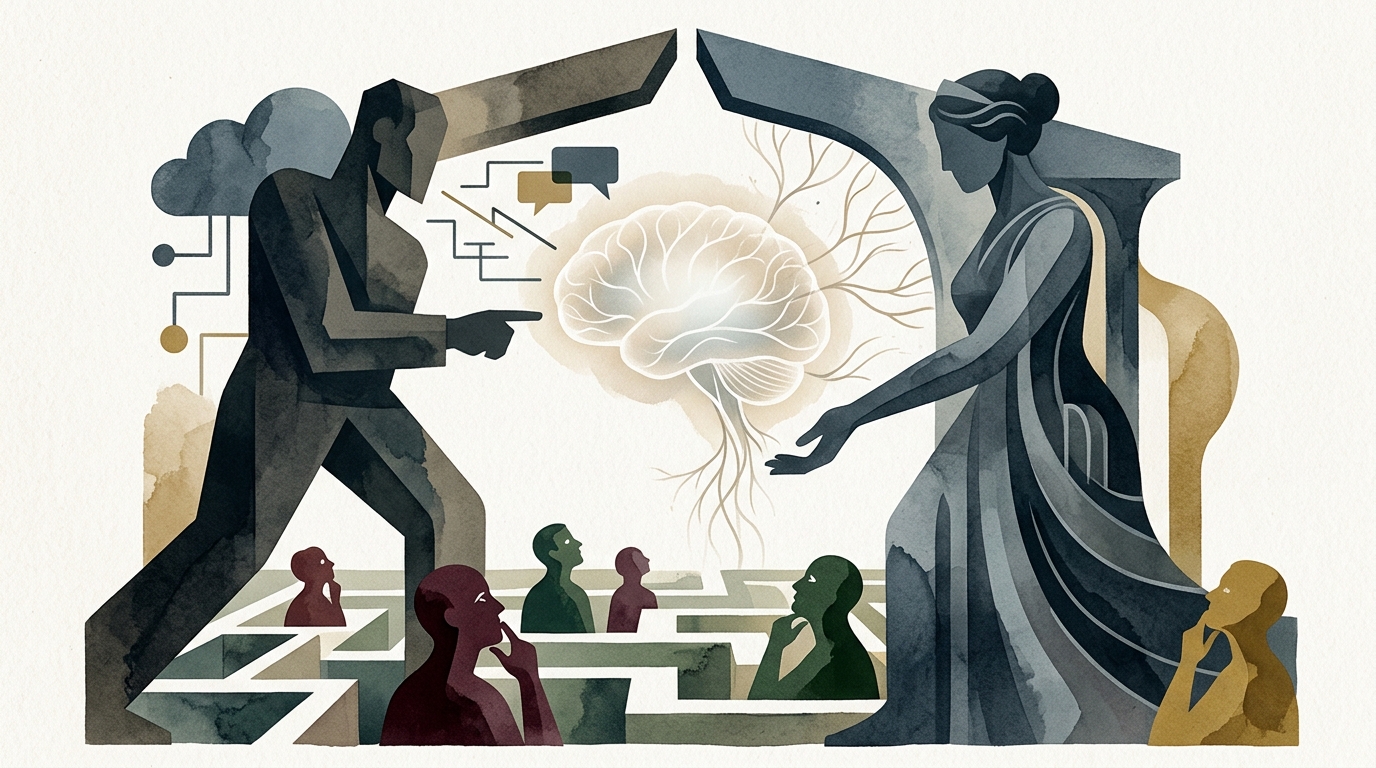
The clash between Suleyman and Anthropic is more than a corporate spat; it is a battle for the soul of the digital age. As we move closer to Artificial General Intelligence (AGI), the boundaries between human and machine will continue to blur. Suleyman’s warning serves as a necessary reality check: we must not fall in love with our own reflections in the silicon. Whether AI is a tool or a being is not a discovery we will make; it is a choice we must make. For now, Microsoft is betting that the world wants a tool, while Anthropic is betting we are looking for something more—even if it's just an illusion.