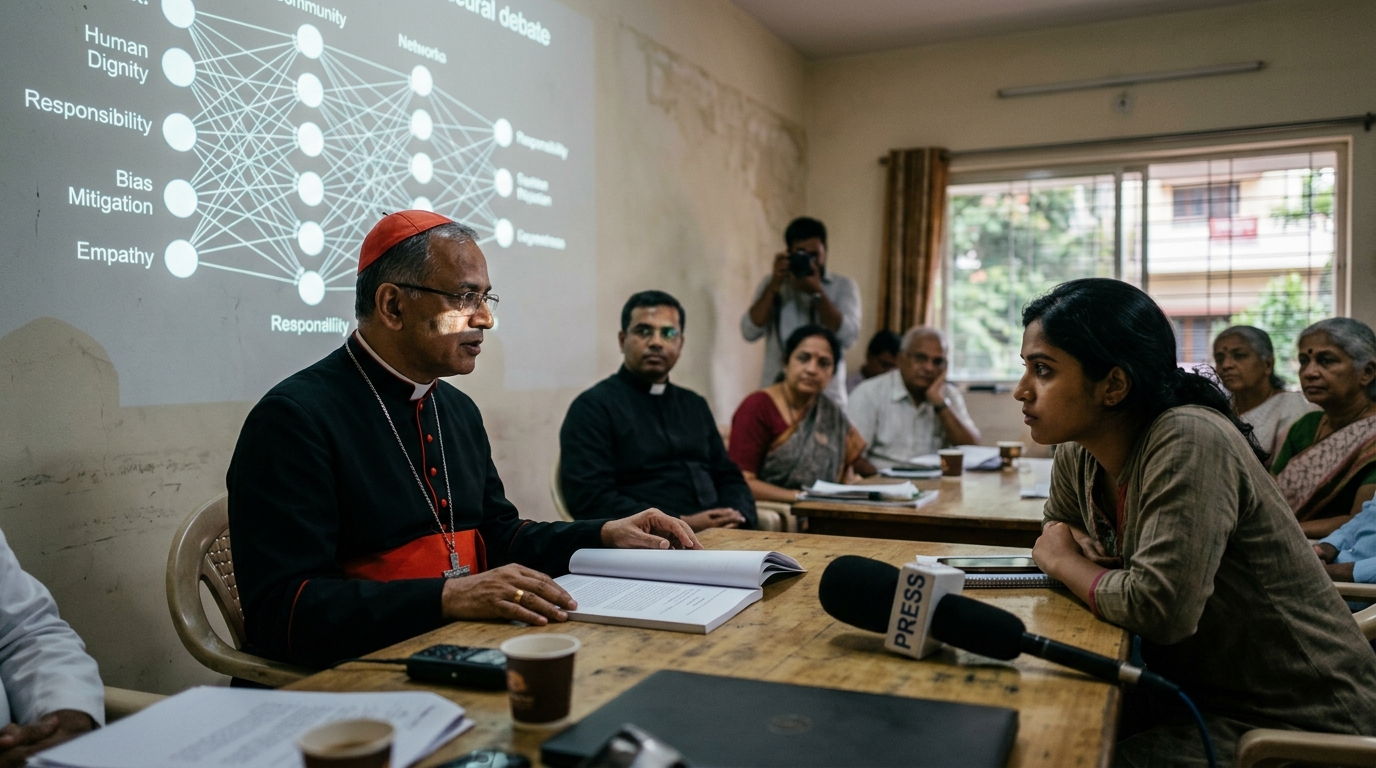
In an era where Artificial Intelligence (AI) is radically transforming the social fabric, the Catholic Church in India has made a historic move by adopting the "Magnifica Humanitas" framework. This initiative is not merely a religious intervention but a profound ethical positioning in a country that stands at the vanguard of global technological development. India, with its vast IT workforce and rapid digitization, is at the heart of a revolution that promises prosperity but also carries risks of further marginalizing vulnerable social groups.
The document "Magnifica Humanitas" (Magnificent Humanity) serves as a guide for the faithful and policymakers alike, promoting the concept of "algorethics"—a term coined by the Vatican to describe the need to embed ethical principles directly into the code of algorithms. The reception of this framework by the Indian hierarchy underscores the urgent need for technology that serves humanity, rather than the other way around.
Human Dignity as a Non-Negotiable Pillar
The core thesis of "Magnifica Humanitas" is that every technological advancement must be evaluated based on its impact on human dignity. In the Indian context, this takes on particular significance. The Church in India expresses concern that algorithms can reinforce existing biases, such as those related to the caste system, religion, or economic status. When decision-making—from access to loans to healthcare—is delegated to AI "black boxes," the risk of structural discrimination increases exponentially.
"Magnifica Humanitas" calls on developers and tech companies to ensure transparency and accountability. It is not enough for an algorithm to be efficient; it must also be just. The Indian Church emphasizes that AI should not be used for surveillance or citizen control but for empowerment. The focus is on "inclusivity," ensuring that the benefits of technology reach rural India, where digital access remains limited.
The Social Question and Digital Inequality
One of the most significant challenges addressed by the framework is the impact of AI on the labor market. India relies heavily on IT services and outsourcing, sectors directly threatened by automation. The Church warns of a "digital feudalism," where a small elite owns the technology while the majority of the population faces unemployment or the devaluation of their labor.
- Transparency: Algorithms must be explainable and open to audit.
- Justice: Avoiding the reinforcement of social and racial biases.
- Responsibility: Clearly defining who is accountable for the decisions of AI systems.
- Solidarity: Technology must bridge the gap between the rich and the poor.
"Magnifica Humanitas" proposes the creation of local ethics committees to monitor the implementation of AI in schools, hospitals, and social services managed by the Church in India. This serves as a practical example of how theoretical principles can be translated into action, affecting the daily lives of millions.
A Global Call from the East
This move by the Indian Church aligns with the "Rome Call for AI Ethics," signed by giants like Microsoft and IBM, as well as representatives of major monotheistic religions. However, India's uniqueness lies in its multiculturalism. The adoption of "Magnifica Humanitas" sends a message to the Indian government, which is currently working on its own regulatory framework for AI.
"Technology is a gift from God, but its use requires wisdom and discernment. We cannot allow the algorithm to replace the human conscience," the text states.
In conclusion, "Magnifica Humanitas" is not an attempt to halt progress but an attempt to humanize it. In a world rushing at breakneck speed toward full automation, the voice of the Church in India reminds us that the true greatness of humanity lies not in silicon chips, but in our ability to protect the weakest and keep our ethical compass intact.