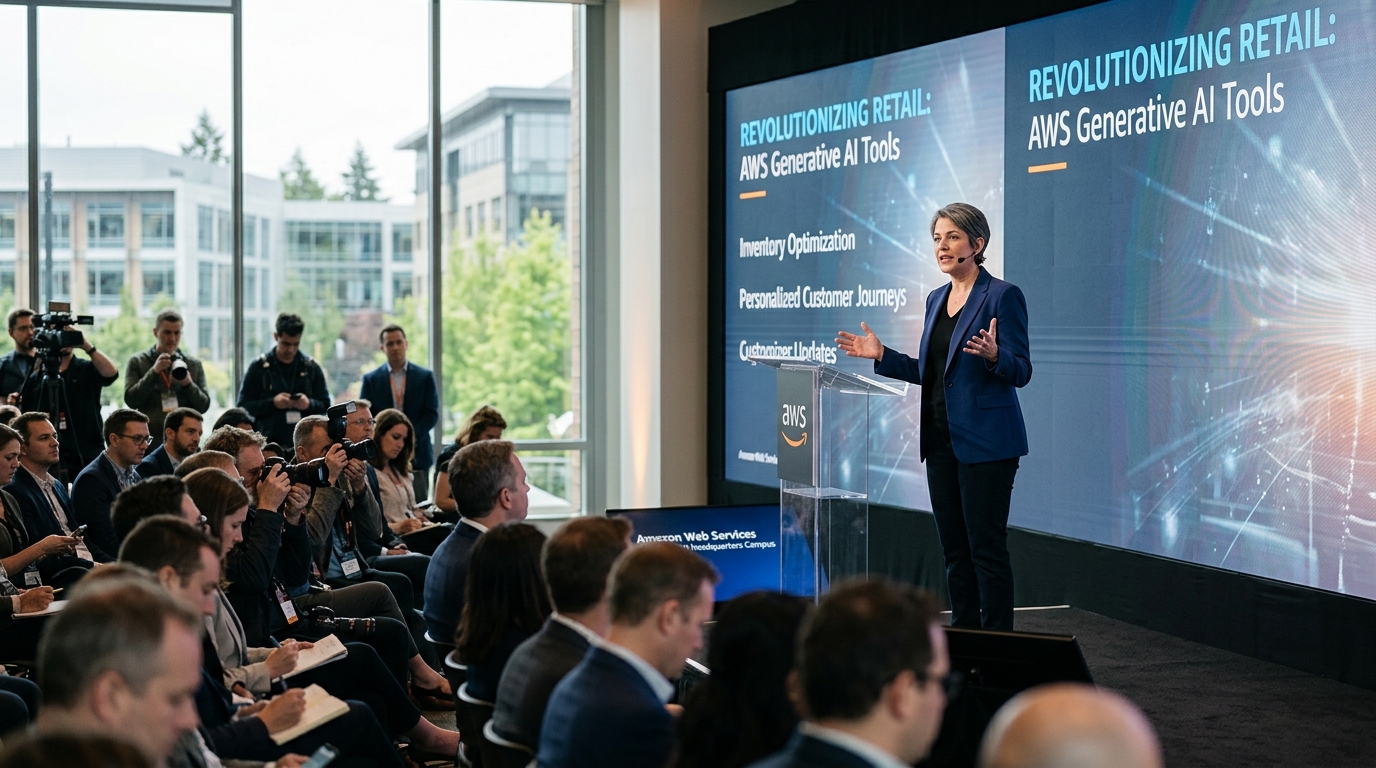
In the modern business landscape, Amazon plays a dual and often paradoxical role. On one hand, it is the undisputed sovereign of e-commerce, a juggernaut that has forced traditional retailers into a defensive retreat. On the other, through Amazon Web Services (AWS), it acts as the premier infrastructure provider enabling those very same competitors to survive and thrive in the digital age. AWS's recent pivot toward Generative AI marks a new chapter in this relationship, where technology is no longer just a data storage utility, but the beating heart of the shopping experience.
Amazon Bedrock: Democratizing Artificial Intelligence
The tip of the spear for AWS in the retail sector is Amazon Bedrock, a fully managed service that makes foundation models (FMs) accessible via an API. For a retailer, this means they no longer need to invest billions to train their own large language models. Instead, they can "rent" the intelligence of world-class models from AI21 Labs, Anthropic, Meta, or Amazon itself, to build sophisticated shopping assistants.
These AI assistants go far beyond traditional chatbots. They can analyze a customer's purchase history, current fashion trends, and real-time product reviews to offer recommendations that mimic the expertise of a seasoned floor manager in a high-end boutique. The ability for retailers to customize these models with their own private data—without that data leaking into the public domain—is the key that unlocks the trust of major global brands.
Optimizing the Supply Chain and Demand Forecasting
Beyond the direct consumer interface, AWS is utilizing AI to solve one of commerce's oldest riddles: the supply chain. Through the AWS Supply Chain service, companies can now use machine learning to forecast demand with accuracy reaching 90% in certain categories. This drastically reduces overstocking and out-of-stock scenarios, improving profit margins in an industry that traditionally operates on razor-thin returns.
- Data Integration: Consolidating data from disparate sources (ERPs, warehouses, logistics) for a unified view.
- Automated Replenishment: Systems that automatically trigger orders before stock runs out.
- Sustainability: Reducing carbon footprints by optimizing delivery routes and minimizing waste.
The Physical Experience in a Digital Era: Smart Stores
Despite the meteoric rise of e-commerce, the physical store remains vital. AWS is bringing AI technology into the brick-and-mortar space with solutions like "Just Walk Out" and "Dash Carts." While these technologies were initially developed for Amazon Go stores, they are now offered as a service to third-party retailers. The use of computer vision and sensor fusion allows customers to shop without waiting in checkout lines, an innovation that fundamentally alters consumer psychology.
Furthermore, AI is being deployed for "Store Analytics." Retailers can now see which aisles attract the most foot traffic, how customers navigate the store, and which products they touch but ultimately put back. This data, which was previously only available in the digital realm, is now becoming the fuel for optimizing physical retail environments.
The Paradox of Coopetition
The relationship between Amazon and retailers is the epitome of "coopetition." Companies like Best Buy or Shopify rely on AWS for their backbone while simultaneously competing fiercely with Amazon.com for sales. For Amazon, this is a brilliant business model: they generate revenue whether a consumer buys from them or from a competitor running on their rails.
"AI technology is no longer a privilege of the few, but a necessity for all. At AWS, our goal is to give every retailer the tools to become a technology company," say company executives.
In conclusion, AWS’s move to offer advanced AI solutions to the retail sector isn’t just about selling compute cycles. It’s about redefining the very act of "buying." In a world where consumer attention is the scarcest currency, AI is the tool that allows businesses to offer exactly what the customer needs at the exact moment they need it, whether that happens on a smartphone screen or a physical shelf.