By mid-2026, the global community faces one of the most significant legal and ethical challenges in modern history: the management of intellectual property (IP) in the age of Artificial Intelligence (AI). The traditional concept of copyright, built on the principle of human creativity and the protection of work from arbitrary exploitation, is being shaken to its core by models trained on billions of data points without explicit consent from their creators.
The End of Data Innocence
The era when the internet was viewed as a free reservoir of information is over. For years, Big Tech companies utilized "web scraping" to fuel Large Language Models (LLMs), arguing that this constituted "fair use." However, global jurisprudence is beginning to tilt toward creators. The full implementation of the EU AI Act has introduced strict transparency rules, forcing companies to publish detailed summaries of copyrighted training data.
In Greece, the Hellenic Copyright Organization (OPI) is in constant consultation with publishers and creators' associations. The stakes are immense: if the Greek language and culture are used to generate profit via algorithms, how can we ensure that Greek creators receive their fair share? The answer seems to lie in collective licensing and new usage-based royalty models.
Who is the 'Author'?
One of the most thorny issues remains the legal status of works produced entirely by AI. To date, most jurisdictions, including the US and the EU, refuse to grant copyright to non-human entities. This creates a paradoxical "ownership vacuum." If a script or an image is generated by a machine, does it belong to the user who provided the prompt, the company that built the model, or the public domain?
- The concept of "Prompt Engineering" as a creative act is heavily contested.
- Artists are demanding "opt-out" mechanisms to exclude their works from model training.
- Watermarking technology is becoming mandatory to distinguish human content from synthetic output.
Ethically, the issue touches the very essence of art. AI does not create from scratch; it reassembles existing human ideas. This "algorithmic recycling" risks leading to cultural stagnation, where creators are discouraged from producing original work, fearing it will be immediately devoured by machines.
The New Economy of Licensing
We are witnessing a shift toward bilateral agreements. Major news organizations and publishing giants are now signing multi-million dollar contracts with companies like OpenAI and Google. This creates a two-tier market: on one side, powerful players capable of negotiation, and on the other, independent creators who remain exposed. The need for collective management, similar to the music industry's model, is more urgent than ever.
"Intellectual property is not just an economic metric; it is society's contract with those who dare to imagine the future. If we break it, we will be left with a sterile repetition of the past."
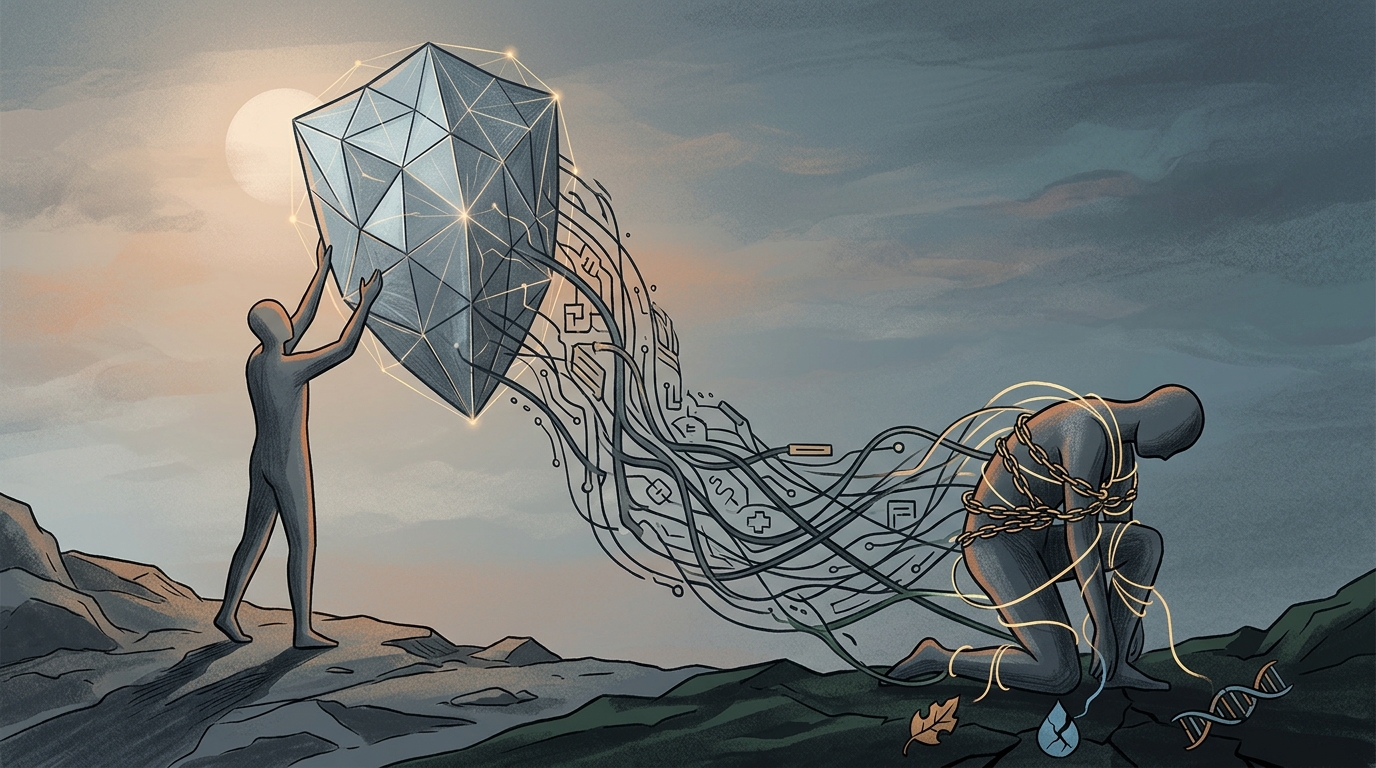
In conclusion, managing IP in the AI era requires a delicate balance. We must encourage innovation without sacrificing human dignity and the livelihoods of creators. Technology should serve as a tool to enhance creativity, not replace it. Lawmakers are now tasked with writing the rules of a game that changes every second, ensuring that the digital renaissance does not turn into digital pillaging.