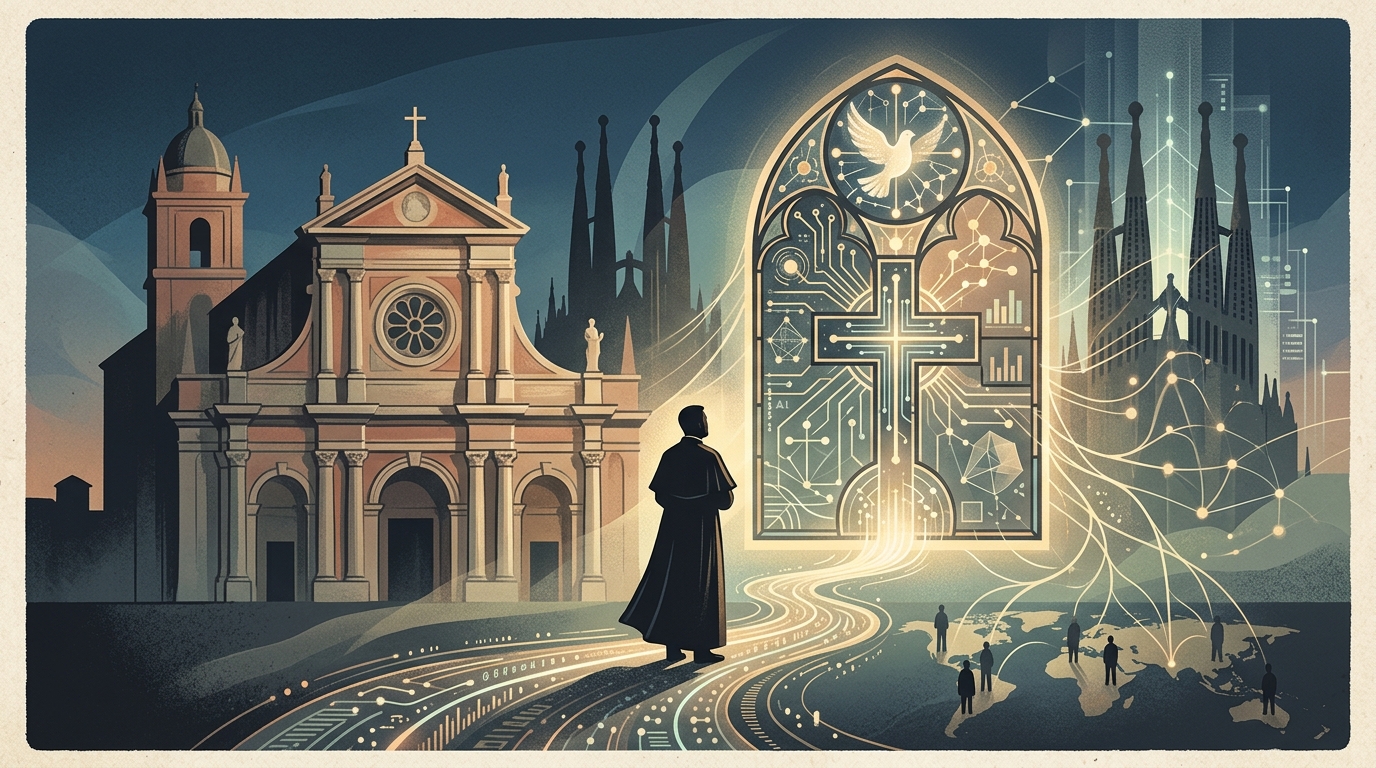
In an era where technology is often viewed as the antithesis of spirituality, the Catholic Church is attempting a bold bridge. This is not merely about adopting new tools, but a fundamental effort to ensure that Artificial Intelligence (AI) remains at the service of human dignity. Recent coverage by EWTN News highlights a growing trend: the faithful and the hierarchy no longer fear the algorithm but seek to sanctify it through ethical use.
The 'Algor-ethics' Initiative and the Vatican
The heart of the Catholic approach to AI lies in the concept of 'algor-ethics,' a term championed by the Vatican and the Pontifical Academy for Life. Pope Francis has repeatedly emphasized that technology is not neutral. Every line of code carries the values of its creators. By signing the 'Rome Call for AI Ethics,' the Vatican managed to bring giants like Microsoft and IBM to the same table, committing them to principles such as transparency, inclusion, and accountability.
This effort is not merely theoretical. It aims to prevent the biases that can arise from discriminatory algorithms, particularly against the poor and marginalized. For the Church, AI must be a tool that reduces inequalities rather than widening them. The ethical framing of technology is now considered part of the Church's social teaching in the 21st century.
Magisterium AI: A Theological Advisor in Your Pocket
One of the most impressive applications of AI in the Catholic world is Magisterium AI. This is a specialized large language model trained exclusively on Church documents, papal encyclicals, and Canon Law. Unlike ChatGPT, which can 'hallucinate' or provide inaccurate theological answers based on dubious internet sources, Magisterium AI offers precision and doctrinal consistency.
This tool assists priests in preparing their homilies, theology students in their research, and laypeople seeking answers to complex ethical questions. Its use demonstrates how AI can democratize access to ecclesiastical knowledge, making centuries of wisdom instantly available through a simple chat interface.
Hallow and the Digital Prayer Revolution
The success of apps like Hallow, which uses AI to personalize the prayer and meditation experience, shows the hunger of the faithful for digital spirituality. AI analyzes user preferences and needs, suggesting specific Scripture passages or audio content that fits their current state of mind. This creates a new form of 'digital parish,' where technology acts as a reminder and facilitator of spiritual life amidst the noise of daily life.
- Personalized spiritual exercise programs.
- Use of voice AI to read texts from saints.
- Connecting global communities of believers through shared prayer challenges.
Preserving Tradition Through Technology
Beyond pastoral care, AI is being used to save historical heritage. In the Vatican Secret Archives, machine learning algorithms help decipher and digitize ancient manuscripts that have been illegible for centuries. This 'digital paleography' accelerates historical research, revealing new aspects of world history and the evolution of Christian thought.
Furthermore, AI aids in the maintenance of cathedrals and artworks. Through sensors and predictive models, conservators can anticipate wear and tear and intervene before irreparable damage occurs. Thus, the most advanced technology of today protects the beauty of yesterday.
Challenges and the Future of Digital Pastoral Care
Despite the excitement, the Catholic Church remains cautious. The fundamental question remains: can a machine have a soul or offer true comfort? The Church's answer is a resounding 'no.' AI is considered a supplement, not a replacement for human contact and the sacraments. A chatbot can provide information about confession, but it cannot grant absolution.
The future of AI in Catholicism will depend on maintaining this balance. As technology evolves, the Church is called to remain an ethical compass, ensuring that the 'smart' society of the future remains a human society. The challenge is great, but the opportunity for a new evangelization in the digital age is historic.