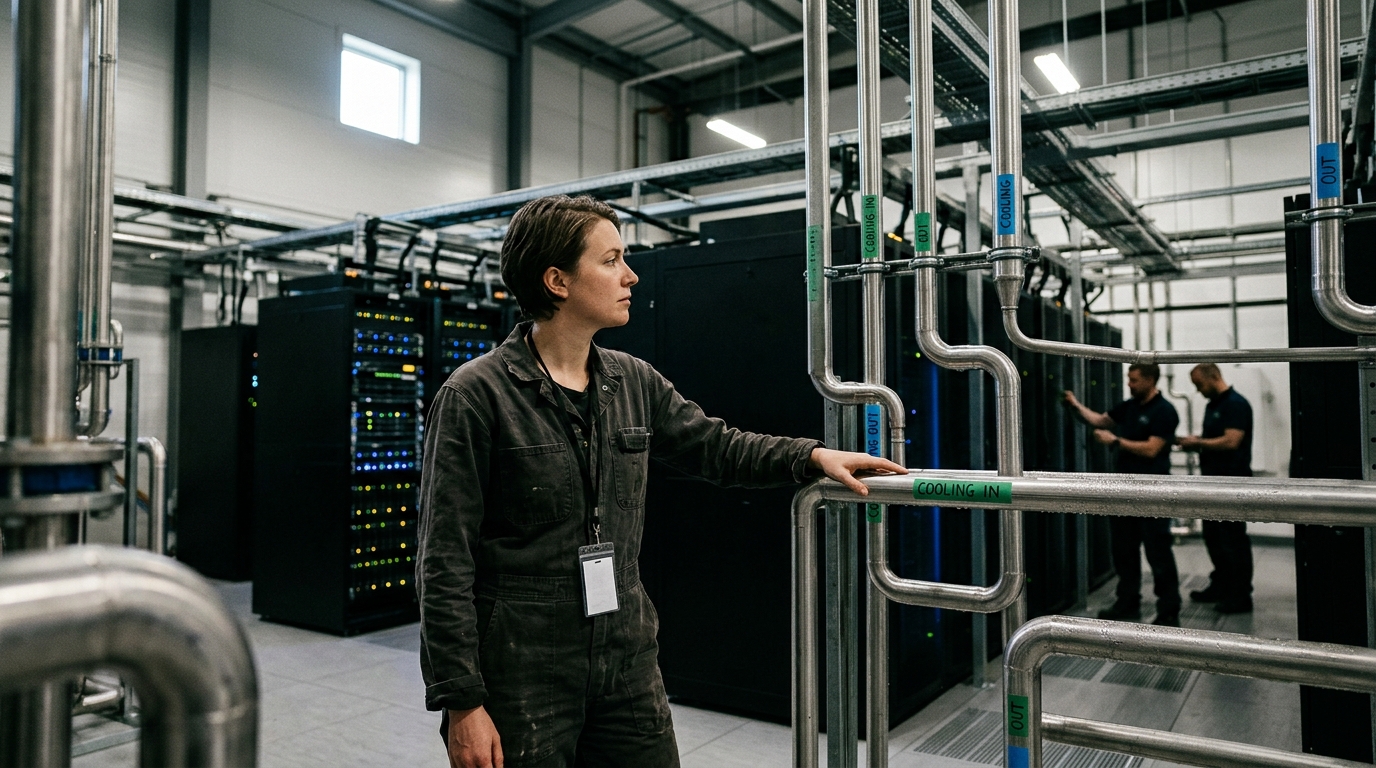
The Artificial Intelligence (AI) revolution is not free of charge. Behind the impressive capabilities of tools like GitLab Duo to write code, fix bugs, and automate workflows, lies a power-hungry infrastructure that threatens to derail global climate goals. In an era where tech giants struggle to reconcile Net Zero promises with an insatiable hunger for GPUs, GitLab is adopting a strategy centered on transparency and sustainability.
The Challenge of Scope 3 Emissions
For a software company like GitLab, the bulk of carbon emissions doesn't come from its offices—which are non-existent due to its fully remote nature—but from its value chain, known as Scope 3 emissions. Integrating AI into DevOps processes adds a new, heavy layer to these emissions. Every time a developer requests a code suggestion, a processing chain is triggered in data centers that consume vast amounts of energy and water for cooling.
GitLab, according to recent reports and the strategy analyzed by Trellis Group, does not focus solely on direct consumption. Instead, it treats emissions "overhead" as an optimization problem. Their approach is based on the principle that the greenest energy is the energy that is never consumed. This translates into selecting models that are "fit-for-purpose" rather than using giant, general-purpose models for simple tasks.
From Efficiency to Strategic Choice
One of GitLab's key tactics is the use of model distillation and specialization. Instead of running a model with hundreds of billions of parameters to suggest a simple Python function, the platform utilizes smaller, optimized models that provide the same accuracy at a fraction of the energy cost. This is not only environmentally sound but also economically necessary, as the cost of AI inference remains high.
- Data Transparency: GitLab aims to provide customers with data regarding the carbon footprint of their actions within the platform.
- Cloud Provider Collaboration: Pressuring Google Cloud and AWS to use 100% renewable energy in the data centers hosting their services.
- Code Optimization: Promoting "Green Coding," where AI helps developers write code that executes faster and with fewer resources.
The Ethics of Compute
The question remains whether voluntary corporate commitments are enough. GitLab seems to understand that sustainability in the AI era requires a fundamental shift in software engineering culture. It is no longer just about "if we can" automate something, but "at what cost" to the planet. Using AI to improve the energy efficiency of the software being produced is a virtuous cycle the company is trying to foster.
"Sustainability is not an add-on feature, but a fundamental requirement for the future of technology," industry executives note, highlighting the importance of GitLab's initiative.
In conclusion, GitLab’s management of AI emissions serves as a critical experiment. If a company built on speed and innovation can harness its energy footprint without sacrificing competitiveness, then there may be hope for a green digital transition. However, the challenge remains immense, as the demand for AI grows exponentially, threatening to outpace any optimization efforts.