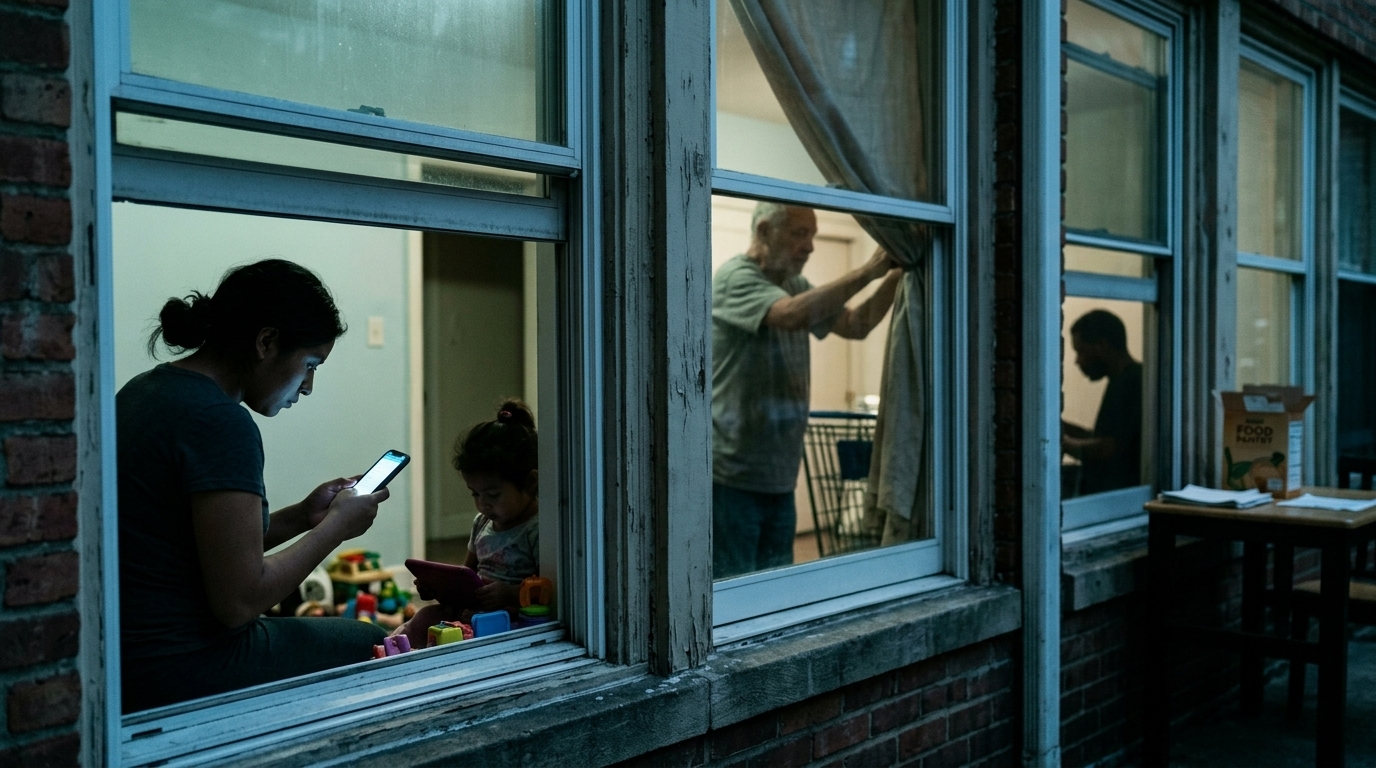
In the heart of the digital age, where artificial intelligence promises abundance and stock indices hit record highs, another, darker reality is emerging. It isn't found in the glossy keynotes of Silicon Valley, but in the corners of the internet where desperation meets solidarity. The r/almosthomeless subreddit is not just a discussion forum; it is a mirror of a society fracturing under the weight of extreme wealth inequality.
A recent investigation by Wired highlighted a chilling trend: the normalization of "precarity." Thousands of people, many of whom are employed full-time, seek advice on how to sleep in their cars without being noticed by police, how to cook with a single candle, or how to maintain hygiene in public restrooms. These digital breadlines are a living testament to the fact that the 21st-century social contract has been irreparably broken.
The Rise of the Digital Precariat
The term "precariat," a portmanteau of precarious and proletariat, describes a new social class lacking job security and a stable income. On r/almosthomeless, this precariat gains a face. It is no longer just the traditionally marginalized, but teachers, nurses, and gig economy workers who see their rent consuming over 70% of their income.
The contrast is provocative. While the billionaire class saw its wealth skyrocket during recent global crises, the middle class is sliding toward poverty. Technology, instead of acting as an equalizer, seems to be accelerating this process. Algorithms that optimize profits for real estate firms and platforms that turn labor into a series of low-paid "tasks" have created a generation of people living in a state of constant panic.
The Failure of Institutions and the Rise of Self-Organization
The fact that people are turning to Reddit for survival guides is a resounding admission of the failure of the welfare state. When official bodies fail to provide housing or basic support, the void is filled by anonymous users. In the subreddit, one finds lists of "friendly" parking lots, tips on how to apply for food stamps, and emotional support from those who have walked the same path.
"Reddit has become the de facto safety net for a generation the state forgot," one user writes. "There are no bureaucratic delays here, only the raw experience of people fighting to keep their heads above water."
This form of "digital solidarity" is moving, but simultaneously terrifying. It highlights a society where survival depends on one's ability to navigate the internet and find the right information, while basic human needs are turned into luxuries. Homelessness is no longer treated as a systemic problem requiring a political solution, but as an individual challenge to be solved with "hacks" and "tips."
The Geography of Despair
The crisis is not limited to the United States. From London to Athens and Berlin, the phenomenon of the "working homeless" is expanding. In Greece, the explosion of rents due to short-term rentals and wage stagnation creates conditions dangerously similar to those described on r/almosthomeless. The digital community acts as a global warning signal: the housing crisis is the new "pandemic" of our era.
The consequences are profound and long-lasting. The constant state of stress in which people who are "almost homeless" live erodes mental health, physical stamina, and social cohesion. When the base of Maslow's hierarchy—shelter and food—is trembling, the entire edifice of democracy is at risk. Inequality is no longer just an economic issue; it is an existential issue for our civilization.
Conclusion: Beyond Survival Hacks
The existence of communities like r/almosthomeless is a cry for help that must be heard in the halls of power. It is not enough to admire the resilience of people surviving on nothing. A radical rethink of wealth distribution, the taxation of windfall profits, and the protection of the right to housing is required. As artificial intelligence continues to generate wealth for the few, society must ensure that technology is used to build homes, not just to provide instructions on how to live without them.