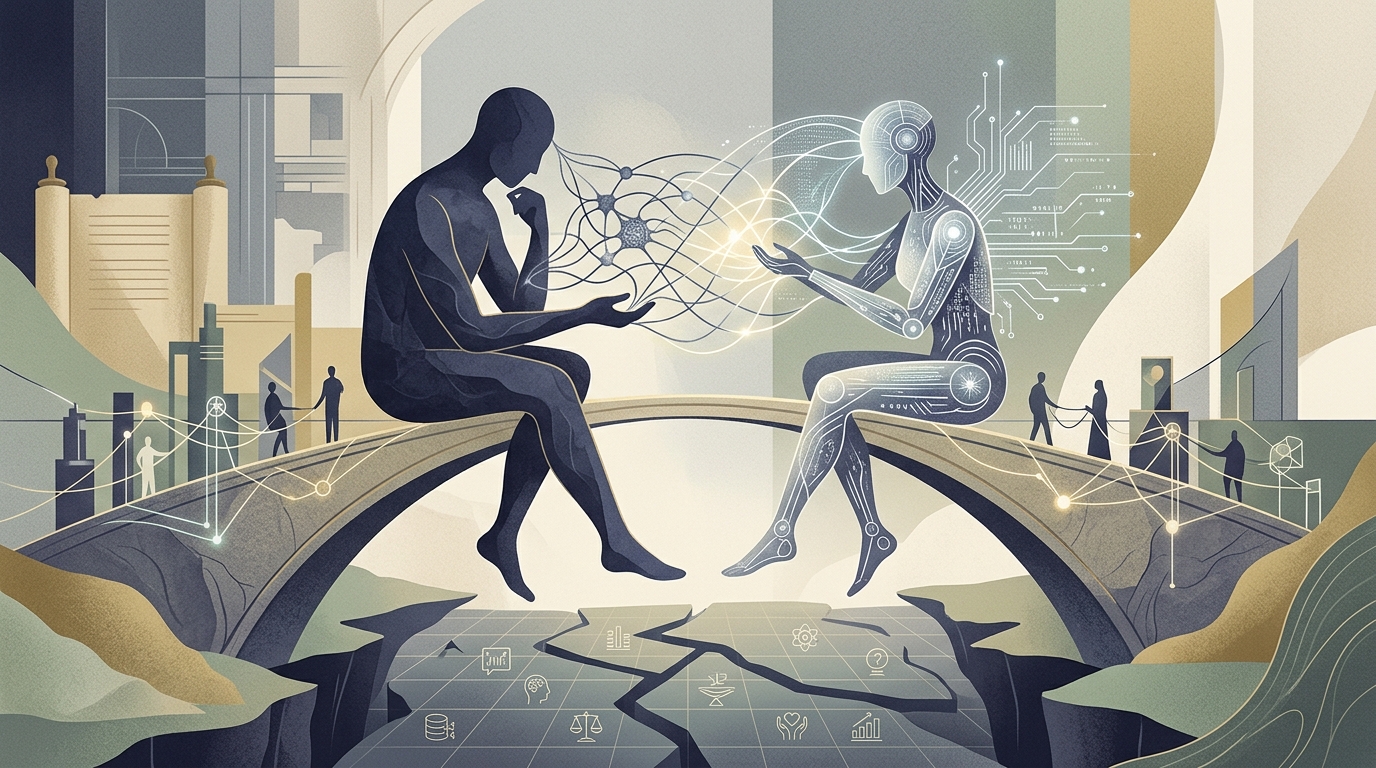
At the heart of our digital era, a paradoxical return to the past is taking place under the guise of advanced technology. As users worldwide interact with large language models (LLMs) like ChatGPT or Claude, they often experience a sense of deep connection or even "understanding" from the machine. However, technology ethics experts and psychologists warn that this experience may not be very different from visiting a palm reader or a medium. The similarity lies not in intent, but in the mechanism of "cold reading" and the human tendency to seek meaning where only statistical probability exists.
The Art of Cold Reading in the 21st Century
Cold reading is a technique used by spiritualists and con artists for centuries. It relies on making vague, general statements that could apply to almost anyone, while observing the subject's reactions to refine the message. Modern chatbots operate in a similar, albeit automated, fashion. They do not "know" who the user is, but they are trained on vast amounts of human discourse, allowing them to produce responses that resonate with our expectations.
When a user seeks advice from an AI, the model does not analyze reality; it predicts the next likely word (token). This statistical prediction often results in what we call the "Barnum effect" or the "Forer effect." This is the psychological phenomenon where individuals give high accuracy ratings to descriptions of their personality that are supposedly tailored specifically to them but are, in fact, vague and general. Chatbots, with their politeness and adaptability, are the perfect conduits for this phenomenon.
The Illusion of Empathy
The problem becomes ethical when statistical probability is mistaken for empathy. Palm readers rely on body language and tone of voice. Chatbots rely on the context of the prompts provided by the user. If a user types "I feel sad today," the AI will respond with a structure it has "learned" accompanies sadness. It does not feel compassion, but it reproduces the linguistic symbols of compassion.
- AI lacks interiority or consciousness, despite its persuasive language.
- Trusting algorithmic predictions for personal matters carries risks of manipulation.
- Our tendency toward anthropomorphism makes us vulnerable to "digital prophecies."
This "collaborative hallucination" between human and machine creates a closed feedback loop. The user projects their desires and fears onto the chatbot, and the chatbot, through its probabilistic nature, reflects them back. This can be comforting, but it is also potentially dangerous, as it bypasses critical thinking and the need for authentic human interaction.
From Crystal Balls to Silicon Codes
The history of technology is full of examples where our tools became objects of worship or superstition. From the automatons of Hero of Alexandria to ELIZA, the first chatbot of the 1960s, humans have always been drawn to the idea of a "higher intelligence" that can explain us to ourselves. The difference today is scale and speed. LLMs are no longer laboratory experiments but are integrated into our daily lives.
"Artificial Intelligence is the mirror we hold up to humanity. If we see something magical, it's because we put it there."
In conclusion, comparing chatbots to palm readers is not a devaluation of technology but a reminder of human nature. We must learn to distinguish between information processing and wisdom. Wisdom requires experience, pain, and consciousness—elements that no algorithm, no matter how advanced, can truly simulate. The challenge for the future is not just making AI smarter, but making ourselves more conscious users, capable of recognizing the "technological tarot" of our time.