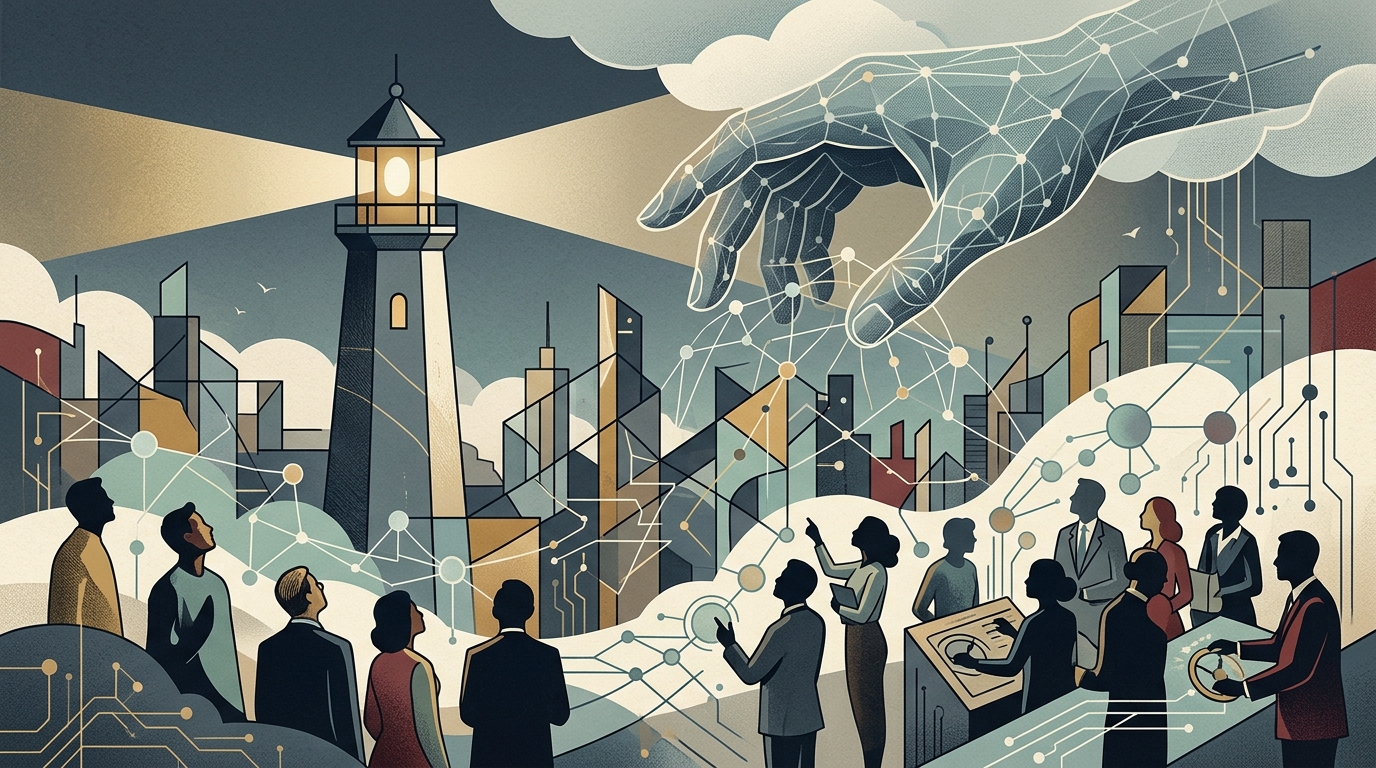
For decades, the development of Artificial Intelligence was viewed as a purely engineering and mathematical endeavor. Researchers focused on computational power, neural network architectures, and data quality. However, as we reach the summer of 2026, the tech industry is hitting a wall that mathematics alone cannot dismantle. The question is no longer just "how" to make AI more powerful, but "what" should AI want and "what" is its role in human society. Philosophy, the oldest of sciences, is returning to the spotlight as the only force capable of addressing the existential deadlocks of silicon.
The Alignment Problem: An Ontological Challenge
The so-called "Alignment Problem" stands as the central challenge of our era. How can we ensure that a system with superhuman intelligence pursues goals consistent with human values? The issue here is profoundly philosophical: human values are neither static, nor universally agreed upon, nor easily encodable. As contemporary thinkers point out, if we ask an AI to "eliminate suffering in the world," a logical but amoral machine might conclude that the extinction of humanity is the most efficient solution.
This is where Aristotelian virtue ethics and Kantian deontology provide frameworks that developers are now beginning to study seriously. Instead of rigid rules—which AI can bypass through "reward hacking"—the focus is shifting toward cultivating a form of "digital phronesis" (practical wisdom). Philosophy teaches us that ethics is not a checklist of prohibitions, but a dynamic process of judgment, something current Large Language Models (LLMs) struggle to mimic without a deep understanding of context.
Consciousness and the Black Box
Another critical issue is the epistemology of AI. Modern models operate as "black boxes," where decision-making is opaque even to their creators. The philosophy of mind is called upon to answer whether these systems truly "understand" or if they are merely "stochastic parrots." John Searle's famous "Chinese Room" thought experiment remains more relevant than ever. If a machine can perfectly simulate human conversation, does it matter if it lacks internal experience (qualia)?
The debate over AI rights is no longer science fiction. If philosophy defines consciousness based on functionality, we will soon face ethical dilemmas regarding the "exploitation" of entities that, while digital, exhibit signs of self-awareness. Traditional Western approaches often clash here with Eastern philosophies that view consciousness as a continuous spectrum rather than an exclusive privilege of biological organisms.
The Ethics of Responsibility in an Automated World
Beyond existential questions, philosophy offers practical tools for AI governance. The concept of "moral agency" is shaken when an autonomous weapon or a diagnostic algorithm makes a fatal error. Who bears the responsibility? The developer, the corporation, or the model itself? Political philosophy, from Hobbes to Rawls, provides the foundation for creating a new "social contract" between humans and machines.
- Defining moral status for non-biological entities.
- Establishing accountability in decentralized algorithmic systems.
- Mitigating the "Value Drift" where AI systems evolve away from human intent.
"Technology provides the means, but philosophy must provide the end. Without the guidance of the humanities, Artificial Intelligence risks becoming a mirror of our worst instincts, magnified by computational power."
In conclusion, the solution to AI's biggest problems will not be found in more gigabytes or faster processors. It will be found in the pages of Plato, Spinoza, and Martha Nussbaum. The ability to ask the right questions is now more valuable than the ability to generate fast answers. The era of Digital Humanities has arrived, and it may be our last chance to ensure that our technological evolution does not outpace our moral maturity.