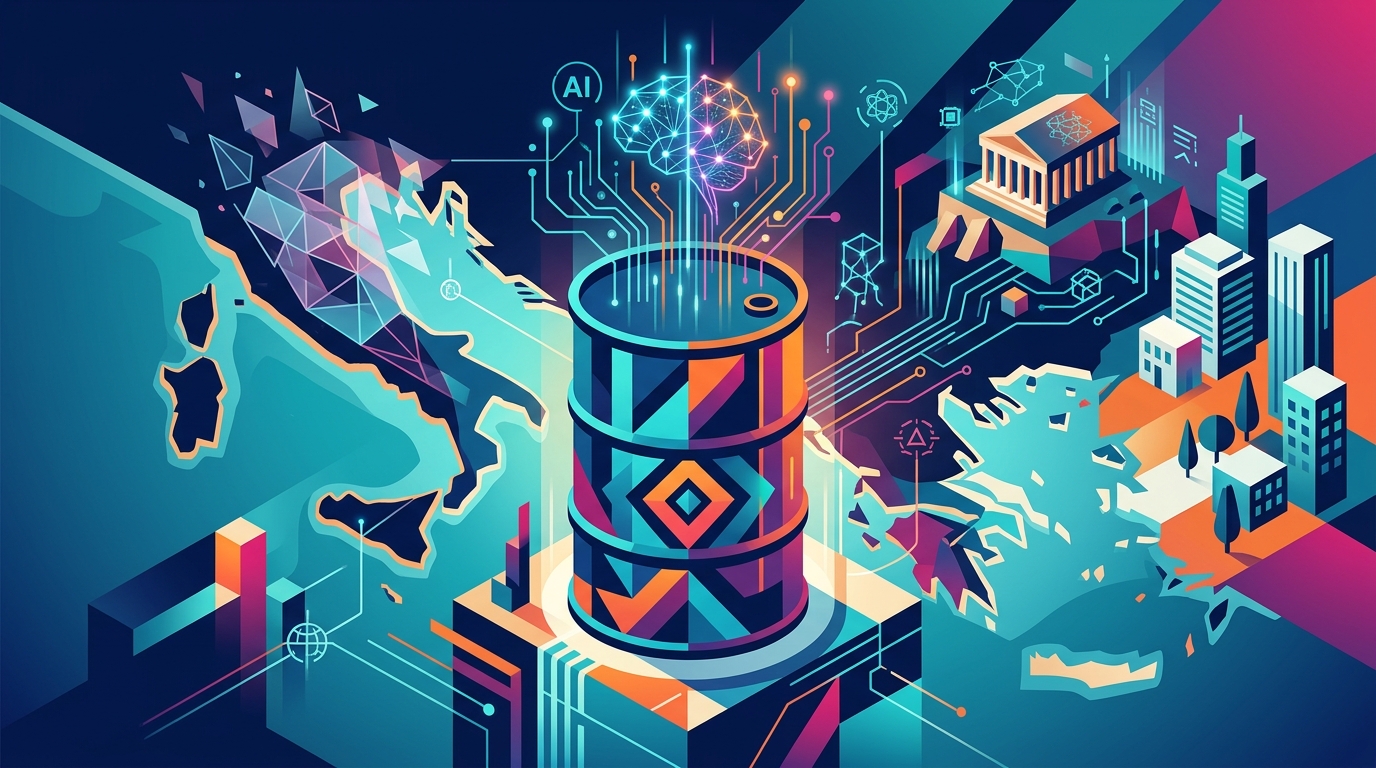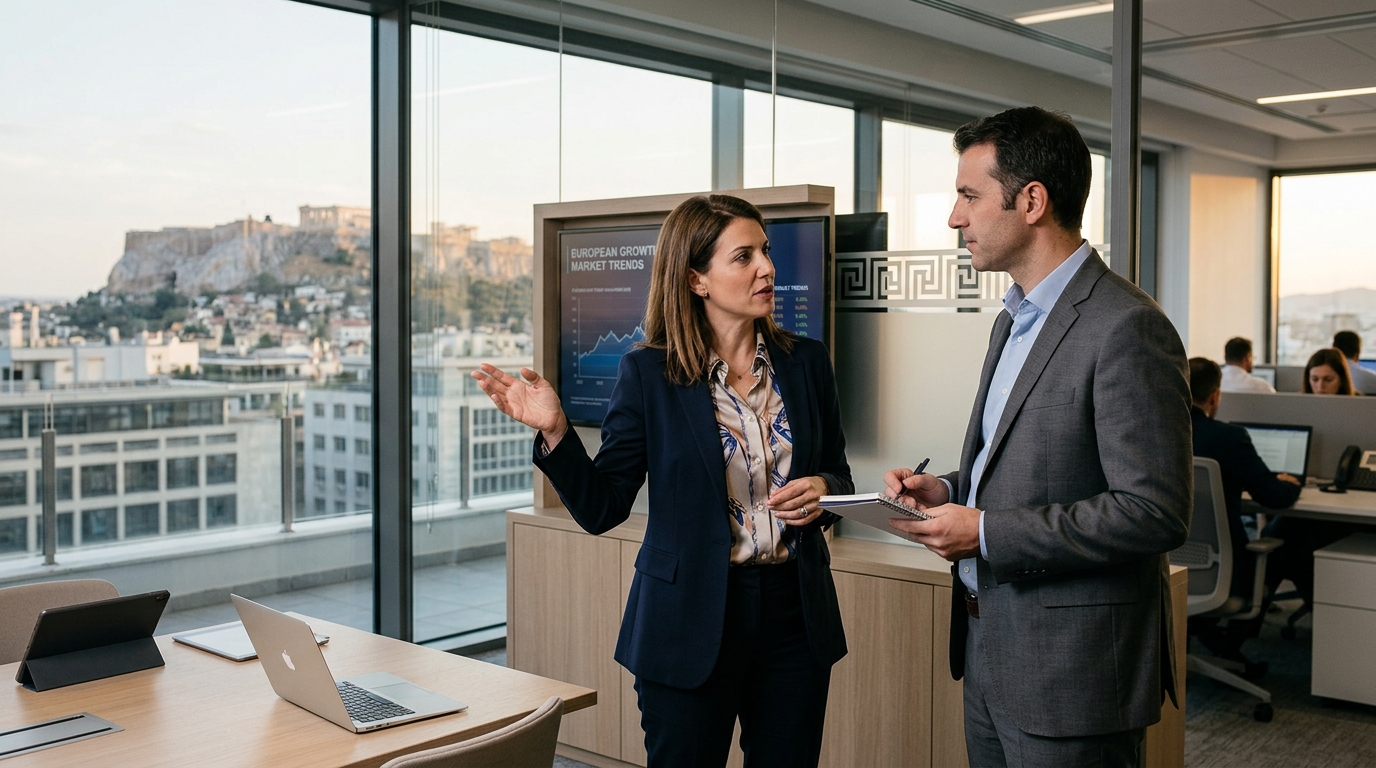
At a time when the global race for Artificial Intelligence (AI) supremacy resembles an arms race between the US and China, Morgan Stanley is turning its gaze toward Europe, identifying a different but equally critical dynamic. According to a recent report by the American investment giant, the Old Continent’s bet is no longer limited to developing large language models; it extends to building the essential "backbone" that will support the digital transition of the next decade.
The European Strategy: Infrastructure and Sovereignty
Morgan Stanley’s analysis highlights that Europe, despite its lagging position in AI software, holds a strategic advantage in infrastructure and "Sovereign AI." The necessity for local data storage and the assurance of digital autonomy are driving EU member states to invest billions in data centers and fiber optic networks. However, the greatest challenge remains energy. AI is energy-intensive, and this is exactly where Europe is called upon to combine the green transition with the digital revolution.
As analysts point out, Europe is not merely trying to replicate Silicon Valley. Instead, it focuses on integrating AI into its traditional industries—from automotive to pharmaceuticals—using strict regulatory frameworks (like the AI Act) as a guarantee of quality and security. This "European model" aims to attract capital seeking stability and ethical technological development.
The 'Greek Key': From Crisis to Tech Hub
Of particular interest is the reference to Greece, which Morgan Stanley describes as the "key" for Southeast Europe. Having left behind a decade-long economic crisis, the country is transforming into a gateway for data and energy. Its geostrategic position, combined with the rapid digitization of the state, makes it an attractive destination for giants like Microsoft, Google, and Amazon Web Services.
- Data Centers: Investments in data hubs in Attica and Northern Greece are creating a new high-tech ecosystem.
- Energy Interconnectivity: Greece's role as an energy hub (via gas pipelines and electrical interconnections) is vital for powering the region's energy-hungry digital infrastructure.
- Digital Governance: Progress on Gov.gr is cited as a case study for how a bureaucratic country can modernize through technology.
Morgan Stanley estimates that Greece can act as a bridge between Europe, the Middle East, and Africa, specifically through the subsea fiber optic cables being laid in the Mediterranean. This "connectivity" is the new currency of the global economy, and Athens seems to be capitalizing on it fully.
Challenges and Perspectives for 2026
Despite the optimism, analysts warn of significant hurdles. The skills gap remains the number one problem for both Europe and Greece. Furthermore, high borrowing costs and the need for further integration of European capital markets make it difficult to finance scale-ups.
"Europe does not need to win the LLM race to be a leader in AI. It needs to win the race of application and infrastructure," the report notes.
For Greece, the challenge is to ensure that this growth diffuses throughout the entire economy and is not limited to a few large investments. The utilization of Recovery and Resilience Facility (RRF) funds until the end of 2026 will be the deciding factor in whether the "Greek key" will permanently unlock the country’s position on the global technological map. Morgan Stanley remains "overweight" on the prospects of the Greek economy, seeing a rare alignment of political will and geopolitical timing.