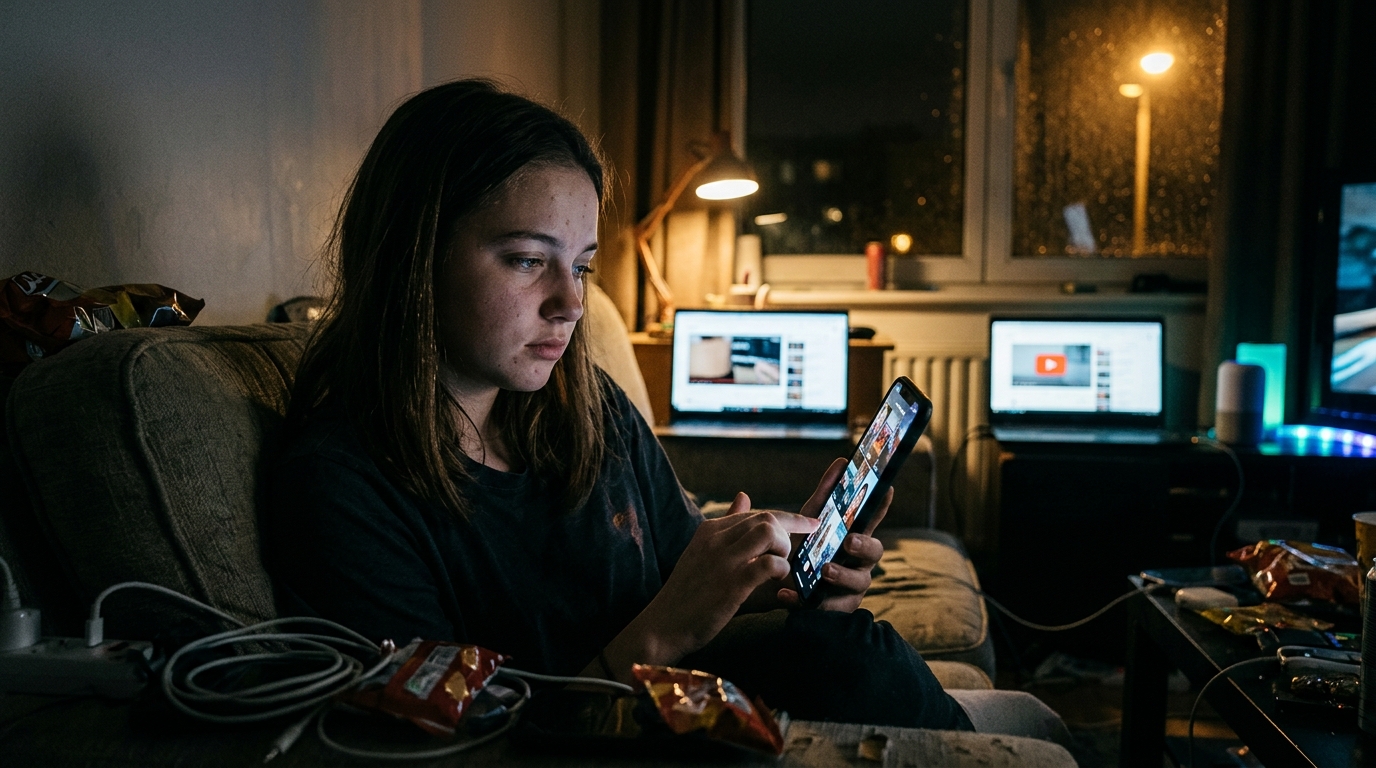
The digital age is navigating one of its most paradoxical turns. While Artificial Intelligence (AI) promised to liberate human creativity from the shackles of technical difficulty, it appears that on platforms like TikTok, the result is an uncontrolled deluge of "digital slop." Recent reports and data analyses indicate that a staggering percentage—reaching 60% of videos in certain niches—is now created entirely by machines, with no human intervention beyond an initial prompt.
The Rise of 'Slop' and the Attention Economy
The term "slop" has become established in digital slang to describe low-quality content mass-produced by AI for the sole purpose of chasing clicks and ad revenue. On TikTok, the process is automated to a dizzying degree. Large Language Models (LLMs) write the script, text-to-speech generators handle the narration, and models like Sora or Kling generate images or videos that often flirt with the "uncanny valley"—that unsettling feeling of something being almost, but not quite, human.
Why is this happening? The answer lies in economic incentives. The TikTok Rewards Program compensates videos over one minute long that garner high viewership. For a genuine content creator, producing a quality video requires hours of research, filming, and editing. For a "content farmer," AI allows for the creation of hundreds of videos per day at zero marginal cost. Even if 99% of them fail, the 1% that goes viral is enough to yield significant profits.
Dead Internet Theory in Practice
This situation brings the "Dead Internet Theory" back to the forefront. This is the belief that the internet has long ceased to be a space for human interaction and has transformed into a closed circuit where bots produce content to be consumed by other bots, or by humans trapped in algorithmic loops.
- Erosion of Trust: When users cannot discern whether the moving story they are hearing is true or the product of an algorithm, trust in the platform collapses.
- Aesthetic Degradation: AI tends to recycle existing patterns, leading to a homogenization of content where all videos look, sound, and evoke the same programmed emotions.
- Misinformation Risks: Automated videos often spread fake news or conspiracy theories, as their production speed outpaces the capabilities of human or even automated moderators.
"We are no longer in the era of creation, but in the era of algorithmic mining. TikTok is transforming from a social network into a vast mirror of synthetic hallucinations."
Platform Response and the Path Ahead
ByteDance, TikTok's parent company, finds itself in a precarious position. On one hand, the sheer volume of content keeps users on the app, increasing dwell time. On the other, the degradation of quality threatens the medium's long-term viability. Recently, the platform introduced mandatory labels for AI-generated content, but "slop" creators are constantly finding ways to bypass these filters.
The question arises whether human creativity can survive in an environment where quantity trumps quality. The need for "authenticity" is emerging as the new digital currency. In the future, perhaps videos that bear the imperfections of human touch—a camera shake, a spontaneous pause, a real wrinkle—will be the only ones with actual value in an ocean of synthetic perfection.
In conclusion, the explosion of AI content on TikTok is not just a technological phenomenon but a profound cultural challenge. If we allow machines to dictate what we see and how we feel, we risk losing the ability to distinguish the essential from the noise. Media literacy and stricter algorithmic regulation are now an urgent necessity.