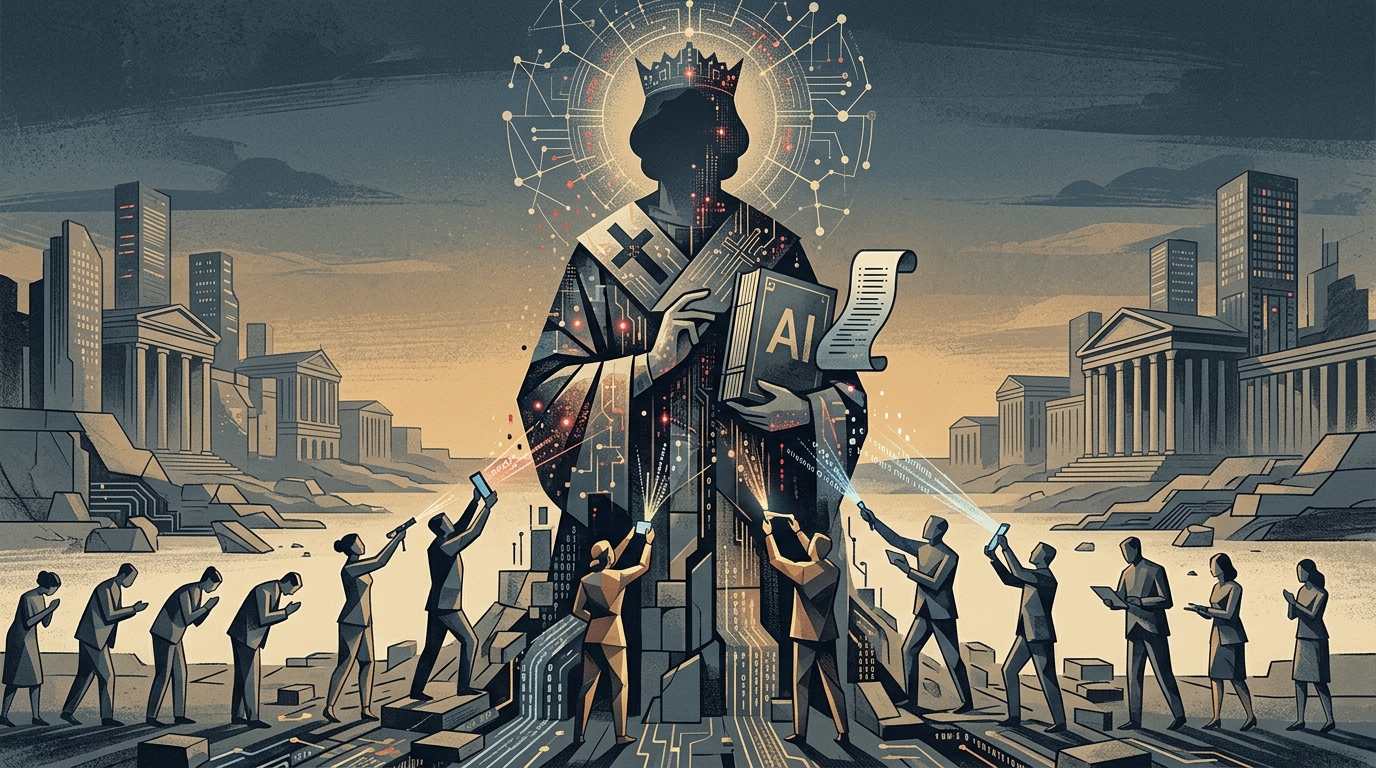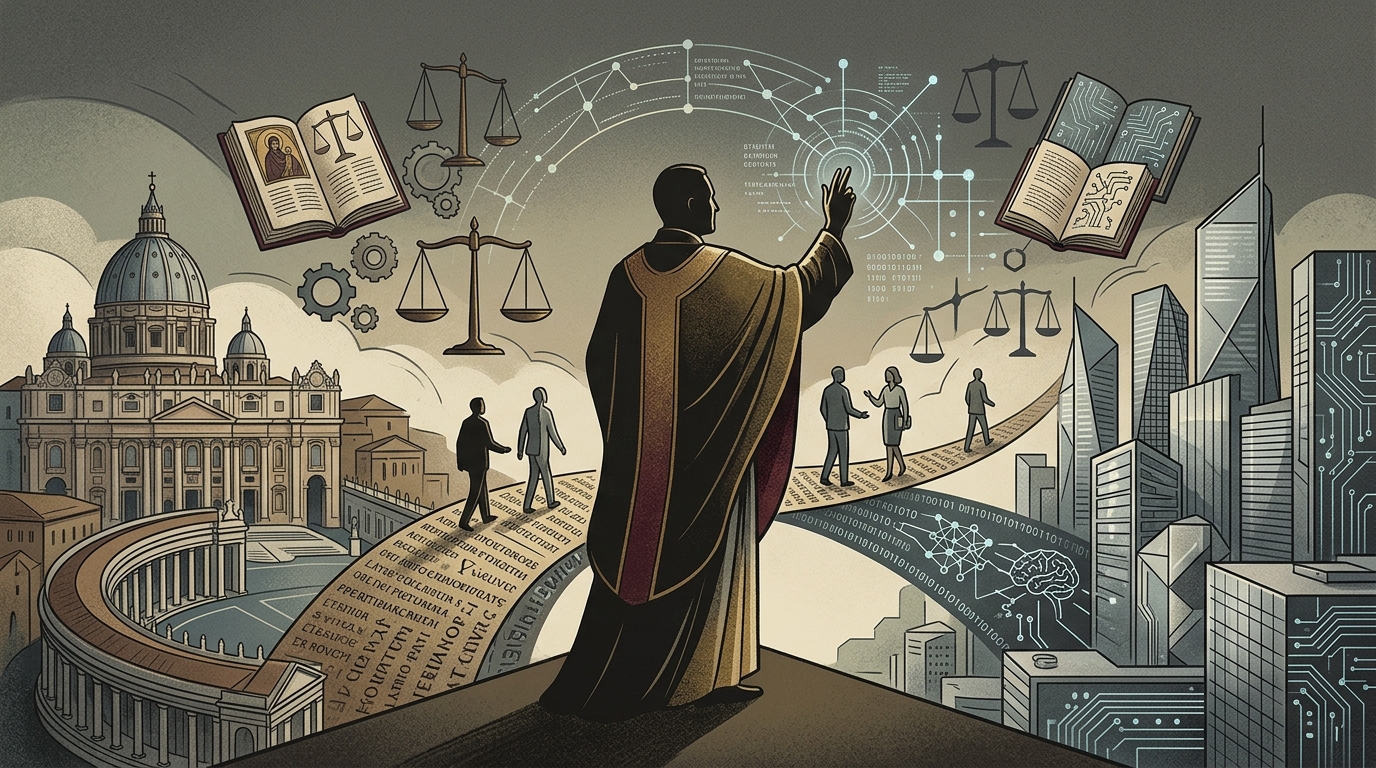
In an era where Artificial Intelligence (AI) is reshaping the foundations of society, economy, and human identity itself, an unexpected power is emerging as the moral guardian of the digital future: the Holy See. The recent activity in Rome, involving giants like Google, Meta, and Anthropic, is not merely a diplomatic courtesy, but a strategic shift by Silicon Valley towards seeking a 'moral compass' that only an institution with a two-thousand-year history can provide.
Pope Francis, who has already expressed his concerns about the risks of AI in the encyclical 'Laudato si'' and subsequent interventions, seems to be leading a global effort to humanize technology. The concept of 'Algorethics,' a term coined within the corridors of the Vatican, has now become the new dogma that the architects of the digital world are being called to embrace.
The Rome Call: From Theory to Practice
The 'Rome Call for AI Ethics,' launched in 2020, has evolved into an international manifesto. Initially signed by Microsoft and IBM, the current involvement of companies like Google and Meta marks a critical turning point. These corporations are not just seeking atonement for past data scandals but a form of 'ethical certification' in a market that now demands transparency and accountability.
The Pontiff's encyclical on AI, which is expected to set the framework for the coming decades, focuses on three central pillars: the protection of human dignity, the assurance of social justice, and the avoidance of 'digital dictatorship.' For the Vatican, AI is not just a productivity tool but an entity that could widen the gap between rich and poor if not reined in by ethical rules.
Why is Silicon Valley Turning to Faith?
The turn of tech giants toward the Vatican is interpreted by many analysts as a move of preemptive compliance. With the European Union implementing the AI Act and the US pushing for stricter frameworks, the Pope's 'blessing' offers a kind of universal legitimacy that transcends national borders. Furthermore, Anthropic, which defines itself as an 'AI safety' company, sees in the Vatican's approach an alignment with its own principles for developing systems that do not conflict with human values.
- Protecting vulnerable social groups from algorithmic bias.
- Maintaining human judgment in decisions concerning life and death (e.g., autonomous weapons).
- The need for 'inclusive technology' that does not leave the developing world behind.
"Technology must serve the human person, not the human person serve technology. If AI becomes a tool of exclusion, then we have failed as a civilization," Pope Francis has characteristically stated.
The Challenges of 'Algorethics'
Despite the optimism, there are skeptics. Implementing ethical rules into programming code is an extremely complex process. How do you translate 'love for thy neighbor' into a credit scoring algorithm? Or how do you ensure 'fairness' in a model trained on data rife with human biases? The Vatican does not offer technical solutions but the philosophical background upon which these solutions must be built.
This collaboration also highlights the importance of interdisciplinarity. In meetings in Rome, theologians sit next to software engineers, and philosophers next to CEOs. This dialogue is essential to avoid 'technocratic paranoia,' where efficiency sacrifices humanity.
The Future: A Global Ethical Agreement?
The Vatican's move may trigger a broader global agreement. If religious leaders, governments, and corporations can agree on a common framework, AI could indeed become the force that solves problems like climate change and disease. However, if 'Algorethics' remains a PR stunt, we risk entering an era where algorithms define our destiny without any moral restraint.
In conclusion, Silicon Valley's 'visit' to Rome is an admission that technology, no matter how powerful, cannot answer the great existential questions. Artificial Intelligence needs a soul, and the Vatican is offering to supply it, or at least to remind its creators that humanity remains the measure of all things.