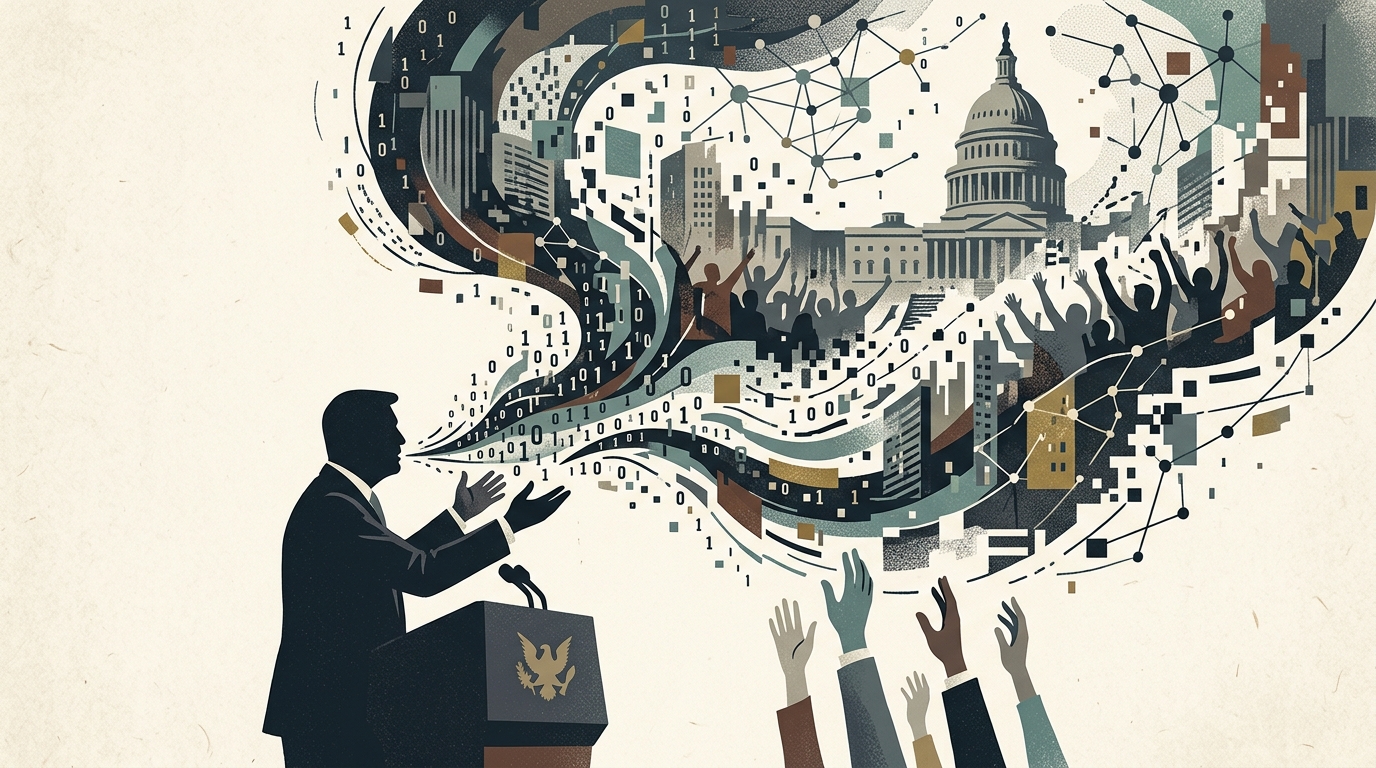
Journalism, the traditional pillar of democracy, is today facing one of the greatest challenges in its history: the advent and rapid spread of Artificial Intelligence (AI). In a recent webinar organized by the International Federation of Journalists (IFJ), the discussion focused not only on technological capabilities but primarily on the ethical and moral orientation that must govern this transition. The central question remains: How can AI become a tool for enhancing truth rather than a weapon of misinformation or a means of devaluing the journalistic profession?
Ethics in the Age of Algorithms
The IFJ, representing over 600,000 media professionals worldwide, emphasizes that AI must never replace human judgment. The 'Global Charter of Ethics for Journalists' remains the industry's sacred text, and the integration of AI must align with the principles of accuracy, independence, and transparency. During the webinar, it was stressed that the use of algorithms for news writing or data processing must be clearly disclosed to the public. A lack of transparency erodes trust, which is already fragile in the age of social media.
The Threat of Misinformation and Deepfakes
One of the most pressing issues discussed is the ease with which Generative AI can create false content. Deepfakes and plausible but fabricated news stories represent an existential threat to information integrity. Journalists are now called upon to become 'fact-checkers' in an ocean of digital illusions. The IFJ proposes investing in AI detection tools and continuous training for journalists to recognize the subtle distortions of truth that an algorithm can introduce.
Labor Rights and the 'Automation' of the Newsroom
Beyond ethics, there is the harsh economic reality. Automation in journalism is often used by media owners as a pretext for staff reductions and cost-cutting. The IFJ is categorical: AI must function as an assistant (augmenting) and not as a replacement (replacing) for the journalist. Creative writing, field research, interviewing, and empathy are elements that AI cannot replicate. Collective bargaining agreements must now include clauses on the use of AI, ensuring that technology will improve working conditions rather than lead to unemployment.
The Copyright Issue
Another critical dimension is the use of journalistic content to train Large Language Models (LLMs) without the permission or compensation of the creators. Tech companies 'scrape' decades of journalistic work to feed their models, reaping enormous profits. The IFJ advocates for a fair compensation framework where journalists and publishers are paid for the value their content provides to AI development. Without high-quality journalistic content, AI itself would end up recycling misinformation, leading to a vicious cycle of knowledge degradation.
Conclusion: Human Oversight as a Shield
The conclusion of the IFJ webinar is clear: the wise coexistence of AI and journalism requires strict Human-in-the-loop oversight. Technology can assist in translation, large-scale data analysis, or content distribution, but the ultimate responsibility for what is published belongs to the human. Journalism is not just the production of words; it is the pursuit of truth and the accountability of power—two fields where the human moral compass remains irreplaceable.