The advent of generative artificial intelligence (AI) initially sent a wave of existential dread through educational circles. The ability of large language models to compose essays, solve complex mathematical problems, and provide personalized explanations in seconds led many to the hasty conclusion that the teacher's role was headed for obsolescence. However, as the dust of the first impression settles, a completely different reality is emerging: technology is not replacing the educator, but rather highlighting the essential, deeply human dimension of their work that no algorithm can simulate.
From Knowledge Transmitter to Architect of Thought
For decades, the educational system was based on the model of the "omniscient" teacher who transfers information to passive recipients. Today, information is a cheap commodity, accessible with a single click. AI can explain the law of gravity or the causes of the French Revolution with precision and patience. What it cannot do, however, is inspire curiosity, detect the spark in the eyes of a struggling student, or connect knowledge to a child's personal experiences and values.
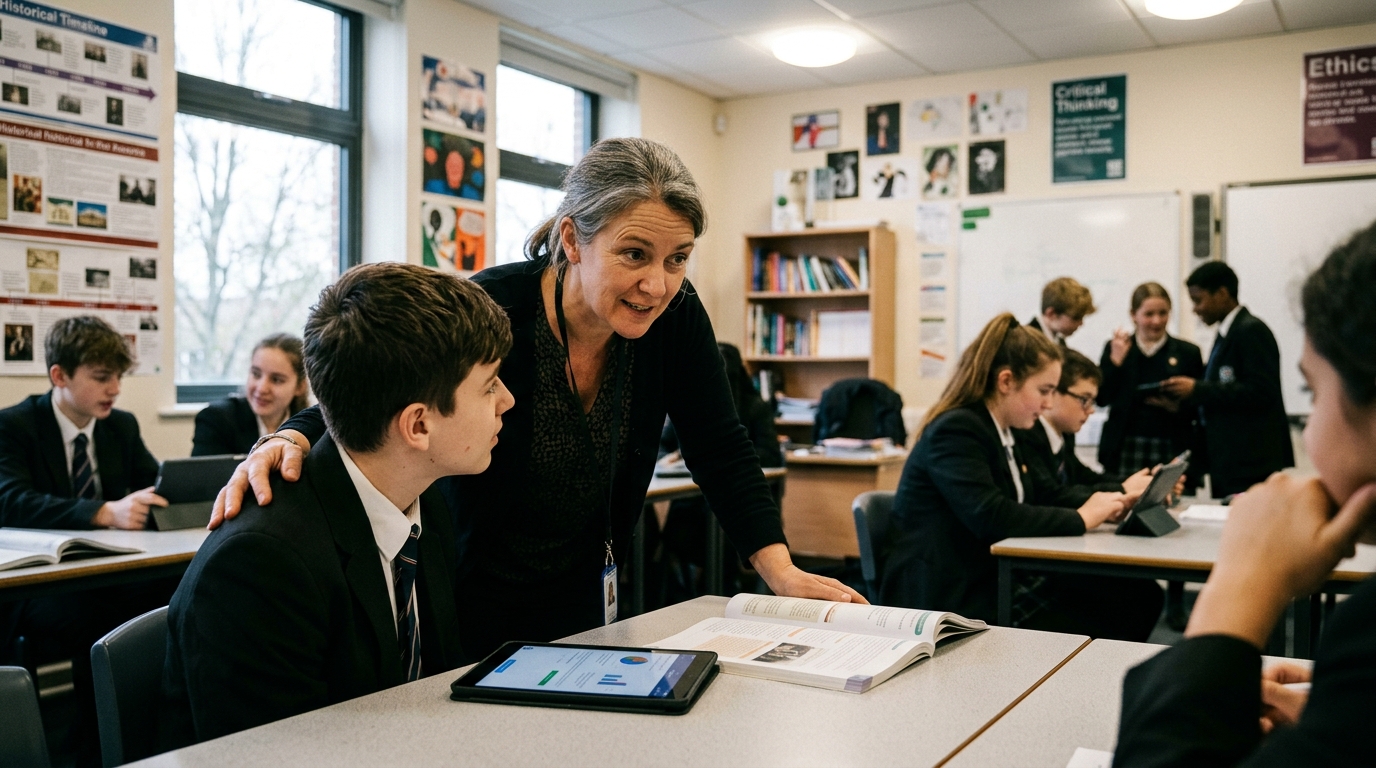
The educator is now transforming from a "source of information" into an "architect of learning." Their role is shifting toward guiding students to navigate the ocean of data, evaluate the reliability of sources, and synthesize new ideas. AI can generate content, but the teacher is the one who teaches the context, the critical analysis, and the ethical use of that content. As recent analyses in Kathimerini suggest, the educational process is becoming a dynamic relationship where technology handles the procedural aspects, freeing up time for meaningful dialogue.
Emotional Intelligence as the Final Frontier
The greatest gap in artificial intelligence remains its lack of empathy. Learning is not a purely cognitive process; it is deeply emotional and social. A student facing problems at home, feeling insecure, or lacking self-confidence does not need a smarter algorithm, but a human who will listen and encourage them. The teacher's ability to build relationships of trust is the catalyst that transforms information into knowledge and knowledge into wisdom.
Furthermore, the school functions as the preeminent space for socialization. There, children learn to collaborate, disagree civilly, and develop a collective consciousness. AI is, by its nature, a solitary tool. Although it can simulate dialogue, it lacks the biological and social essence required to cultivate social intelligence. Teachers are the guardians of this social cohesion, ensuring that technology does not lead to the isolation of younger generations.
Ethics and Critical Literacy in the Age of Hallucinations
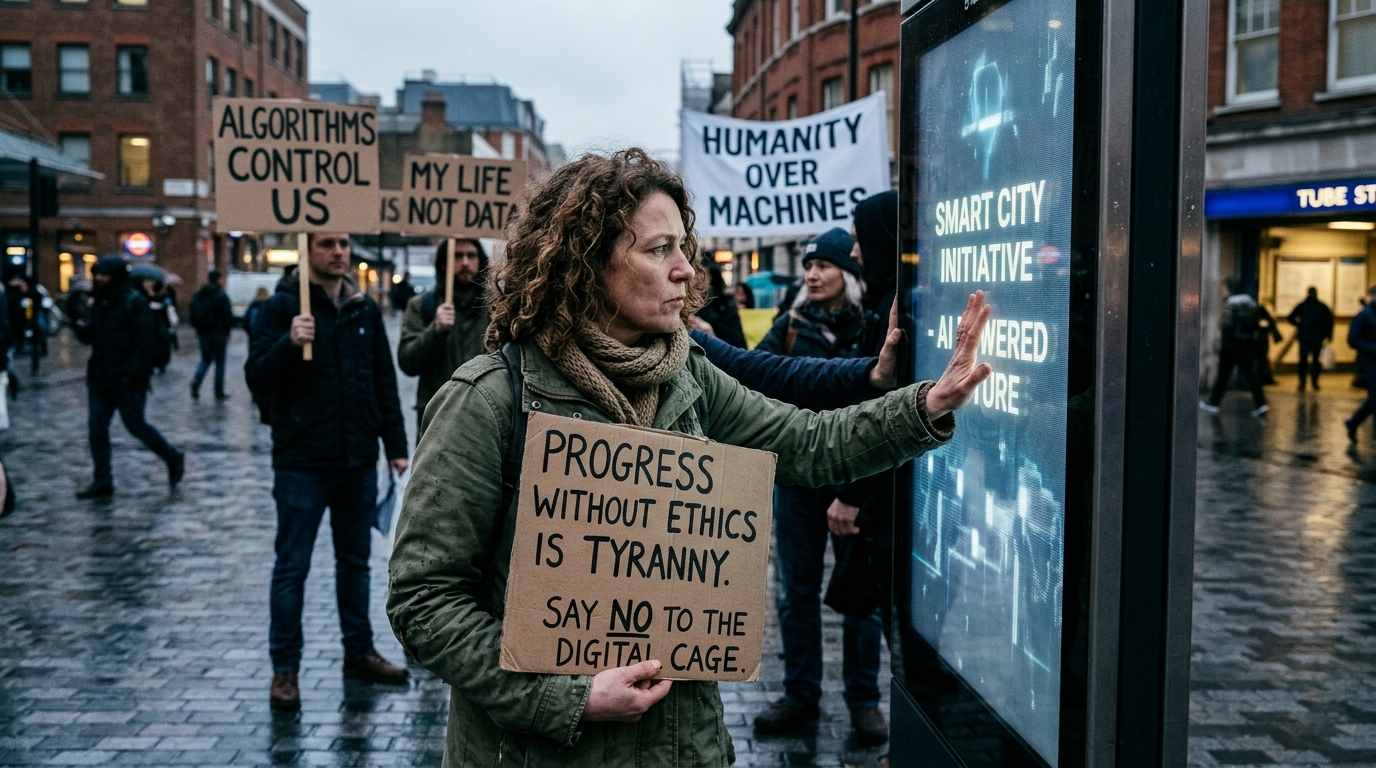
One of the biggest challenges of generative AI is its tendency for "hallucinations"—the production of false information presented as true. At this point, the role of the educator becomes critical for democracy. Teachers are called upon to teach "critical AI literacy," helping students understand how algorithms work, what biases they incorporate, and how to use them without becoming their pawns.
"Artificial intelligence can be the best teaching assistant, but it can never become the teacher. Education is the transmission of human experience, not just data."
This new reality, of course, also requires the appropriate preparation of the educators themselves. It is not enough for them to know their subject; they must be able to use AI to reduce their administrative burden (grading, material preparation) so they can dedicate that time to the personalized support of their students. Technology, instead of marginalizing them, offers them the tools to become more effective mentors.
Conclusion: A New Humanistic Approach
The discussion about AI in education forces us to return to the basics: What does it mean to teach? What does it mean to learn? The answer that emerges is that education remains an act of love and spiritual guidance. Artificial intelligence highlights the value of the teacher precisely because it shows us what the machine cannot do. In the future, the most successful educators will be those who embrace technology to enhance their humanity, turning the classroom into a laboratory of critical thinking and creativity.