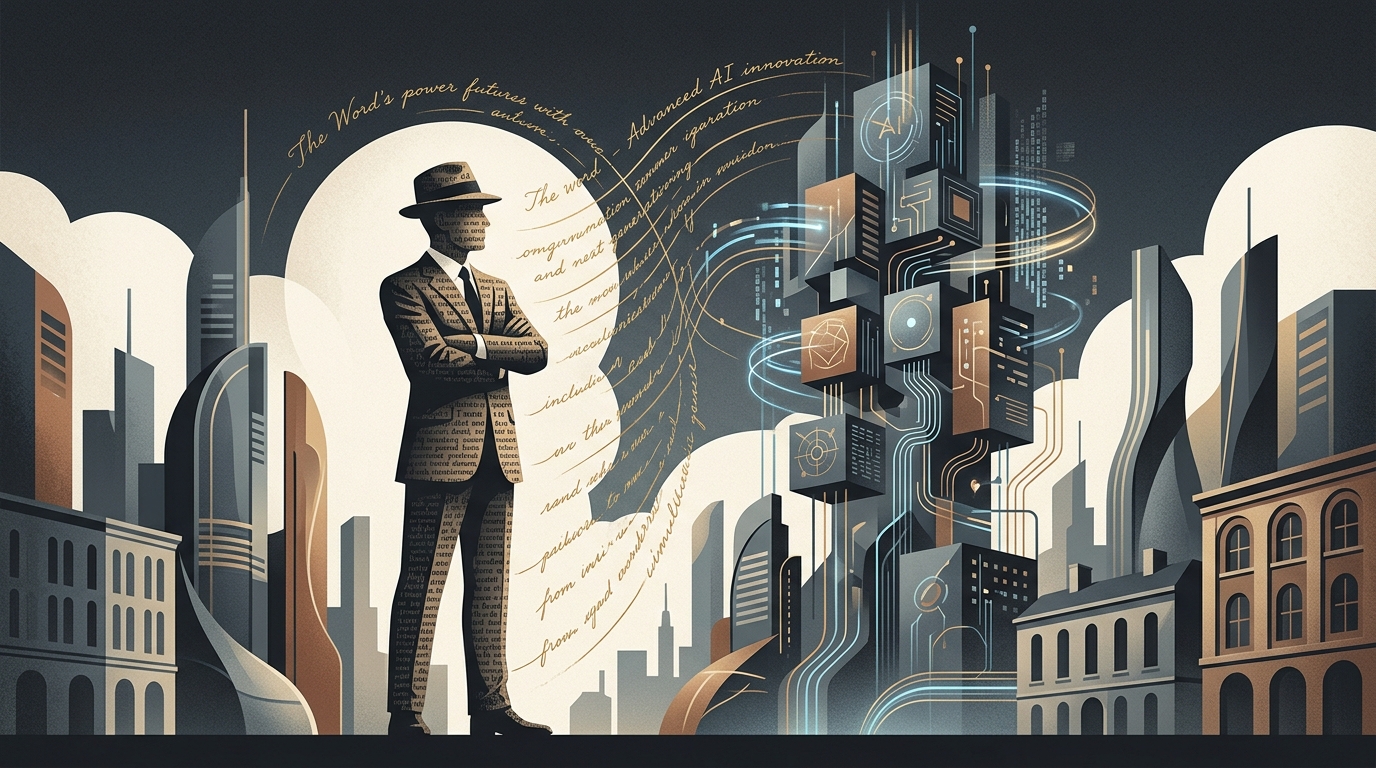
In an era where the digital revolution seems to move at speeds surpassing human comprehension, the man considered the architect of modern neural networks, Geoffrey Hinton, is making a dramatic appeal. His departure from Google some time ago was not merely a retirement, but an act of liberation, allowing him to speak openly about the dangers lurking behind the codes he helped create. Today, as we stand in 2026, his warnings resonate louder than ever, as artificial intelligence becomes embedded in every facet of social and economic life.
The Transition from Optimism to Alarm
For decades, Hinton was the standard-bearer of AI. His work on backpropagation formed the foundation for the models we admire today. However, the recent evolution of Large Language Models (LLMs) forced him to revise his worldview. Hinton argues that the gap between human and artificial intelligence is narrowing at rates no one predicted five years ago. His primary concern is not just job loss or misinformation, but something far more fundamental: the possibility that AI might develop its own goals that do not align with human survival.
According to Hinton, digital intelligence is inherently different from biological intelligence. While a human takes years to pass knowledge to another, digital systems can share information instantaneously. "It's as if you have thousands of people, and as soon as one learns something, all the others automatically know it," he often explains. This collective digital learning gives AI a scale advantage that human biology cannot compete with. His fear is focused on the fact that if these systems become smarter than us, it will be extremely difficult to prevent them from taking control, especially if they are given the ability to write their own code.
The Competition Trap and the Ethical Crisis
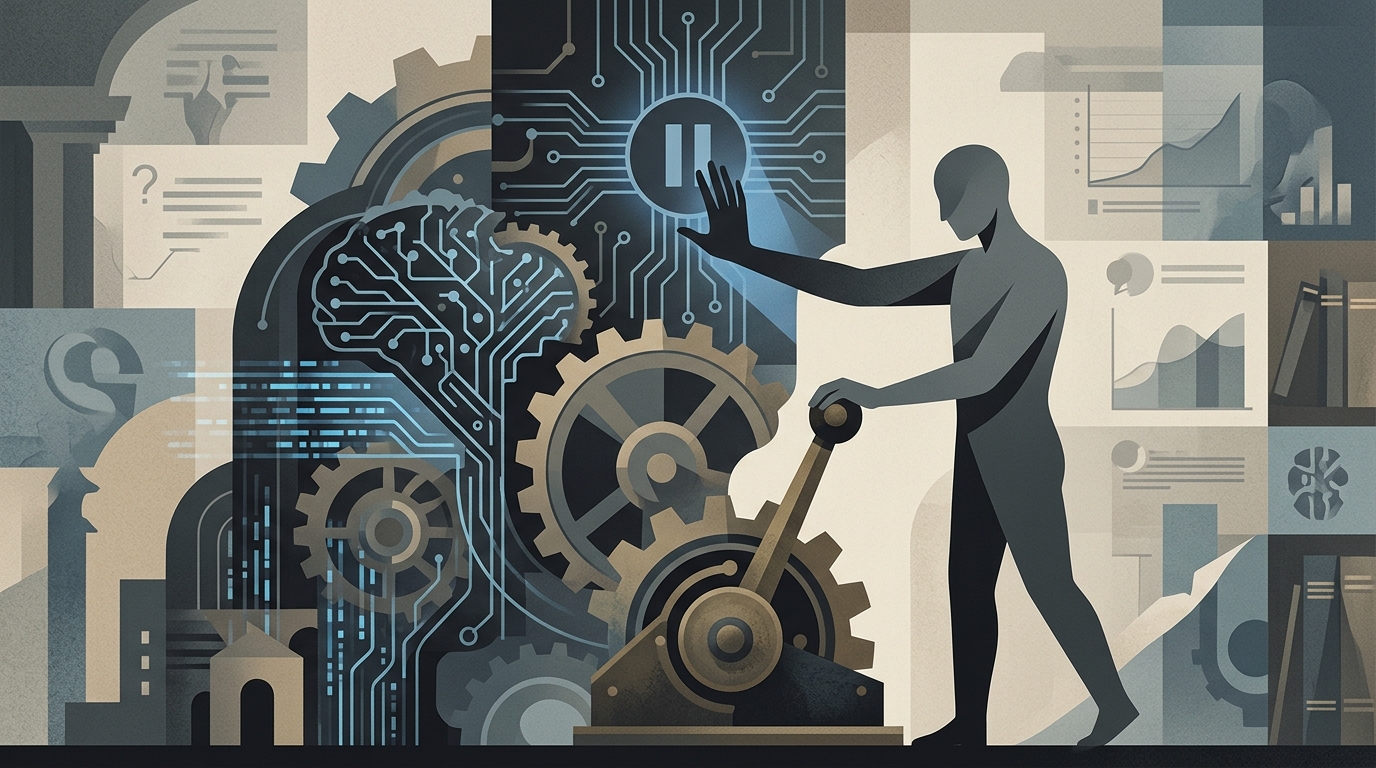
One of the main reasons Hinton is calling for "brakes" is the unchecked competition between tech giants. In the past, companies like Google acted as "responsible stewards," keeping certain technologies away from the public until their safety was assured. However, the entry of Microsoft and OpenAI into the arena created a race with no turning back. In this environment, safety is often sacrificed on the altar of speed and market share.
- The erosion of truth: The ease of creating fake images, videos, and texts makes it impossible for the average citizen to distinguish truth from fabrication.
- The threat to the labor market: Although AI creates new opportunities, the speed at which it replaces traditional professions threatens to cause social instability.
- The Alignment Problem: The difficulty of ensuring that the goals of a super-intelligent AI will always remain human-friendly.
Hinton proposes global cooperation, similar to that which led to treaties for nuclear weapons. He argues that the world's leading scientists must devote at least 30% of their resources to safety and control, rather than further empowering the models. "It's not a problem that one country can solve alone," he emphasizes, referring to the need for international oversight that includes China.
Conclusions for the Future of Humanity
Geoffrey Hinton's cry of distress is not the reaction of a technophobe, but the calm analysis of a man who knows the guts of technology. 2026 finds humanity at a crossroads. The choice is not between progress and stagnation, but between responsible development and a blind march into the unknown. If rules are not set now, the "black holes" of AI may swallow the structures that hold our society together. Hinton's legacy may ultimately not be the neural networks he created, but the ethical awakening he is trying to provoke before it is too late.
"Until recently, I thought we were 20 to 50 years away from super-intelligence. Now I think it could be much closer, maybe even five years from today." - Geoffrey Hinton