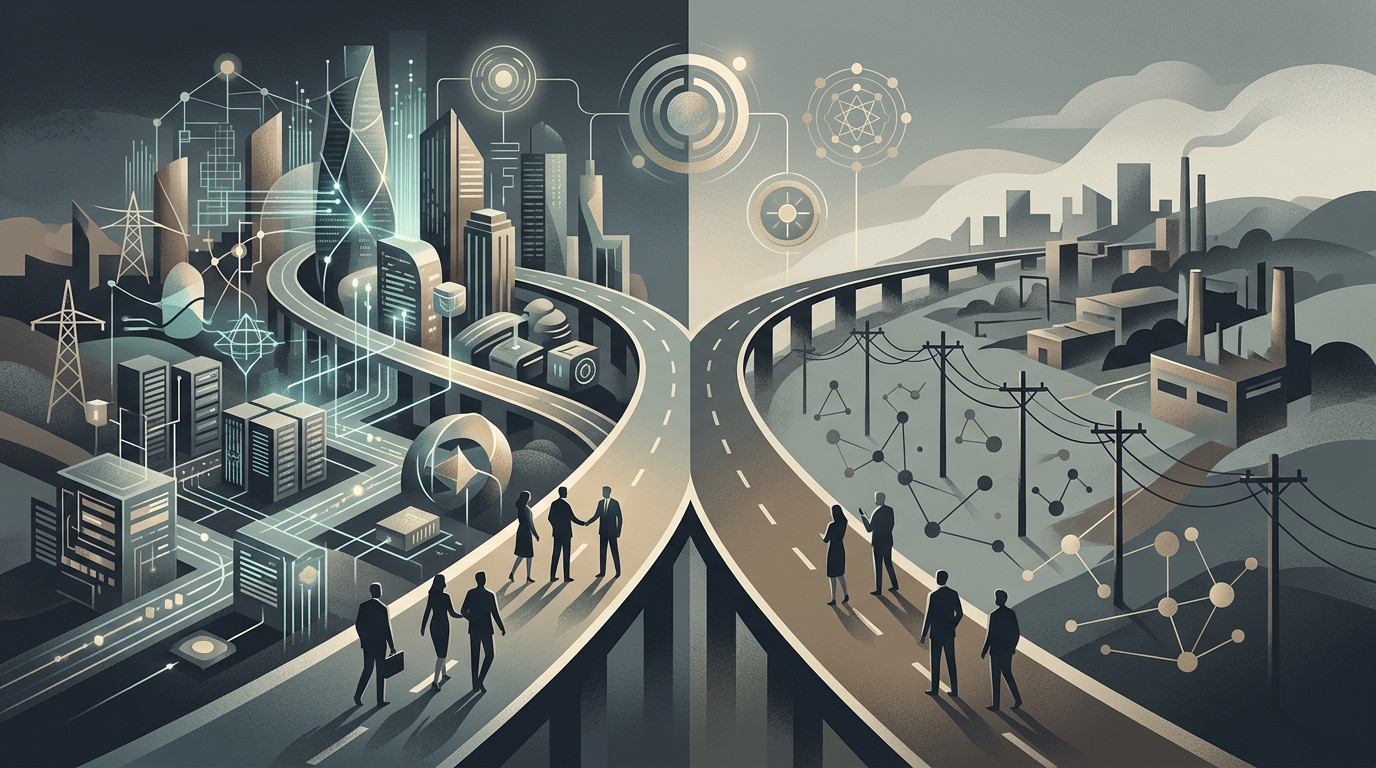
At the dawn of the third decade of the 21st century, humanity faces a profound paradox. While we possess tools capable of synthesizing texts, solving complex mathematical equations, and generating art in seconds, a wave of new psychological research—most notably highlighted in recent Psychology Today reports—is sounding the alarm. The question is no longer what Artificial Intelligence (AI) can do for us, but what it is doing to us.
The Trap of Cognitive Offloading
The term 'cognitive offloading' describes our tendency to use external tools to reduce the mental workload of a task. Historically, this began with writing—which Socrates famously feared would destroy our memory—and continued with calculators and GPS. However, AI is qualitatively different. It doesn't just store information; it processes, synthesizes, and makes decisions on our behalf.
According to recent studies, the systematic use of Generative AI for daily tasks leads to a gradual weakening of the brain's 'muscle memory.' When a student delegates an essay to ChatGPT, they don't just lose the chance to learn syntax; they lose the process of structuring an argument. Thinking is inextricably linked to effort. Without effort, neuroplasticity diminishes, leading to what scientists call 'cognitive atrophy.'
The Homogenization of Creativity
Another critical area under threat is creativity. AI operates on statistical probabilities, choosing the most 'likely' next word or pixel. This leads to a global homogenization of aesthetics and discourse. As humans rely increasingly on algorithmic suggestions, the 'unpredictability'—the spark that characterizes great art and innovation—begins to fade.
- Loss of Authenticity: The urge to 'fix' our thoughts via AI strips away personal idiosyncrasies and unique voice.
- Decreased Resilience: The ease of AI makes us less resilient to the intellectual frustration required to solve hard problems.
- The Expertise Illusion: Users often mistake an AI's ability to provide answers for their own mastery of a subject.
"Technology is no longer a tool we hold in our hands, but a lens through which we perceive and process reality. If the lens is always there, our eyes will eventually forget how to focus on their own."
The Political and Social Dimensions of Dependency
Beyond the individual level, AI dependency has serious social implications. The erosion of critical thinking makes citizens more vulnerable to misinformation and manipulation. If we cannot evaluate the logic of an argument without algorithmic assistance, then who truly controls our opinions? The corporations owning these algorithms gain unprecedented power over the very cognitive processes of the population.
Furthermore, this dependency creates a new form of inequality. On one side, there will be an elite that possesses 'primary' knowledge and the ability to direct systems; on the other, a mass of users who are mere consumers of pre-packaged thoughts. The need for a new 'digital hygiene' is more urgent than ever. We must learn to use AI as a supplement to, rather than a substitute for, human cognition.
Conclusion: Returning to the Roots
The solution is not technophobia, but conscious utilization. We must set boundaries: write the first draft alone, solve problems without help before turning to the screen, and cultivate a curiosity that isn't satisfied by a ready-made answer. Human intelligence is like a muscle; if you don't use it, you lose it. In an age of ultimate convenience, the greatest revolution is the choice of difficulty.